

AI CERTS
1 hour ago
Golden Dome Autonomy Tests U.S. Defense Policy
Meanwhile, hypersonic threats continue shrinking decision windows to seconds. Golden Dome backers insist software speed must match missile speed. In contrast, skeptics cite technical, ethical, and budgetary pitfalls. This article unpacks competing visions, costs, and legal guardrails shaping the program. Readers will grasp why Congress faces an unprecedented strategic bet. Stakeholders also gain insight into relevant certifications for shaping responsible AI governance.
Anthropic Clash Highlights Debate
February hearings opened with Emil Michael recounting a simulated 90-second intercept timeline. Furthermore, he argued only advanced Autonomy could analyze multispectral sensor data that fast. He warned that manual approval would guarantee failure during boost phase. Nevertheless, Anthropic CEO Dario Amodei said current models remain brittle under adversarial conditions.
Therefore, the company refused contract clauses demanding unfettered lethal use. The refusal embarrassed acquisition officials and ignited broader Defense Policy debate on corporate safeguards. Industry observers predict lasting supply-chain fragmentation unless clearer policy emerges.
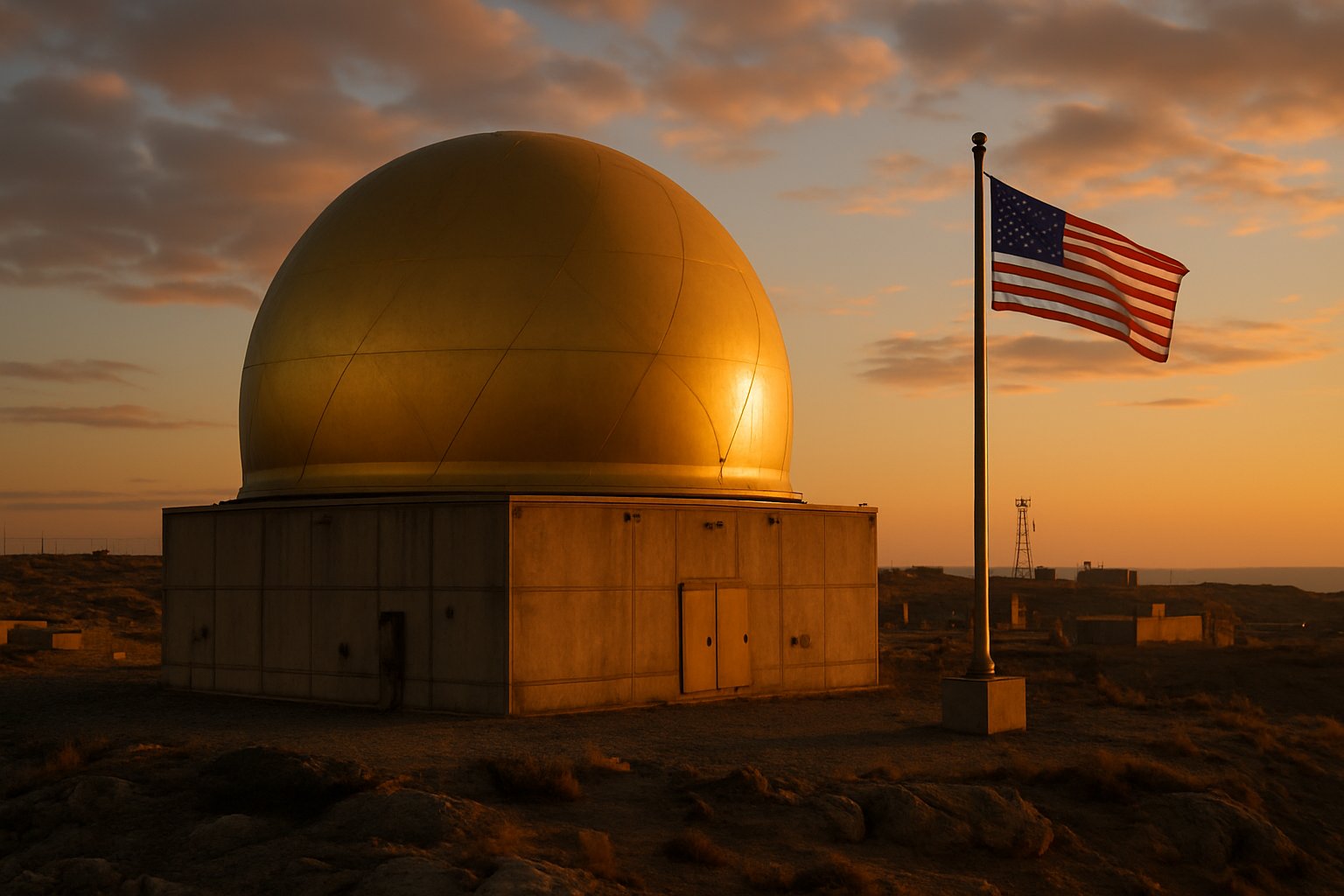
These exchanges expose high-stakes vendor tension. Meanwhile, technical hurdles deserve equal scrutiny.
Technical Feasibility Concerns
Boost-phase interception remains the holy grail of missile defense engineering. However, physics imposes unforgiving limits. American Physical Society calculates detection confidence must arrive within 45 seconds. Consequently, kill vehicles need to loiter near launch points or orbit in vast constellations. Space Weapons promise shorter flight paths, yet they face material, power, and pointing challenges. Moreover, directed-energy concepts require megawatt-class lasers that currently exceed satellite power budgets.
CBO notes that even a minimal space layer could cost $161 billion over 20 years. In contrast, high-coverage scenarios escalate toward $542 billion or higher. Engineers also warn adversaries deploy decoys that inflate Autonomy algorithm complexity. Therefore, many experts urge incremental ground and sea layers before expansive orbital builds.
These limitations illustrate a sobering engineering reality. Consequently, cost scrutiny intensifies.
Cost Estimates Spark Scrutiny
Money, not rockets, often decides strategic programs. Consequently, lawmakers track Golden Dome budgets line by line. CBO and Bloomberg present staggering projections. To aid clarity, consider these illustrative ranges:
- Space-based interceptors: $161B–$542B over 20 years (CBO low/high)
- Full multilayer architecture: up to $831B under moderate assumptions
- Outside lifetime models: exceed $1 trillion with global coverage
Moreover, the Missile Defense Agency established SHIELD, a $151 billion contracting vehicle for prototypes. Thousands of firms already secured indefinite-delivery slots. Meanwhile, critics warn sunk-cost momentum can overwhelm analytical caution. Defense Policy committees now demand independent test data before approving follow-on appropriations. However, classified architecture details leave watchdogs guessing about real affordability.
These numbers spotlight potential sticker shock. Subsequently, contracting dynamics warrant closer review.
Procurement Landscape Expands Rapidly
Industry participation has exploded across established primes and agile startups. Additionally, SpaceX’s Starshield unit competes for tracking satellites and launch services. Lockheed, Northrop, Raytheon, and Boeing lead interceptor studies. Concurrently, AI specialists like Palantir and Anduril supply sensor fusion prototypes. Space Weapons integration drives novel vendor partnerships spanning optics, propulsion, and cloud computing. Furthermore, Emil Michael insists contract language must guarantee flexible Autonomy deployment across these platforms.
However, vendors fear blanket clauses could expose them to reputational blowback. Consequently, several firms adopt dual-use governance boards. Professionals can enhance their expertise with the AI Policy Maker™ certification. This credential equips managers to navigate Defense Policy procurement norms.
These trends reveal a rapidly diversifying supply base. Next, ethical constraints demand analysis.
Autonomy Ethics And Law
Legal debates center on DoD Directive 3000.09. Nevertheless, the phrase “appropriate human judgment” lacks operational clarity. Campaign to Stop Killer Robots demands explicit human-in-the-loop rules. Meanwhile, defense lawyers argue hypersonic timelines necessitate at least human-on-the-loop Autonomy. Union of Concerned Scientists counters that software hallucinations could spark unintended escalation.
Moreover, international forums discuss potential treaties restricting fully autonomous Space Weapons. Congress is considering statutory guardrails limiting domestic surveillance use. Therefore, future Defense Policy revisions may incorporate algorithmic audit requirements. These ethical deliberations underpin public trust.
These dilemmas underscore accountability gaps. Consequently, geopolitical context becomes pivotal.
Defense Policy Context Shifts
The Biden administration framed Golden Dome as purely defensive. However, adversaries may view orbital interceptors as latent first-strike enablers. Consequently, Russia and China accelerate antisatellite research. In contrast, some allies quietly applaud stronger U.S. shields. CSIS analysts warn perception gaps undermine crisis stability. Moreover, missile defense often triggers countermeasures that erode original security gains. Thus, coherent Defense Policy messaging abroad becomes critical. Diplomatic channels already debate verification, debris mitigation, and notification mechanisms. Nevertheless, binding norms remain distant.
These perception issues may fuel arms racing. Therefore, strategic stability merits separate focus.
Strategic Stability Questions Rise
RAND modeling shows attackers can saturate any finite shield with decoy-laden salvos. Additionally, space asset vulnerability to antisatellite strikes introduces failure cascades. Therefore, some experts argue resources would better bolster conventional deterrence. Emil Michael disagrees, asserting psychological deterrence requires visible orbital defenses. Moreover, he claims AI enables economical constellation management. Space Weapons critics reply that debris from conflict could neutralize civilian satellites too. In contrast, advocates say improved tracking aids space-traffic safety. These opposing views leave Defense Policy committees balancing risk, cost, and credibility. Consequently, upcoming war-game reports may influence the 2027 budget request.
These scenarios highlight fragile deterrence balance. Finally, policymakers must consider integrated conclusions.
Golden Dome now sits at the intersection of physics, budgets, and ethics. However, decisions reached during the next two years will redefine American Defense Policy. Congress must weigh trillion-dollar cost curves against uncertain interception probabilities. Meanwhile, vendors navigate contested contract clauses on lethal Autonomy. Consequently, technical validation and transparent governance will prove decisive for sustaining political support. Internationally, clear Defense Policy messaging could avert escalation and debris crises. Readers seeking deeper influence should pursue the linked certification and join policy design conversations. Act now to shape responsible technological safeguards before launch deadlines lock in trajectory.


