

AI CERTs
2 hours ago
Global Impact of the AI Traceability Mandate
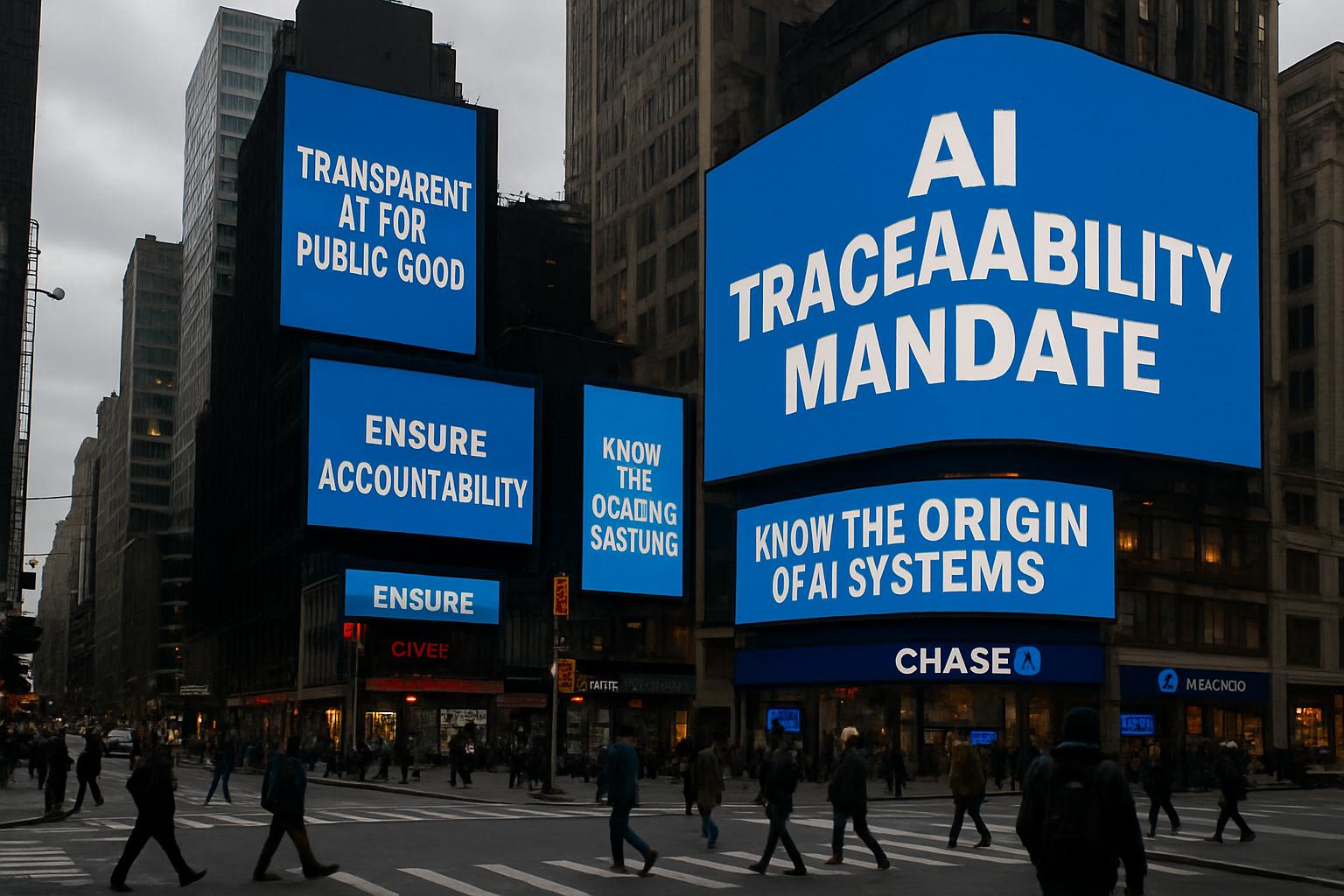
Election cycles, copyright lawsuits, and deepfake scams have pushed provenance from niche research to front-page policy. Consequently, legislators on three continents now demand machine-readable labels for synthetic media. The AI Traceability Mandate signals a decisive pivot from voluntary guidance to enforceable disclosure. Moreover, technical teams must translate policy text into resilient code, signatures, and invisible marks. However, confusion lingers over timelines, responsibilities, and viable toolchains. This feature unpacks what matters, who is involved, and how businesses can comply without stalling innovation.
Global Rules Gain Momentum
The European Commission published its draft Code of Practice in December 2025, operationalizing Article 50 of the AI Act. Meanwhile, China’s compulsory labelling regime has applied since September 2025, combining visible tags and embedded metadata. South Korea’s AI Basic Act entered force in January 2026 and mirrors these demands. In contrast, the United States lacks one federal statute, yet state IT Rules proliferate. FTC Chair Lina Khan warns, “There is no AI exemption from the laws on the books.”
Major platforms now chase interoperability. Adobe and Microsoft back C2PA manifests, while Google’s SynthID expands invisible watermark coverage to short videos. Consequently, provenance infrastructure is moving from pilot to production.
These synchronized moves illustrate regulatory acceleration. Therefore, enterprises must map jurisdictions before shipping global products.
Momentum is unmistakable. Nevertheless, looming penalties make deadline clarity critical, so the next section details concrete dates.
Upcoming Legal Deadline Pressures
Missed timelines invite steep fines. EU authorities may levy up to €15 million for transparency breaches. China’s national standard already empowers platform inspectors, and South Korea promises audits after a brief grace period. Additionally, dozens of U.S. states impose civil penalties through new IT Rules.
- 2 Aug 2026: Article 50 transparency duties become enforceable across the EU.
- 1 Sep 2025: China’s nationwide labelling obligation began; enforcement reports are incoming.
- 22 Jan 2026: South Korea activates watermark and metadata compliance for “high-impact” systems.
Failure to label now jeopardizes market access, investor confidence, and brand trust. Moreover, fragmented state measures amplify complexity for U.S. developers.
Deadlines compress engineering roadmaps. However, technical standards offer reusable building blocks, as outlined next.
Technical Toolkit For Compliance
C2PA manifests sit at the heart of most implementation plans. They store creator identity, edit history, and a cryptographic signature. Furthermore, imperceptible watermark layers such as SynthID survive crops and compressions. Providers also log perceptual hashes to recreate a lost digital fingerprint.
Multi Layer Labeling Model
Regulators now promote a three-tier stack: signed metadata, invisible watermark, and server logs. Consequently, detection remains possible even when attackers strip one layer. Professionals can enhance their expertise with the AI Supply-Chain Auditor™ certification.
Choosing Robust Watermarking Standards
Teams compare SynthID, SteganoGAN, and open C2PA marks. Additionally, they evaluate how platforms process headers, thumbnails, and streaming variants. In contrast, text generators still struggle to plant a stable digital fingerprint, prompting ongoing research.
The toolkit delivers flexibility. Nevertheless, every layer adds cost and latency, themes explored in the following risk assessment.
Pros And Persistent Gaps
Supporters claim provenance deters scams and streamlines courtroom evidence. Moreover, standardization reduces vendor lock-in. However, adversaries already distribute scripts that strip C2PA blocks within seconds. Screenshots erase each embedded watermark and shred the original digital fingerprint.
Start-ups fear that heavy compliance favors cash-rich incumbents. South Korean founders cite server costs for storing large manifest logs. Meanwhile, privacy advocates worry that perpetual provenance may expose sensitive creator data.
These challenges highlight critical gaps. Nevertheless, informed leadership can mitigate many issues by learning from early adopters.
Industry Voices And Doubts
Google engineers tout detection accuracy above 95 percent for SynthID-marked images. Conversely, journalists at The Verge observed watermark loss after simple screen recordings. EU officials counter that multi-layer design lessens single-point failures.
Furthermore, academics from the Ada Lovelace Institute argue that provenance must integrate with media literacy curricula. Consequently, consumers gain agency rather than blind faith in labels.
Opinions diverge sharply. Therefore, executives need a pragmatic action list, provided next.
Action Plan For Leaders
Executives racing to satisfy the AI Traceability Mandate should:
- Audit model outputs for existing provenance gaps and relevant IT Rules.
- Adopt C2PA v2.2 libraries and test invisible watermark resilience.
- Create fallback logs to preserve a unique digital fingerprint.
- Train teams via the linked certification for supply-chain assurance.
- Monitor regional bills to ensure rolling adherence.
These steps build defensible systems. Moreover, proactive disclosure fosters public trust ahead of enforcement waves.
Preparation today averts fines tomorrow. Consequently, leaders who act early gain competitive signaling advantages.
The action items close our roadmap. However, a concise recap cements the core insights.
Conclusion
Governments worldwide now align behind the AI Traceability Mandate, imposing synchronized yet diverse labels, metadata, and watermark expectations. Moreover, C2PA manifests, invisible marks, and hash logs provide a practical compliance stack. Nevertheless, tampering, cost pressures, and privacy trade-offs persist. Consequently, leaders must adopt multi-layer techniques, secure expert training, and track evolving IT Rules. Explore additional guidance and certifications to fortify your organization’s provenance strategy today.


