

AI CERTS
3 hours ago
Global Boom in AI Data Infrastructure Construction
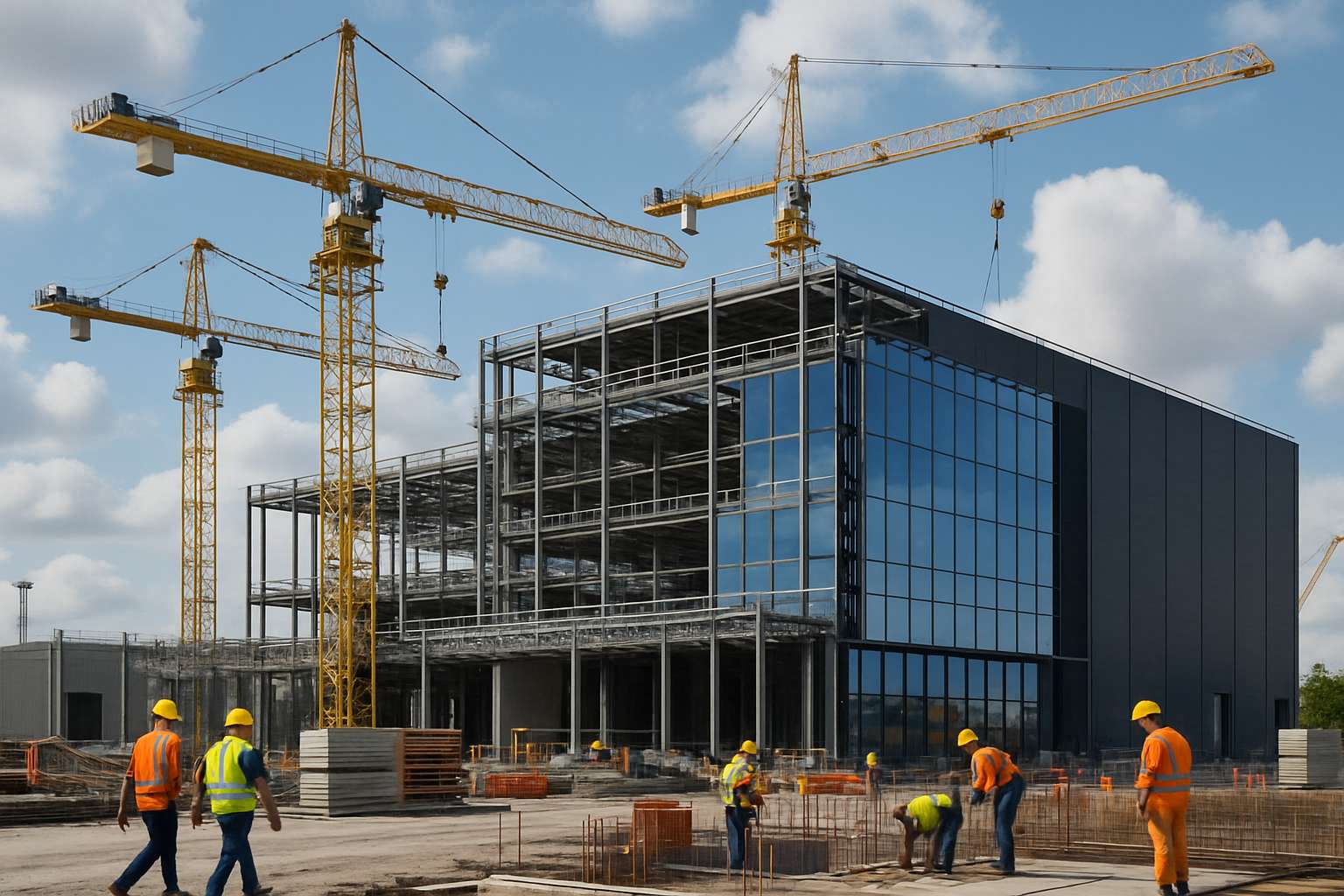
The Wall Street Journal highlighted similar momentum in a recent WSJ report, underscoring market urgency.
Market trackers already note a 23% increase in data center spending year over year.
However, electricity demand, financing complexity, and community concerns complicate the narrative.
The following analysis maps capital flows, technical shifts, policy drivers, and emerging risks.
Moreover, it offers professionals vital insights and resources to remain competitive in this evolving field.
Read on for a concise yet comprehensive briefing that blends fresh data with expert commentary.
Capital Surge Worldwide Trends
Private equity giants are pouring billions into specialized campuses.
BlackRock’s AI Infrastructure Partnership agreed to acquire Aligned Data Centers for about $40 billion.
Additionally, Blackstone and Digital Realty launched a $7 billion joint venture targeting 500 MW of capacity.
IEA figures confirm soaring capital intensity, with near-term AI Data Infrastructure commitments exceeding hundreds of billions.
Consequently, data center spending has grown more attractive to pension funds seeking stable, inflation-linked cash flows.
A recent WSJ report even framed the asset class as the decade’s hottest infrastructure play.
These transactions illustrate a maturing market structure.
Nevertheless, questions about overbuild risk persist as hardware evolves quickly.
Capital is plentiful, yet strategic discipline remains essential.
Therefore, understanding power constraints is the logical next step.
Power And Grid Strain
AI servers draw far more electricity than traditional cloud racks.
IEA projects global data center load doubling to 945 TWh by 2030.
Meanwhile, accelerated servers grow about 30% yearly, magnifying stress on regional grids.
Utilities, especially PJM and ERCOT, warn of transmission bottlenecks near AI Data Infrastructure clusters.
Moreover, community opposition intensifies when backup generators and water use threaten local resources.
Data center spending now often hinges on guaranteed interconnection rights and renewable supply deals.
The WSJ report noted that some projects face multiyear delays despite ample financing.
Consequently, siting decisions increasingly align with power availability rather than market proximity.
- 415 TWh global use in 2024 (IEA)
- 945 TWh projected by 2030, a 23% increase for AI Data Infrastructure demand
- Liquid-cooled racks reaching 140 kW each; air systems hit limits
These figures spotlight the power squeeze.
Subsequently, operators embrace advanced cooling to raise density without overtaxing airflow systems.
Cooling Technology Adoption Spike
TrendForce reports liquid cooling adoption rising from 14% to 33% within one year.
Furthermore, Nvidia’s GB200 racks can consume 140 kW, forcing AI Data Infrastructure teams toward immersion or direct-to-chip cooling.
Uptime Institute observes limited recent PUE gains because IT load growth outpaces efficiency upgrades.
Consequently, many builders retrofit existing halls with rear-door heat exchangers while planning greenfield immersion tanks.
AI Data Infrastructure leaders tout environmental benefits, claiming liquid systems cut fan energy dramatically.
However, water availability and chemistry management introduce fresh operational risks.
Operators must balance equipment longevity, maintenance expertise, and insurance requirements.
Cooling choices now influence site selection as much as land price.
Therefore, policy incentives increasingly target efficiency, which the next section explores.
Policy Moves Accelerate Builds
Governments recognize data hubs as strategic assets.
The U.S. Department of Energy identified sixteen federal sites for fast-tracked campuses in April 2025.
Additionally, Indian states signed gigawatt-scale memoranda at Davos 2026 to attract hyperscale investment.
Larry Fink called the build-out “essential to power the future of AI.”
Moreover, tax incentives and streamlined permitting lower project timelines by up to 30%.
Policy drives AI Data Infrastructure toward regions with stable grids, cooling water, and skilled labor.
Yet regulators now mandate environmental disclosures, forcing transparency on power sourcing and emissions.
Public-private alignment speeds deployment while embedding accountability.
Nevertheless, social pushback remains a powerful counterforce, as the next section shows.
Risks And Community Concerns
Local groups question water rights, noise, and diesel emissions.
Wired covered protests against Virginia’s so-called “Data Center Alley.”
In contrast, operators argue that efficient AI Data Infrastructure can co-locate with renewable projects.
Financial analysts warn of possible overbuild if model efficiency improves faster than anticipated.
Moreover, supply chain delays for transformers and skilled electricians already extend delivery schedules.
A 23% increase in global rack power densities magnifies fire suppression challenges and insurance costs.
Consequently, insurers seek higher premiums, squeezing developer margins.
Risks span social, technical, and financial domains.
Therefore, professionals require up-to-date skills and certifications to navigate uncertainty.
Market Outlook And Careers
Industry consensus expects sustained double-digit growth through 2030.
However, the pace depends on capital cost, chip roadmaps, and policy stability.
Career paths now extend beyond cloud engineering into energy planning, construction management, and sustainability analytics.
Professionals can enhance their expertise with the AI Data Infrastructure™ certification.
Moreover, rising data center spending creates roles in project finance, procurement, and grid interconnection.
A recent WSJ report suggested talent shortages could delay commissioning schedules by six months.
Consequently, employers value candidates familiar with liquid cooling, environmental compliance, and power purchase contracts.
AI Data Infrastructure mastery promises a resilient career path despite market volatility.
The outlook remains bright for those who continuously upskill.
Subsequently, we recap the core insights and next actions.
The construction boom shows no signs of slowing.
Capital availability, supportive policies, and relentless model demand reinforce a robust pipeline.
However, grid constraints and environmental scrutiny will test operator creativity.
Cooling innovation, especially immersion, offers practical relief while saving energy.
Therefore, organizations investing in AI Data Infrastructure should also invest in skilled talent.
Professionals can act now by securing specialized certifications and monitoring regional power markets.
Stay informed, stay adaptable, and lead the next generation of intelligent facilities.


