

AI CERTS
3 months ago
Germany’s €2.9B Military Tech Push Bolsters NATO Surveillance
Moreover, the platform will funnel data from multiple sensors to commanders watching NATO’s eastern flank. Reuters attributes the figures to Bloomberg documents and notes formal confirmation remains pending. Nevertheless, parliament approval is expected within days, keeping the Bundeswehr’s modernisation clock ticking.
Berlin Strategic Rationale Unpacked
Germany’s defence reset began after Russia invaded Ukraine in 2022. Consequently, Berlin launched a €100 billion special fund to close capability gaps.
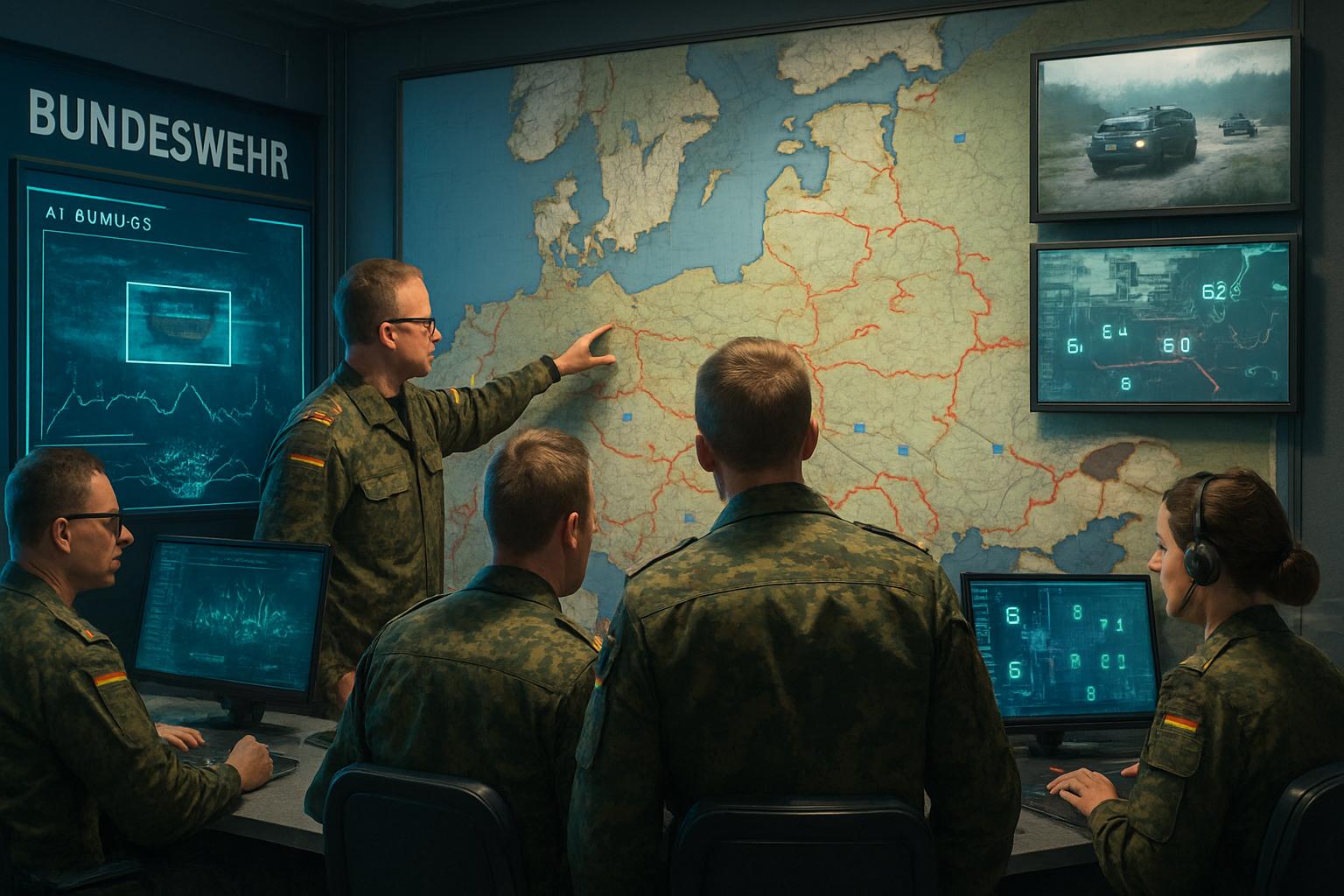
The pending procurement package fits that trajectory. Furthermore, it mixes traditional firepower with digital enablers that accelerate decision cycles. Officials argue that integrated systems reduce response times along the Eastern Flank.
Moreover, domestic industry benefits from contracts that keep intellectual property inside national borders. This industrial angle builds political support across party lines.
In summary, political, strategic, and economic motives intersect in Berlin’s plan. Consequently, attention now shifts to the exact spending breakdown.
Key Procurement Line Items
Budget documents cited by Bloomberg outline 11 separate contracts. Nevertheless, Reuters has not yet seen an official ministry release. The reported figures, though unverified, paint a detailed picture.
- Up to 250,000 G95 rifles — €765 million
- 250,000 laser targeting modules — €490 million
- 750 tactical drones — €85 million
- 1,744 off-road vehicles — €379 million
- Missiles for F-35 jets — €445 million
- AI surveillance platform — €68 million (initial)
Additionally, the list confirms that digital capabilities share the spotlight with hardware. Therefore, Military Tech spending now extends from rifles to cloud-based analytics.
These numbers illustrate Germany’s broad modernization push. However, the AI platform deserves deeper scrutiny.
AI Platform Dual Consortia
The €68 million tranche funds two rival teams. Airbus partners with Quantum Systems, while Helsing joins Arx Robotics. Consequently, the defence ministry can compare architectures before awarding a full deployment contract.
The proposed platform will ingest radar, optical, acoustic, and drone feeds. Moreover, machine-learning models will classify objects, track movements, and push alerts to commanders in real time.
Nevertheless, officials repeat that humans will remain in the loop. Furthermore, data residency rules demand that sensitive streams stay on German or NATO-certified servers.
In short, the platform merges cutting-edge Military Tech with strict governance. Subsequently, deployment plans pivot to the Eastern Flank.
Eastern Flank Deployment Context
NATO commanders worry about gaps in Baltic surveillance. Therefore, Germany has pledged a brigade for Lithuania and supports other frontline allies.
The AI system could provide persistent situational awareness across that corridor. Additionally, fused sensor data may detect troop concentrations or low-flying drones within seconds.
Moreover, Lithuanian officials have signalled interest in sharing feeds through NATO networks. Such collaboration fits alliance goals for interoperable Military Tech.
These operational drivers explain why the AI line appears despite its modest size. Nevertheless, industry dynamics also shape the package.
Industrial And Funding Surge
German startups have captured record venture capital since 2024. Consequently, firms like Quantum Systems and Helsing became flagships for European defence investors.
Moreover, the government sees domestic suppliers as vital for sovereignty and resilient supply chains. The current Procurement list aligns with that view.
Additionally, large incumbents—Airbus, Rheinmetall, Mercedes-Benz—still receive substantial orders, ensuring balanced industrial coverage.
Thus, public money complements private capital to nurture a full Military Tech ecosystem. Subsequently, observers turn to challenges that could derail momentum.
Risks Privacy And Oversight
Despite optimism, technical, legal, and political hurdles remain. In contrast, critics warn that machine-learning errors could trigger false alarms.
Furthermore, GDPR and national privacy laws restrict cross-border data flows. Therefore, engineers must design safeguards before operational rollout on the Eastern Flank.
Moreover, adversaries may attempt spoofing or jamming campaigns against sensors and drones. Consequently, resilient architectures and robust human oversight become essential.
Professionals can enhance expertise through the AI+ Human Resources™ certification, gaining governance skills for sensitive Military Tech deployments.
Addressing these risks will determine whether capabilities arrive on time and on budget. Therefore, verification steps gain urgency.
Next Steps And Verification
Reuters stressed that it could not independently verify Bloomberg’s numbers. Nevertheless, Bundestag minutes should soon reveal final figures and contract winners.
Additionally, the defence ministry is expected to publish a press release outlining schedule, milestones, and oversight mechanisms. Such transparency would bolster public trust in Military Tech spending.
Moreover, NATO planners will seek integration demonstrations before field deployment. Consequently, consortium teams must deliver prototypes by 2026 to maintain momentum.
Verified documents and early prototypes will anchor confidence across government, industry, and allies. Subsequently, attention returns to the package’s strategic dividends.
Conclusion And Outlook
Germany’s latest vote will signal whether reported numbers become reality. Moreover, the decision will illustrate how Military Tech is reshaping procurement culture. In contrast, failure to confirm documents could dent investor confidence.
Assuming approval, the AI platform will link sensors, drones, and analytic engines into a coherent shield. Consequently, frontline commanders would gain Military Tech advantages once reserved for superpowers.
Nevertheless, privacy, verification, and alliance integration tasks remain urgent. Therefore, policymakers, engineers, and auditors must collaborate to turn bold plans into operational facts.
Readers seeking governance expertise for future Military Tech projects should explore the linked certification. Act now to stay ahead in defence innovation.


