

AI CERTS
2 hours ago
Genomic AI Milestone: Google AlphaGenome Illuminates Dark DNA
In January 2026, Google DeepMind unveiled a powerful answer. The Nature-published AlphaGenome system applies Genomic AI to predict molecular activity from one million bases of sequence. Furthermore, early users report rapid hypothesis generation and variant prioritization. Nevertheless, experts caution that models remain limited by data quality and environmental factors.
This article examines how AlphaGenome decodes dark DNA, its benchmarks, adoption, and lingering challenges. Readers will gain practical insight into deploying the technology responsibly. Moreover, we outline governance questions that industry leaders must address before clinical translation. Finally, professionals can explore upskilling options, including the forthcoming AI Researcher™ certification. Let us dive into the architecture behind this emerging milestone.
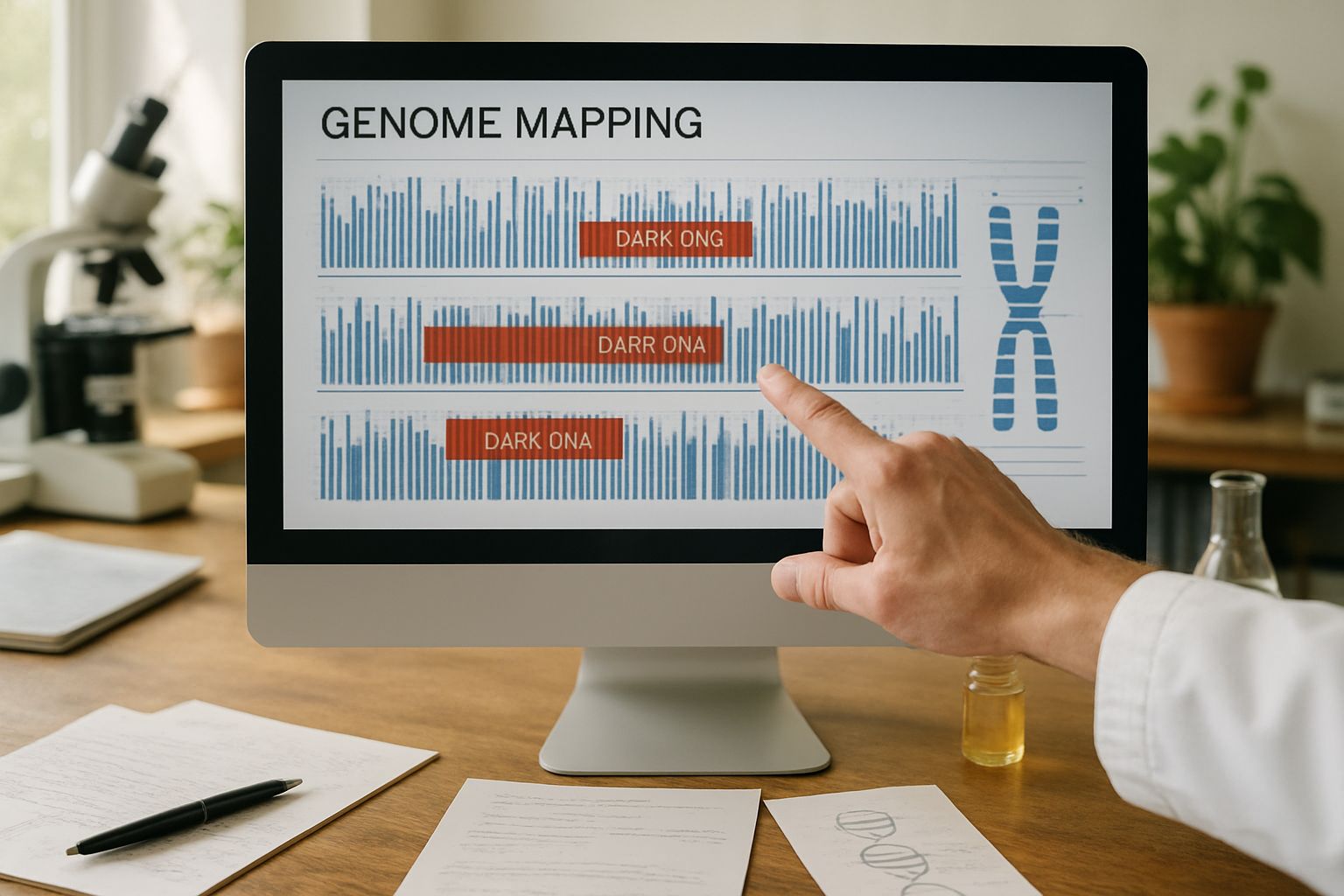
Decoding The Dark Genome
Most human DNA does not encode proteins. Instead, non-coding elements regulate when, where, and how genes switch on. However, experimental mapping of every enhancer and silencer remains impractical.
Genomic AI promises virtual assays that survey these elements across one million-base windows. Consequently, researchers can prioritize disease-linked variants hidden deep within introns or intergenic deserts. These insights set the stage for AlphaGenome’s design choices.
In summary, decoding regulatory code demands context and resolution. Therefore, the next section explores how AlphaGenome tackles both requirements simultaneously.
Inside The AlphaGenome Model
The model processes 1,000,000 contiguous bases using a hybrid transformer and convolutional stack. Additionally, positional embeddings preserve distance information critical for long-range regulation. The network outputs thousands of parallel genomic tracks, from RNA expression to 3D chromatin contacts.
Google engineers trained the model on 5,930 human and 1,128 mouse experimental tracks. Subsequently, fine-tuning optimized variant-effect scoring across 26 benchmark tasks. That pipeline exemplifies Genomic AI engineering at extreme scale.
Consequently, the model inspects DNA context at single-base resolution across the full window. Collectively, these components deliver single-base predictions without sacrificing megabase context. Next, we review how this architecture performs against peer tools.
Benchmark Results Explained Clearly
DeepMind compared AlphaGenome with 26 established variant-effect predictors. Consequently, the new model matched or exceeded top scores in 24 assessments. Performance gains were especially notable for non-coding cancer mutations near the TAL1 oncogene.
These benchmarks provide rare quantitative evidence that Genomic AI can outperform traditional statistical pipelines.
- 1 Mb context window combines distal enhancers with promoters.
- 5,930 human signals and 1,128 mouse signals predicted simultaneously.
- Approximately one million API calls daily during preview.
- 24 of 26 tasks show state-of-the-art performance.
- Single-base DNA variant scoring enables mechanistic interpretation.
Nevertheless, experts emphasize that benchmarks reflect training data distributions. Real-world clinical samples may present novel sequence contexts.
Overall, the evaluations validate strong general performance. However, adoption patterns reveal additional insight beyond numbers.
Global Research Adoption Trends
Within seven months, about 3,000 researchers across 160 countries accessed the preview API. Meanwhile, the GitHub repository accumulated thousands of stars and forks. Hugging Face mirrors ensured broader distribution of model checkpoints and dataset manifests.
Google reported roughly one million daily API calls, underscoring community demand. Such traction demonstrates Genomic AI moving quickly from theory to practical laboratory pipelines. Moreover, early adopters highlight faster variant triage for rare disease investigations.
Adoption metrics confirm immediate scientific value. Consequently, scrutiny of risks grows in parallel.
Opportunities And Key Limitations
AlphaGenome’s strengths stem from unified multimodal outputs and long context windows. Therefore, users can infer mechanistic links between distant elements and gene expression. Moreover, the open API streamlines exploratory studies without massive compute investment.
Key Expert Cautionary Voices
Independent scientists warn that training data biases may skew predictions for under-represented ancestries. In contrast, environmental factors remain invisible to sequence-only models. Ben Lehner argues that predictions must be validated experimentally before clinical translation.
Ethicists also flag dual-use concerns around designing harmful regulatory sequences. Responsible Genomic AI governance will require transparent audits and usage policies.
Taken together, benefits and caveats illustrate the delicate balance of innovation and safety. Next, we consider regulatory paths and professional skill development.
Future Directions And Governance
Regulators will likely adapt machine-learning medical-device frameworks for genomic predictors. Meanwhile, DeepMind maintains non-commercial API terms to monitor usage patterns. Consequently, open-source communities debate whether full weight release is desirable.
Practitioners can strengthen oversight literacy via the AI Researcher™ credential. Such programs teach Genomic AI audit techniques, risk modeling, and reproducibility best practices.
Looking ahead, federated fine-tuning could personalize predictions while preserving privacy. Therefore, multi-stakeholder collaboration remains essential. Finally, sustained funding for experimental validation will anchor predictive claims.
Google’s AlphaGenome marks a pivotal advance in sequence modeling. Nevertheless, its greatest impact will emerge when predictions drive new biological experiments. Together, vast context windows and base-pair resolution refine our view of the dark genome. Therefore, Genomic AI now stands poised to accelerate variant interpretation, drug discovery, and synthetic design. However, responsible deployment demands rigorous validation and transparent governance. Consequently, professionals should stay informed and pursue competencies that bridge biology and data science. Explore the linked certification and join the frontier shaping tomorrow’s precision medicine.


