

AI CERTS
3 months ago
Generative Model Distillation: Amazon Bedrock’s High-Speed Edge
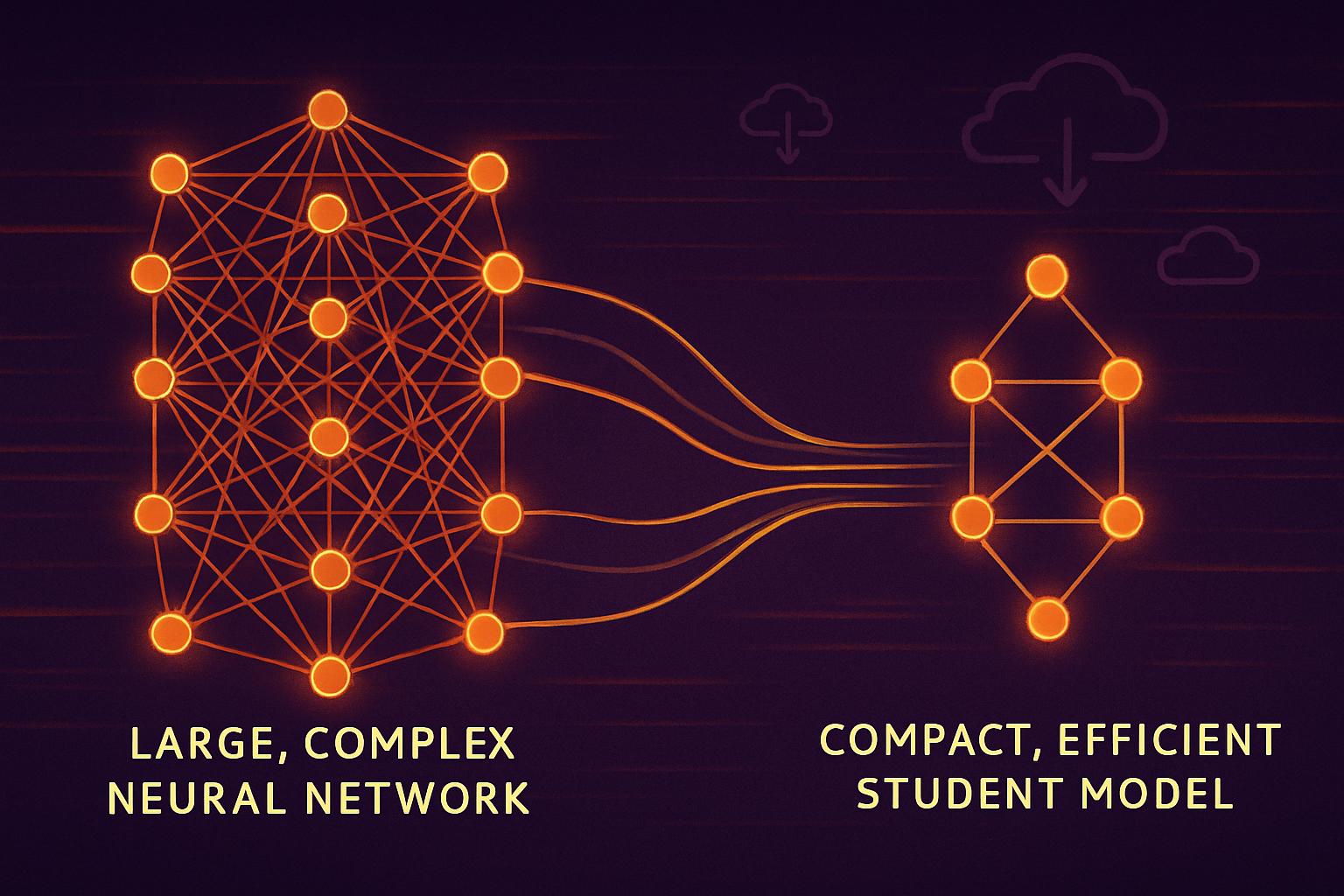
Cost, latency, and privacy pressures push enterprises toward slimmer deployments. Consequently, distillation offers a pragmatic shortcut. Bedrock automates synthetic data generation, augments prompts, performs fine-tuning, and hosts the resulting student models. Therefore, builders can trade minimal accuracy loss for substantial efficiency gains.
Bedrock Distillation Arrives Fast
The preview launched on 3 December 2024 with limited model pairings and region locks. Meanwhile, customer interest surged during the test window. AWS reports Bedrock’s customer base grew 4.7x year over year, underscoring commercial appetite.
General availability arrived on 1 May 2025 with expanded support for Amazon Nova, Anthropic Claude, and Meta Llama families. Furthermore, the GA release added agent function-calling enhancements, reflecting rising demand for orchestration workloads.
In short, Bedrock moved from preview curiosity to full product within five months. However, adoption now depends on measurable gains, which the next section examines.
Core Distillation Workflow Steps
Users upload prompts or invocation logs to Bedrock. Then the chosen teacher models generate high-quality responses, creating a synthetic dataset.
Bedrock may expand that dataset to 15,000 pairs through proprietary augmentation. Subsequently, the platform triggers fine-tuning on a specified student model variant, optimizing weights to mimic teacher behavior.
Finally, Bedrock hosts the distilled artifact behind provisioned throughput. Customers alone access the endpoint, ensuring privacy and compliance.
- Prompt collection or log export
- Teacher inference for synthetic data
- Optional dataset augmentation
- Targeted fine-tuning phase
- Hosted student models endpoint
The automated chain removes much of the ML heavy lifting. Consequently, enterprises lacking specialist talent can still pursue Generative Model Distillation projects.
These mechanics explain the promise. Yet performance data determines whether those promises hold.
Performance Claims And Caveats
AWS touts 5x faster inference and 75% lower cost versus teacher models. Reported accuracy loss stays below two percent for RAG tasks.
Independent journalists welcome the numbers. Nevertheless, outlets like TechCrunch stress that external benchmarks are absent, leaving cloud buyers wary.
Dr. Swami Sivasubramanian claims Bedrock adoption jumped 4.7x in twelve months. Meanwhile, skeptics await customer telemetry across varying domains.
Key advantages AWS highlights:
- Latency reduction for interactive chat
- Cost savings at scale
- Improved function-calling success
Vendor Latency Metrics Data
Generative Model Distillation tests from AWS show median latency falling from 950 to 180 milliseconds. Furthermore, function-calling success reportedly climbs by eleven percentage points when distilled agents execute JSON tool invocations.
Independent labs have yet to release corroborating figures. Therefore, early pilots should capture baseline metrics to confirm real savings.
Performance promises appear compelling on paper. However, verification will shape future sentiment.
Pricing Limits And Regions
Distillation economics involve four separate charges: synthetic teacher inference, fine-tuning compute, model storage, and provisioned throughput.
Moreover, AWS caps the expanded dataset at fifteen thousand pairs. Crossing that boundary simply stalls the job.
Region placement also matters. For example, Nova distillation runs inside US East, whereas Claude and Llama variants operate from Oregon.
These constraints affect latency and data residency compliance. Consequently, global rollouts require careful architecture alignment.
Generative Model Distillation budgets therefore require holistic forecasting across the entire life cycle.
Bedrock pricing and locality tradeoffs demand diligent planning. Next, we examine who is already buying.
Early Enterprise Adoption Stories
Legal platform Robin AI distilled Claude Sonnet into Haiku to accelerate contract Q&A. Consequently, users experienced snappier turnarounds without visible answer degradation.
Financial giant Moody’s applies the workflow to credit research chatbots. Meanwhile, PwC pilots Nova distillation for internal knowledge retrieval.
Each company cited efficiency gains as the decisive factor. Both also highlighted simplified governance because only their teams access the distilled endpoints.
Professionals can enhance their expertise with the AI Foundation certification to manage similar initiatives.
For Robin AI, Generative Model Distillation cut query cost by nearly two thirds.
Early adopters validate tangible business dividends. However, broader success hinges on ecosystem positioning.
Competitive Landscape Quick Analysis
Microsoft Azure and Google Cloud offer parallel compression pipelines under different branding. Nevertheless, Bedrock’s end-to-end automation stands out for simplicity.
NVIDIA, Hugging Face, and open-source groups have long used distillation plus pruning. In contrast, AWS bundles orchestration, hosting, and billing into a single console.
That integration may sway buyers already entrenched in the AWS ecosystem. Furthermore, access restrictions to same-family teacher models could nudge multi-cloud accounts elsewhere.
Google’s Gemini toolkit lacks end-to-end Generative Model Distillation, focusing instead on quantization.
Distillation Skills Market Demand
Recruiters already list Generative Model Distillation experience as a preferred qualification for cloud architect roles.
Consequently, professionals who understand student models, teacher models, and dataset strategies can command premium salaries.
Adding a structured credential, such as the earlier linked AI Foundation certification, strengthens career leverage.
Competitive momentum will likely intensify through 2025. The final section distills key lessons.
Key Takeaways And Outlook
Generative Model Distillation on Bedrock promises dramatic latency and cost improvements for text workloads.
Bedrock simplifies dataset creation, orchestrates fine-tuning, and hosts the new student models behind private endpoints.
Remember these highlights:
- Up to 5x faster and 75% cheaper
- <2% accuracy loss claimed
- Dataset cap at 15k pairs
- Region and family restrictions
Efficiency remains the primary draw, yet accuracy and governance still require validation through third-party benchmarks.
Therefore, practitioners should prototype, measure, and iterate before full production rollout.
Nevertheless, the toolset opens new optimization routes for voice, chat, and agent systems once multimodal support lands.
Consequently, leaders exploring strategic GenAI programs should monitor Bedrock’s roadmap and competitor reactions.
Generative Model Distillation expertise will become a marketable asset across cloud teams.
Consider validating your knowledge with the AI Foundation certification and stay prepared for next-generation optimization demands.
Mastering Generative Model Distillation today sets teams up for tomorrow’s multimodal frontier.


