

AI CERTs
4 hours ago
Generative Interior Design Engines Transform Estate Visualization
Real-estate firms now compete on visual speed and accuracy. Consequently, fresh technology embeds itself across listing workflows. Generative Interior Design Engines deliver photoreal rooms in minutes rather than days. Moreover, these engines connect captured scans to shoppable assets, shrinking marketing budgets. Brokers, developers, and retailers therefore face a pivotal choice: adopt AI-first visualization or risk lagging rivals.
However, rapid deployment raises compliance and quality questions. California’s new disclosure statute spotlights the stakes. Meanwhile, consolidation between CoStar and Matterport expands distribution globally. The following report examines market momentum, technical foundations, business benefits, governance hurdles, and future impacts.
Market Shift Accelerates Rapidly
Over eighteen months, visualization pipelines evolved dramatically. Previously, artists crafted bespoke renders. Now automated capture tools feed Generative Interior Design Engines directly. Matterport’s Genesis initiative illustrates this evolution. Furthermore, CoStar’s acquisition integrates those capabilities into leading listing portals.
Analysts value the generative real-estate segment at $438 million in 2024. Precedence Research forecasts $1.3 billion by 2034, marking 11-12% compound growth. Additionally, National Association of Realtors data links staged imagery to quicker sales and modest price uplifts.
These numbers confirm accelerating demand. Nevertheless, market sizing still varies across reports, reflecting differing scope definitions.
Key takeaways: adoption surges as ROI crystallizes; consolidation amplifies reach. Consequently, technology vendors race to secure platform positions.
Tech Stack Overview Summary
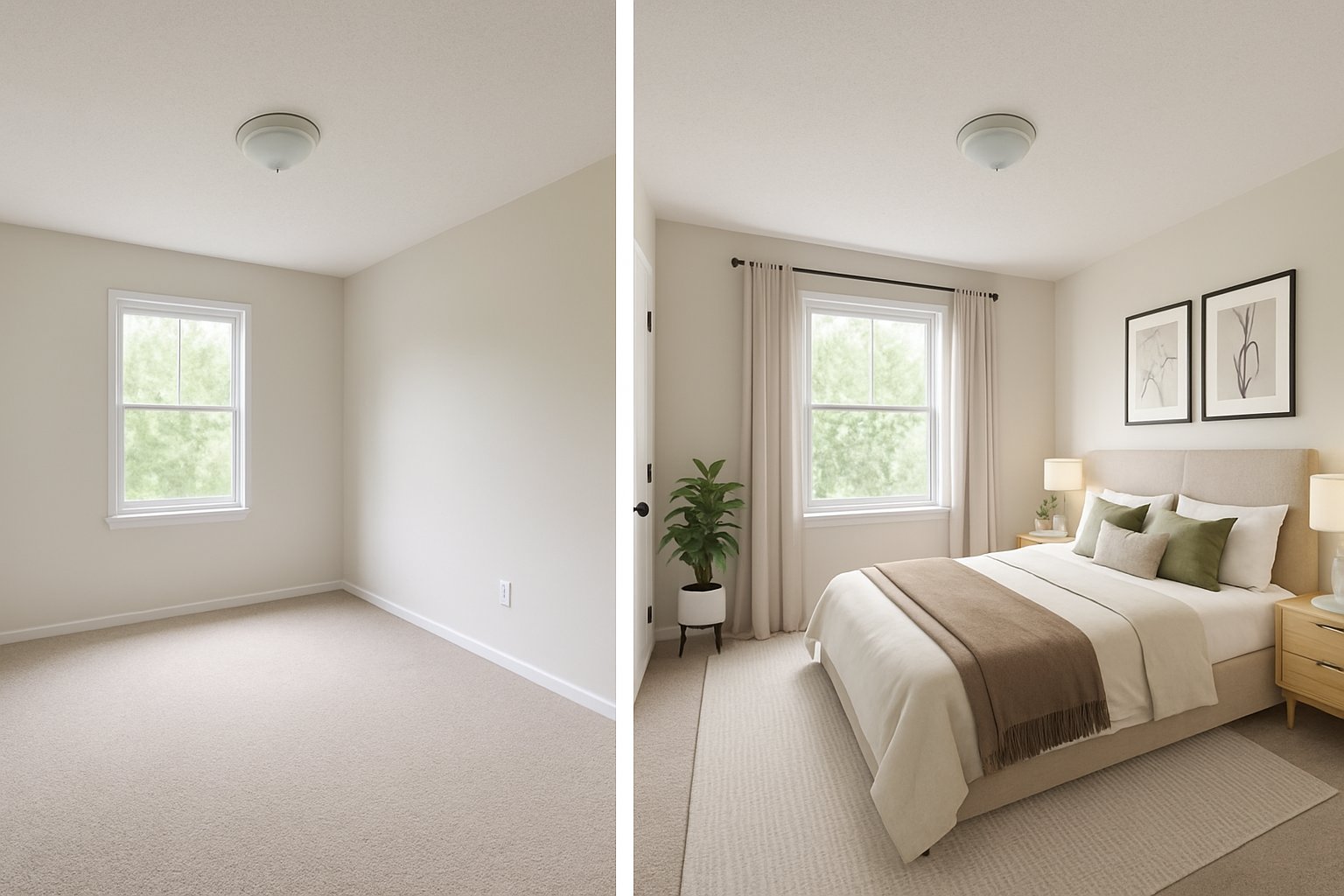
The workflow begins with spatial capture. Phone LiDAR, Pro-grade scanners, or photogrammetry produce point clouds within minutes. Subsequently, computer-vision pipelines transform raw data into dimensionally accurate digital twins. Generative Interior Design Engines then generate fresh layouts, styles, and décor from text prompts.
Platforms like Coohom and Planner 5D expose these steps through cloud APIs. Meanwhile, Epic Games’ Twinmotion and NVIDIA Omniverse render interactive walkthroughs in real time. Retail partners, including Wayfair, supply 3D catalogs, making staged couches instantly purchasable.
- Capture to mesh: often under two hours for a typical apartment.
- AI defurnish and restage: usually under ten minutes per room.
- Interactive export: real-time engines provide VR tours within hours.
End-to-end speed reshapes listing economics. However, accuracy safeguards remain essential to maintain buyer trust.
These architecture advances shorten production cycles. Moreover, modular APIs let brokers mix tools without rebuilding back-office systems.
Business Benefits Detailed Clearly
Cost reduction headlines every pitch. Traditional physical staging may exceed $3,000 per listing. Conversely, virtual staging AI costs can fall below $300. Generative Interior Design Engines push that figure still lower when bulk-processed.
Furthermore, faster asset creation accelerates “days on market” metrics. NAR reports show 29% of agents attaining 1-10% price premiums after staging. Additionally, shoppable tours open incremental retail revenue through affiliate conversion.
Developers exploit digital twins to pre-lease unfinished units. They present multiple furnishing schemes, supporting capex planning. Meanwhile, asset managers test renovation options virtually before committing capital.
Key takeaway: financial upside spans brokers, landlords, and retailers. Therefore, budget holders increasingly allocate funds toward AI visualization lines.
Regulatory Landscape Tightens Quickly
Innovation rarely escapes oversight. California AB 723, effective January 2026, mandates conspicuous labels on materially altered images. Moreover, brokers must retain and share original captures upon request. Several MLS boards publish similar guidance.
Consequently, compliance teams build new disclosure workflows. Watermarks, metadata tags, and side-by-side originals become standard. Nevertheless, inconsistent vendor practices still create exposure risk.
Fair-housing bodies also monitor bias inside AI outputs. In contrast, supporters argue automated pipelines can remove human stereotyping when properly governed.
Key takeaway: regulation will intensify rather than fade. Therefore, choosing vendors with transparent tooling protects brand reputation.
Challenges Facing Adoption Today
Accuracy remains the first concern. Furniture occasionally floats or clips walls when measurements drift. Additionally, color rendition sometimes misleads lighting expectations.
Data ownership questions persist. Who controls generated renders—the agent, the homeowner, or the platform? Moreover, training data licenses may conflict with property releases.
Quality variance also plagues low-cost apps. Wired warns of an “AI slop” era flooding portals with untrustworthy images. Consequently, MLS moderators increase takedowns.
Key takeaway: technology saves time yet introduces novel risks. Nevertheless, rigorous QA and clear governance can mitigate many issues.
Future Outlook And Impact
Market forces suggest broader convergence. Digital twins, e-commerce, and analytics will intertwine around Generative Interior Design Engines. Subsequently, brokerage dashboards may offer one-click listing packs bundling tours, floorplans, and targeted ad copy.
Moreover, retailers will deepen integrations, turning every staged room into a contextual storefront. McKinsey expects enterprise twin investment to exceed $48 billion by 2026, supporting this vision.
Job roles will also evolve. 3D artists pivot toward oversight, brand styling, and custom high-end work. Meanwhile, compliance specialists gain prominence.
Key takeaway: adoption will broaden beyond sales into asset management and facilities operations. Consequently, professionals should upskill quickly.
Action Steps For Professionals
First, audit current visualization pipelines for speed, cost, and disclosure compliance. Additionally, pilot at least two Generative Interior Design Engines to benchmark accuracy.
Second, draft clear labeling policies aligned with AB 723 guidance. Furthermore, establish model ownership clauses within vendor contracts.
Third, invest in staff training. Professionals can enhance their expertise with the AI Educator certification.
Finally, monitor secondary markets like virtual staging AI platforms and broader proptech innovation trends to stay competitive.
These steps position teams for compliant growth. Moreover, continuous review ensures pipelines remain state-of-the-art.
Generative Interior Design Engines appear set to dominate visualization. Meanwhile, regulatory clarity and quality benchmarks will decide winners.
Conclusion: Generative Interior Design Engines have moved from novelty to necessity. They slash staging costs, speed listings, and unlock retail partnerships. However, accuracy, governance, and bias demand vigilance. Consequently, firms must blend agile testing with strict compliance. Industry professionals should act now—evaluate tools, refine policies, and pursue targeted education. Doing so secures competitive advantage in the fast-evolving proptech innovation landscape.


