

AI CERTS
2 hours ago
Generative Imaging Converts CT to PET: RADiCAIT’s Insilico PET
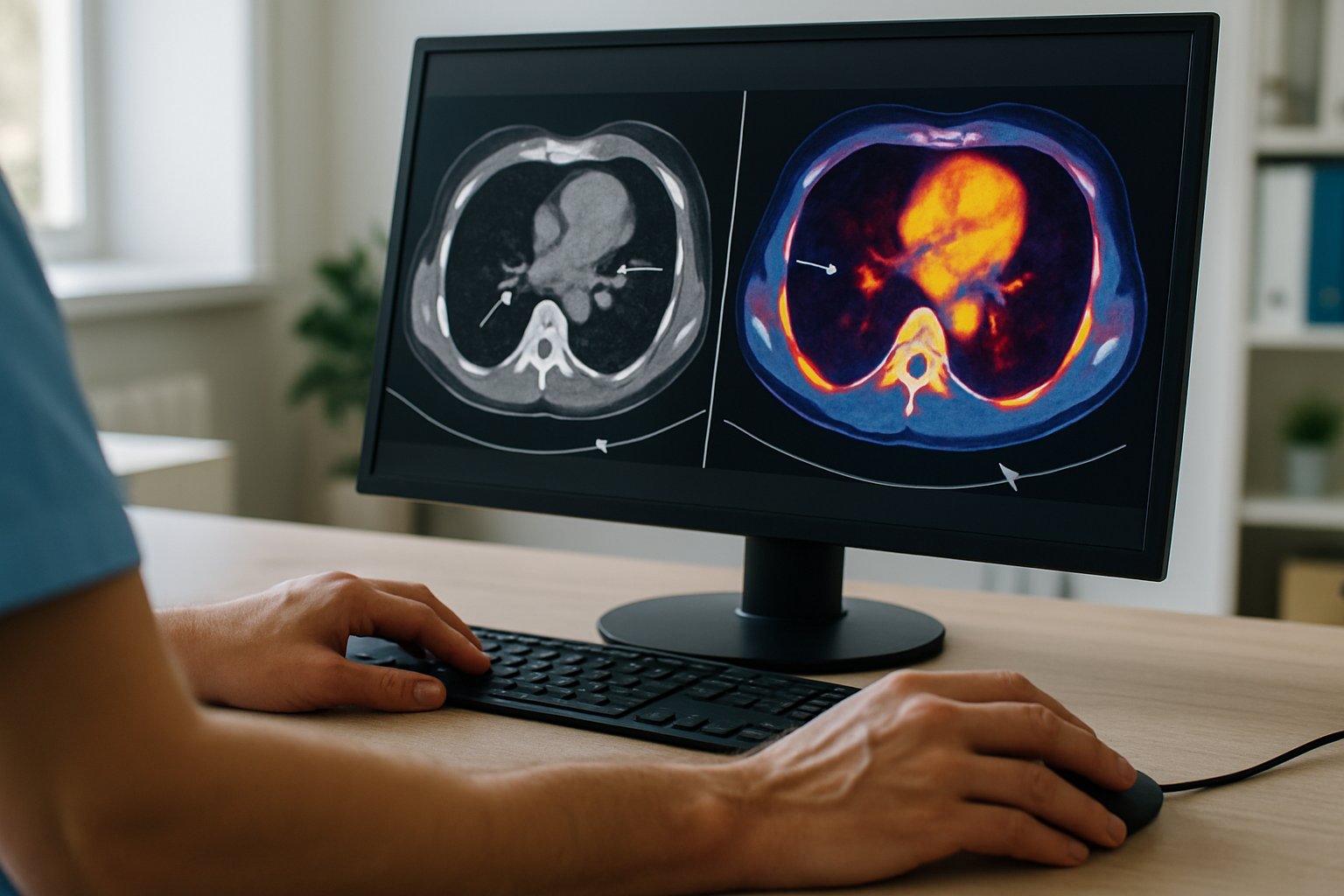
Computed tomography scanners are abundant, while PET capacity remains limited worldwide. Moreover, regulators insist synthetic images match quantitative performance standards. This article dissects the science, market forces, and regulatory hurdles shaping the emerging field. It also maps potential benefits for Oncology services, the wider NHS, and global health systems. Readers will gain data-driven context, expert insights, and actionable next steps. Therefore, stay with us as we unpack how Generative Imaging might redefine cancer diagnostics.
Global Market Access Gap
PET scanners number roughly 5,300 worldwide, based on IAEA IMAGINE data. In contrast, hundreds of millions of computed-tomography exams occur annually. Consequently, functional imaging remains geographically uneven and financially restrictive. OECD datasets show many nations operate fewer than four PET units per million residents. Meanwhile, scanner density often exceeds twenty anatomical units per million people. This disparity delays timely Oncology staging and treatment response assessments.
Moreover, the NHS faces lengthy waiting lists for fluorodeoxyglucose studies. Radiotracer production, scanner slots, and specialist staffing each constrain throughput. Therefore, an algorithm converting anatomical scans into synthetic physiology could unlock latent capacity. Cost models suggest operational savings by reallocating tracer expenditure to AI infrastructure. These numbers underscore why investors are funding translation efforts now. However, numbers alone never guarantee clinical viability. Rigorous scientific validation remains essential, as the next section explains.
Science Behind Image Translation
Synthetic physiology relies on paired CT and PET datasets collected under consistent protocols. Conditional GANs map voxel intensities to predicted standardized uptake values. Additionally, newer diffusion models promise sharper lesion boundaries and smoother noise profiles. RADiCAIT claims its architecture connects anatomical and functional domains through physics-informed loss functions. Salehjahromi's multi-center study demonstrated 0.85 lesion-level sensitivity across 1,478 lung cases. However, sensitivity dropped for small nodules below ten millimeters. SUV accuracy also varied across scanners, indicating calibration remains tricky.
Generative Imaging outputs must preserve SUVmax within clinically acceptable error margins. Researchers therefore publish open code and multi-site benchmarks to encourage reproducibility. Nevertheless, heterogeneous reconstruction kernels still degrade performance when models travel. The science is promising, yet it exposes technical debt requiring vendor attention. These realities set the stage for RADiCAIT’s commercial approach.
RADiCAIT Commercial Strategy Roadmap
RADiCAIT emerged from stealth in October 2025 with $1.7 million in pre-seed funds. Subsequently, the firm opened a $5 million seed round to finance FDA trials. Insilico PET targets lung Oncology pilots at Mass General Brigham and UCSF Health. Furthermore, leadership promises a cloud deployment that integrates directly with radiology PACS. Generative Imaging enables the software to ride existing scanner workflows without hardware upgrades. CEO Sean Walsh states the aim is "the same quality of decision" as tracer studies.
Meanwhile, CTO Sina Shahandeh highlights physics constraints embedded within training objectives. The company positions itself against capital-intensive hardware vendors, offering a subscription model instead. However, commercial success hinges on formal clearance and reimbursement, not early demos. The next section explores those validation hurdles.
Major Validation Challenges Persist
Peer-reviewed evidence proves concept feasibility yet exposes safety gaps. EJNMMI reports missed small or low-uptake lesions despite convincing global metrics. Consequently, regulators demand lesion-level sensitivity analysis rather than image-level fidelity alone. FDA authors also stress transparent provenance, calibration checks, and post-market surveillance. Generative Imaging systems therefore need continuous monitoring for dataset drift and unexpected artefacts. Quantitative reliability matters because clinicians rely on SUV thresholds for therapy decisions. Moreover, diverse scanner vendors use proprietary kernels that change noise statistics. These shifts can propagate bias into synthetic physiology outputs if unaddressed.
Validation must include multi-site, multi-vendor, prospective, blinded reader studies. Nevertheless, public ClinicalTrials.gov records for RADiCAIT remained absent at press time. Independent replication by academic groups will influence payer and NHS adoption. Thus, evidence generation remains work in progress, as our regulatory review details next.
Regulatory Pathway Unfolds Slowly
Medical device rules classify diagnostic software as moderate to high risk. Therefore, RADiCAIT must submit an investigational device exemption before pivotal studies. Subsequently, the company will likely pursue 510(k) clearance citing substantial equivalence. However, absence of predicate devices for synthetic physiology could force a de-novo pathway. Europe will require CE marking under MDR with performance evaluation across reference sites. Insurers also need health-economic data showing cost offsets for tracer service reduction.
Generative Imaging reimbursement codes do not yet exist, complicating national tariff negotiations. The NHS may pilot evaluation frameworks using radiology AI procurement guidelines. Ultimately, transparent protocols and public datasets will influence regulator confidence. These procedural steps feed directly into adoption considerations covered below.
Implications For Adoption Globally
Hospitals already owning scanners could deploy synthetic physiology without capital spend. Consequently, Oncology departments might triage patients faster and reserve chemical tracer studies for therapy planning. Moreover, rural sites lacking radiotracer logistics gain functional imaging capabilities overnight. A recent market survey projected billions in savings if thirty percent of scans shift. Generative Imaging advocates also highlight lower radiation dose because no tracer injection occurs. Nevertheless, clinicians warn against over-reliance until lesion-level sensitivity matches gold standards. Training and auditing frameworks must accompany rollout to maintain diagnostic governance.
Additionally, professionals can deepen knowledge via the AI-for-Everyone™ certification. NHS procurement teams will expect such credentials when assessing vendor proposals. Implementation pilots should include automated failsafe alerts and radiologist override buttons. Therefore, adoption equals technology plus governance, not technology alone. These adoption factors bring us to concise practical takeaways.
Key Takeaways Ahead Section
Below are distilled facts for quick reference.
- PET scanners: ~5,300 globally; CT scans: ~350 million annually.
- RADiCAIT funding: $1.7 million pre-seed, $5 million seed opening.
- Academic sensitivity: ~0.85 lesion-level; small nodules remain problematic.
- Regulatory status: FDA trial promised, no public ID yet.
- Adoption outlook: cost savings likely, validation gaps persist.
These points clarify opportunities and unresolved issues. Consequently, stakeholders should balance enthusiasm with methodical due diligence.
Conclusion And Outlook Ahead
Synthetic physiology promises to democratize molecular imaging. Generative Imaging may convert CT ubiquity into population-scale functional insight. Regulatory clearance, quantitation fidelity, and real-world sensitivity remain the decisive hurdles. Nevertheless, early pilots suggest workflow fit and patient acceptance are strong. Hospitals, vendors, and payers should collaborate on transparent trials and shared open datasets.
Meanwhile, clinicians can prepare by studying AI fundamentals and obtaining recognized credentials. Consequently, the field will advance faster with informed, multidisciplinary oversight. Explore the certification link and follow upcoming trial disclosures to stay ahead.


