

AI CERTs
2 months ago
Generative Campaign Optimization Engines Boost Marketing ROI
Marketers once struggled to balance creative testing speed with budget discipline. Today, generative campaign optimization engines deliver both at industrial scale. Consequently, performance marketers witness rapid uplifts in click-through and sales efficiency. Major platforms now embed these engines directly into bidding workflows. However, adoption still requires disciplined measurement and talent investment. Moreover, new data shows most U.S. CMOs already realize material returns. In contrast, legacy manual processes appear increasingly inefficient. Therefore, early adopters secure competitive advantage before regulation tightens.
This article explores how generative campaign optimization engines reshape ROI across Google, Meta, and Amazon. Additionally, we dissect fresh statistics, emerging risks, and proven governance practices. We also map opportunities for AI media buying teams seeking faster growth. Finally, readers will gain a practical action plan and certification pathways. Consequently, organizations can benchmark current programs against industry leaders. Nevertheless, understanding nuanced compliance issues remains essential. Moreover, conversion intelligence techniques now connect creative inputs with downstream sales attribution. Subsequently, they accelerate profitable expansion into new audience segments.
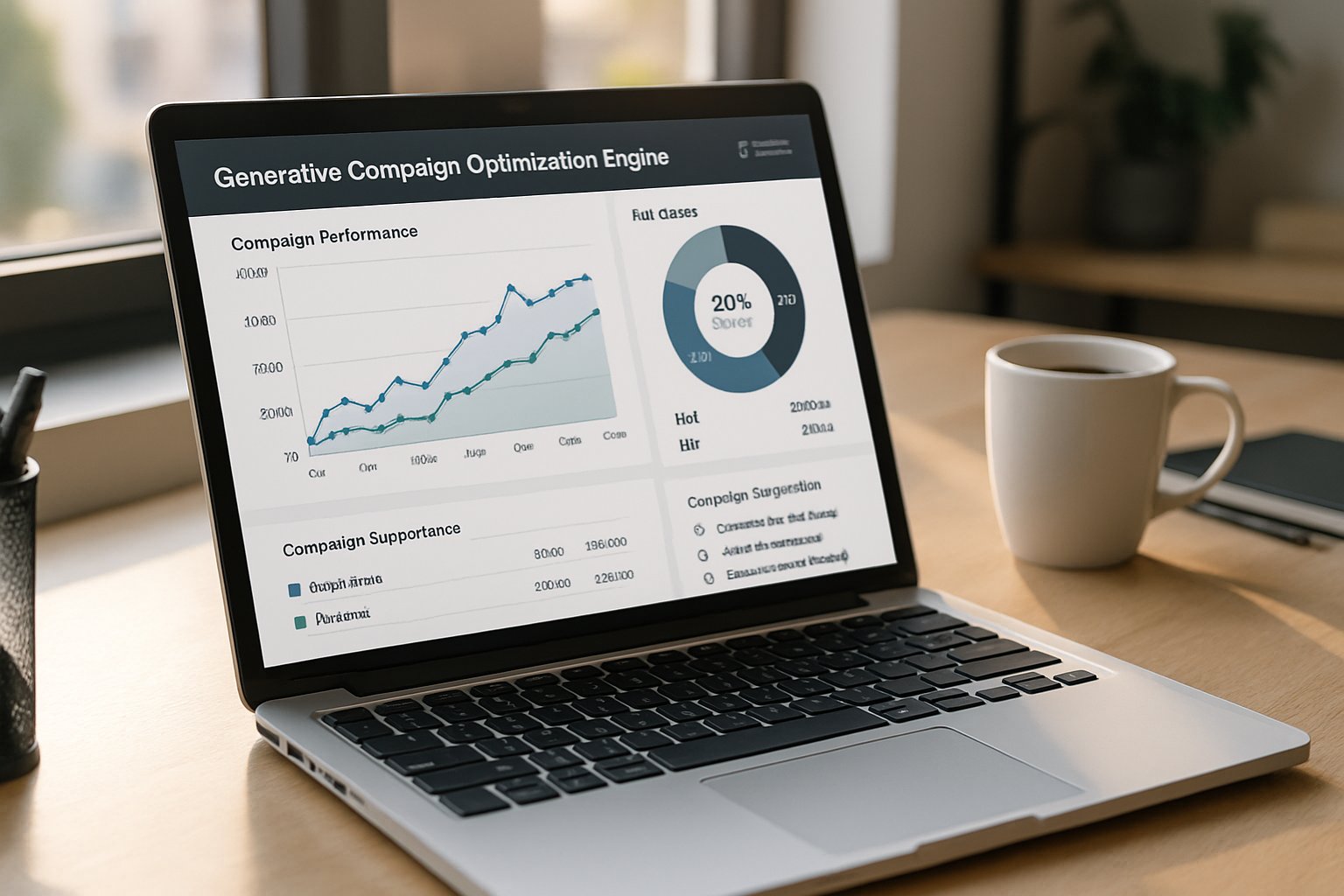
Platform Innovations Accelerate ROI
Google injected large language models into Performance Max during 2025 updates. Moreover, Asset Studio now fabricates images, headlines, and videos from simple prompts. Consequently, advertisers recorded over 10 percent more conversions in controlled tests. Such gains illustrate the direct power of generative campaign optimization engines. Additionally, Google's AssetGenerationService lets developers automate variant creation through the Ads API.
Meta's Advantage+ Creative layers reinforcement learning above foundational models. Furthermore, its AdLlama research delivered a 6.7 percent CTR improvement across 35,000 advertisers. Amazon followed quickly with Image, Video, and Audio Generators plus the Creative Agent pipeline. In contrast, legacy editors cannot match this velocity. Therefore, AI media buying teams gain unprecedented scale.
Creative Automation Advances Rapidly
Creative generation once consumed weeks; now it finishes in minutes. Generative campaign optimization engines unite creation, testing, and budget allocation in one loop. Consequently, microsegments receive tailored visuals and copy aligned with conversion intelligence approaches. Moreover, Amazon reports 10.3 percent higher ROAS when images are AI generated.
These platform advances prove that automation already drives measurable ROI. However, verifying results beyond vendor dashboards remains critical before scaling programs. In contrast, broader adoption data offers independent validation.
Adoption Data Validates Gains
Independent surveys confirm widespread U.S. adoption. For instance, SAS found 85 percent of marketers already deploying generative tools. Additionally, 93 percent of CMOs reported positive ROI. McKinsey models predict 5-15 percent marketing value uplift when programs mature. Consequently, finance leaders increasingly loosen budgets for experimentation.
- Google Performance Max: >10% conversion lift using generative campaign optimization engines.
- Meta AdLlama tests: 6.7% relative CTR jump in field experiments.
- Amazon Sponsored Brands: 10.3% ROAS increase using AI images.
- Forrester agency survey: 60% actively integrate generative workflows today.
Together, these results strengthen confidence in generative campaign optimization engines. Moreover, evidence spans multiple inventory sources, not limited walled gardens. Nevertheless, data also exposes measurement blind spots. Complex attribution threatens to obscure true incremental value. Conversion intelligence dashboards still struggle to connect creative tweaks with lifetime value.
The statistics paint a compelling, yet incomplete, picture of progress. Therefore, benefits must be weighed against evolving risk factors. Meanwhile, understanding those risk factors ensures responsible scaling.
Benefits Outweigh Current Risks
Generative campaign optimization engines cut creative costs and testing time dramatically. Furthermore, AI media buying processes now cover countless micro audiences without manual setup. Conversion intelligence features feed real sales signals back into model fine-tuning. Consequently, models optimize not only clicks but also profitability.
- Micro-personalization delivers relevant experiences at negligible incremental cost.
- Faster experimentation cycles surface winners within hours, not weeks.
- Higher ROAS emerges as budgets shift automatically toward proven variants.
McKinsey sightings show early adopters gaining 10-20 percent sales ROI improvements.
Governance And Measurement Challenges
However, governance maturity lags technology progress. Brand safety issues arise when models hallucinate product claims. Additionally, attribution derails when variant volume dilutes statistical power. Regulators now scrutinize synthetic endorsements and undisclosed image generation. Therefore, CMOs must enforce review gates, disclosures, and data lineage audits.
Benefits from generative campaign optimization engines remain significant yet depend on disciplined oversight. Subsequently, executives should formalize guardrails before accelerating deployments. Consequently, an actionable playbook becomes indispensable.
Action Plan For CMOs
Leaders should begin with a focused pilot covering one product line. Moreover, baseline metrics must be captured using clean-room or holdout methodologies. Next, activate generative campaign optimization engines within existing bidding frameworks. Meanwhile, enable AI media buying specialists to monitor creative and audience drift.
In contrast, scaling without governance invites legal and brand hazards. Thus, establish a cross-functional governance committee including legal, analytics, and creative leaders. Finally, scale generative campaign optimization engines across channels only after documented lift exceeds costs.
Talent gaps persist despite tooling advances. Professionals can enhance their expertise with the AI Developer™ certification. Such credentials reinforce technical credibility during vendor negotiations.
This playbook safeguards growth while protecting brand integrity. Nevertheless, continuous learning remains vital as algorithms evolve weekly. Therefore, final reflections clarify the road ahead.
Generative campaign optimization engines have crossed the tipping point. Moreover, independent statistics confirm durable uplifts in engagement and revenue. AI media buying leaders now pair these engines with robust conversion intelligence systems. Consequently, budgets move faster toward profitable segments while governance keeps brand claims honest. Nevertheless, success depends on vigilant measurement, transparent disclosures, and continuous skill upgrades.
Practitioners should start pilots, apply learnings, and pursue advanced training. Additionally, earning the linked certification sharpens technical fluency and career prospects. Therefore, your team will outpace competitors during the next budget cycle. Act today and drive your organization’s next growth chapter. Subsequently, share outcomes internally to secure continued executive sponsorship.


