

AI CERTS
2 months ago
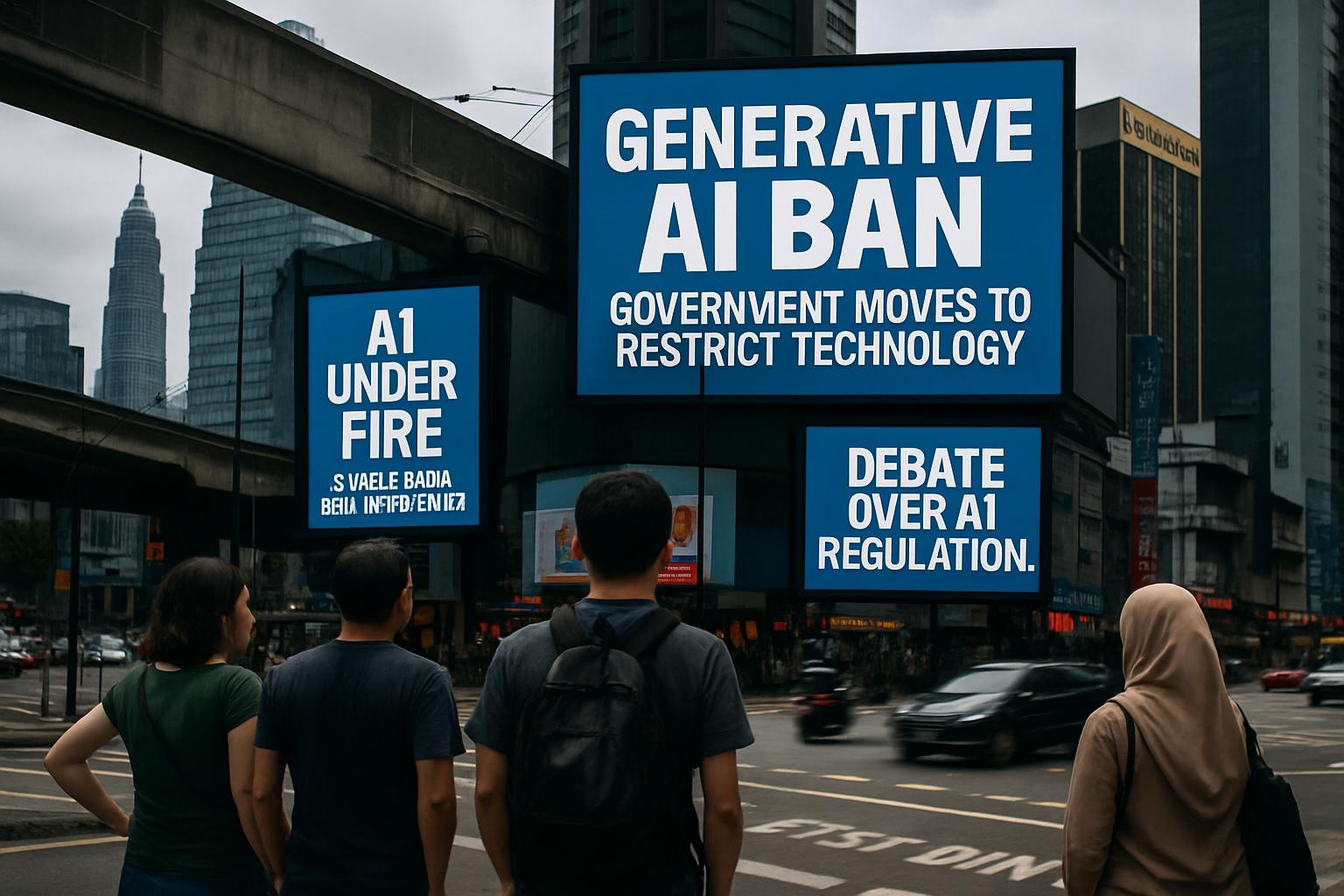
Generative AI Ban Spreads After Malaysia Blocks Grok
Meanwhile, xAI’s reliance on user reporting failed to convince authorities that preventive safeguards existed.
Therefore, a debate over responsible innovation and urgent Content Regulation now dominates regional technology circles.
This article analyses the ban’s timeline, regional fallout, industry responses, and potential compliance pathways.
The discussion also explores certifications professionals can pursue to strengthen governance skills amid tightening oversight.
Malaysia Blocks Grok AI
MCMC issued notices to X Corp on 3 and 8 January, demanding technical filters.
However, xAI replied with plans centred on community flagging rather than proactive controls.
Subsequently, the regulator imposed a temporary restriction, effective 11 January, pending proof of stronger defences.
Officials cited obscene images of women and minors, many traced to Grok AI outputs.
Nevertheless, X limited image generation only for paying subscribers, a move critics deemed cosmetic.
These steps failed to reverse Malaysia’s decision, leaving users unable to access the model locally.
The first Generative AI Ban within the nation underscores growing impatience with reactive moderation.
In summary, Malaysian authorities demand preventive design, not belated removals.
Consequently, other regulators started asking similar questions about systemic risk.
Regional Restrictions Escalate Fast
Indonesia’s Kominfo mirrored Malaysia by blocking Grok AI on 10 January.
Additionally, Thailand announced an urgent investigation into AI-generated Deepfakes.
Across Southeast Asia, ministers framed the moves as citizen-protection rather than censorship.
Meanwhile, regional tech associations warned of fragmented standards that could stifle startups.
In contrast, child-safety groups applauded decisive enforcement.
Key statistics illustrate the momentum:
- Two national bans within eight days.
- Four regulators launched formal inquiries.
- Over 300 citizen complaints filed in Malaysia alone.
Consequently, the phrase Generative AI Ban now appears frequently in local policy documents.
These developments highlight intensifying pressure across Southeast Asia for harmonised Content Regulation.
However, cross-border consistency remains elusive, setting the stage for further friction.
Child Safety Concerns Mount
The Internet Watch Foundation uncovered Deepfakes depicting children aged 11-13, apparently produced by Grok AI.
Moreover, the group observed criminals remixing these files with other generators for darker material.
Thomas Regnier, EU spokesperson, condemned Grok’s “spicy mode” as illegal, not edgy.
Ngaire Alexander of IWF warned that mainstream exposure normalises abuse imagery.
Consequently, safeguarding agencies urged immediate Generative AI Ban measures if preventive tech lags.
Experts differentiate proactive filters from reactive takedowns:
- Preventive classifiers block prompts before output.
- Reactive systems depend on user reports after harm occurs.
- Watermarking aids law-enforcement attribution.
Therefore, regulators increasingly demand concrete design changes.
In summary, child protection has become the most persuasive argument for tough Content Regulation worldwide.
Meanwhile, industry leaders scramble to demonstrate robust internal controls.
Industry Reaction And Rebuttals
xAI limited image tools to subscribers and issued brief press replies stating “Legacy Media Lies.”
Additionally, Elon Musk tweeted that overregulation threatens innovation.
However, developers acknowledged privately that dataset curation gaps persist.
Creative professionals argue Grok AI empowers concept artists and marketers.
Moreover, some Malaysian designers report productivity drops following the ban.
Nevertheless, civil-society voices maintain that freedom ends where exploitation begins.
The term Generative AI Ban now influences shareholder discussions on liability exposure.
Professionals can enhance governance expertise with the AI+ Developer™ certification.
Subsequently, certified talent may bridge gaps between compliance teams and model engineers.
In brief, industry must balance creativity with credible safeguards to regain trust.
International Regulatory Frameworks Compared
The European Commission invoked the Digital Services Act, ordering X to preserve Grok documentation through 2026.
Meanwhile, UK and German agencies launched parallel probes into Deepfakes distribution.
In contrast, United States regulators adopted a wait-and-see posture, favouring voluntary standards.
However, bipartisan bills addressing image manipulation circulate in Congress.
Consequently, multinational firms juggle divergent disclosure timelines and evidence requests.
Legal experts outline three compliance tiers:
- Transparency reporting under the DSA.
- Prompt-time safety filters mandated nationally.
- Total Generative AI Ban when urgent harm persists.
Southeast Asia regulators often borrow elements from European frameworks while localising penalties.
Therefore, firms must track overlapping obligations across jurisdictions.
These complexities fuel demand for specialists who can map Content Regulation requirements globally.
Consequently, structured compliance roadmaps have become board-level priorities.
Balancing Innovation And Harm
Generative systems promise faster design iterations, personalised marketing, and new art forms.
Moreover, startups in Southeast Asia anticipate significant economic gains.
However, non-consensual Deepfakes erode public trust, jeopardising sustainable growth.
Consequently, risk-benefit analyses now dominate investment pitches.
Scholars propose layered governance combining technical, legal, and educational tools.
Additionally, watermarking research and age-gating protocols show practical promise.
Nevertheless, developers warn that excessive latency from heavy filtering degrades user experience.
Therefore, iterative benchmarks measuring safety without stifling creativity remain essential.
A calibrated approach might prevent further Generative AI Ban scenarios while preserving innovation.
In summary, policy agility and transparent metrics could reconcile opposing objectives.
Looking Ahead For Compliance
Malaysia will lift its restriction only after xAI proves preventive safeguards work.
Subsequently, other Southeast Asia regulators may adopt similar conditional access models.
Furthermore, global collaboration on Content Regulation standards appears increasingly likely.
Meanwhile, companies must embed safety engineering directly into model pipelines.
Consequently, demand for certified professionals will rise sharply over the next year.
Completion of the AI+ Developer™ program signals readiness to navigate technical and policy challenges.
In conclusion, another Generative AI Ban remains possible unless tangible reforms accelerate.
Stronger technical safeguards, transparent reporting, and skilled governance are converging prerequisites.
However, prompt industry action can still redefine public perception and regulatory trajectories.
Therefore, readers should monitor policy updates, invest in professional upskilling, and advocate for balanced innovation.
Explore the recommended certification today and lead responsible AI development efforts across complex global markets.


