

AI CERTs
2 hours ago
Gender Bias Scandal: HR Bots Sideline Non-Binary Talent
Automated recruiting promised impartial screening. However, researchers now spotlight a widening Gender Bias Scandal tied to non-binary jobseekers. Field audits show measurable callback drops when resumes list they/them pronouns. Consequently, compliance officers face fresh pressure as regulators examine algorithmic tools that silently force binary labels. Moreover, vendors scramble to defend products once hailed as objective innovations. This article unpacks the mechanics, numbers, and looming liabilities.
Bias Roots In Automation
Applicant Tracking Systems parse nearly every Fortune-500 resume. Nevertheless, many parsers treat pronouns as noise or break formatting. In contrast, name-to-gender inference APIs misclassify every non-binary individual by design. Taryn Eames’ recent study confirms a 5.4-percentage-point decline in positive responses when they/them appears. Furthermore, Republican-leaning regions show even larger penalties. These findings convert abstract fears into concrete evidence.
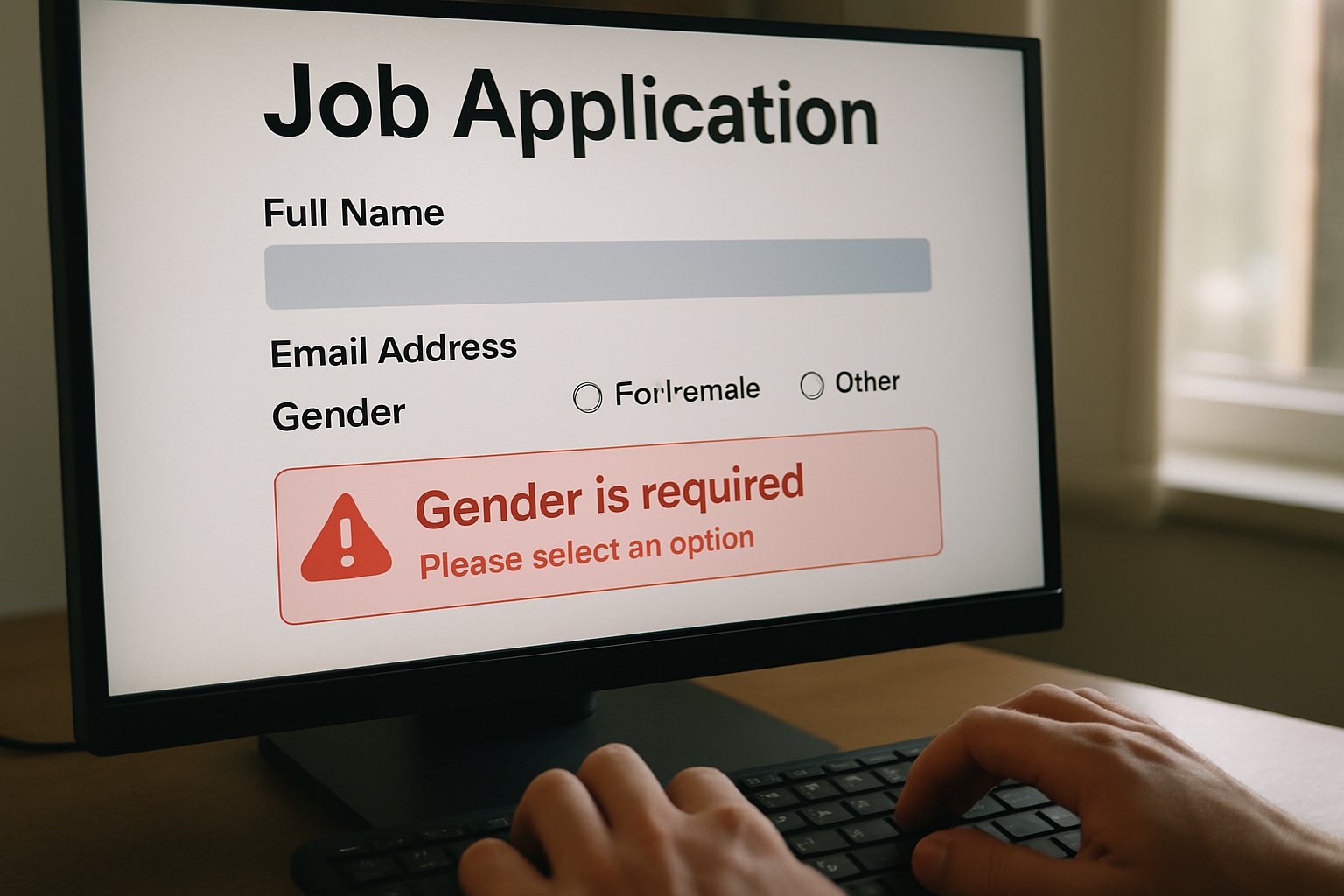
These technical flaws underpin the current Gender Bias Scandal. Consequently, misclassification propagates through ranking algorithms before human review even begins. However, few corporate leaders understand those hidden steps. The scandal’s foundation now looks systemic rather than accidental.
Flaws at the parsing layer intensify downstream discrimination. However, richer data helps expose patterns. The next section quantifies that impact.
Key Findings And Statistics
Audits and experiments outline consistent disadvantage. Moreover, numbers illustrate scope:
- Eames study: 5.4 pp callback drop, equal to an 18 percent reduction relative to baseline.
- Jobscan reports 97-99 percent ATS adoption among Fortune 500 employers.
- Name-gender inference tools show 4.6 percent overall error yet 100 percent misgendering for non-binary names.
- University of Washington research found LLM screeners favored white, male-associated names across rankings.
Additionally, an ACLU complaint filed March 19 2025 targets HireVue, alleging discriminatory scoring against a deaf Indigenous applicant. Regulators increasingly cite these numbers as proof of harm.
The statistics intensify the Gender Bias Scandal narrative. Therefore, stakeholders cannot dismiss issues as isolated glitches. These documented impacts set the stage for legal escalation.
Solid metrics drive policy debates. Subsequently, enforcement agencies have begun to react.
Legal And Regulatory Pressure
New York City’s Local Law 144 mandates annual bias audits for Automated Employment Decision Tools. Furthermore, employers must notify candidates when such tools influence decisions. Meanwhile, the EEOC’s AI Fairness Initiative signals federal scrutiny. Consequently, non-compliant firms risk penalties and reputational damage.
Litigation momentum grows. Moreover, civil-rights groups frame algorithmic exclusion as unlawful sex discrimination. The ACLU action against HireVue and Intuit marks an early test case. Nevertheless, legal experts expect more suits as affected workers recognize potential claims.
Regulators build leverage off the ongoing Gender Bias Scandal. Therefore, proactive mitigation becomes essential.
Mounting oversight reshapes vendor behavior. The next section examines how suppliers and human resources teams respond.
Vendor And HR Responses
Leading platforms now publish public audit summaries and promise configurable pronoun fields. However, independent testers still reveal parsing gaps. Workday, Greenhouse, and iCIMS issued statements affirming commitments to Equality and algorithmic transparency. Nevertheless, few disclose raw data that would confirm progress.
Internal HR teams run parallel reviews. Moreover, some revert to manual screening for finalist pools to reduce liability. Professionals can enhance their expertise with the AI+ Human Resources™ certification, gaining skills to audit algorithms effectively.
Despite public pledges, critics argue vendors monetize speed over Ethics. Consequently, mistrust fuels the broader Gender Bias Scandal.
Corporate action remains uneven. Therefore, structured mitigation offers a clearer roadmap.
Mitigation Steps For Teams
Organizations seeking fair Hiring can implement multilayer safeguards:
- Conduct third-party bias audits covering pronoun handling and name inference.
- Offer anonymous resume options during early screening rounds.
- Include non-binary training data when retraining ranking models.
- Publish transparent performance metrics segmented by gender identity.
- Establish appeal channels for applicants flagging misclassification.
Additionally, teams should limit reliance on inferred gender features entirely. In contrast, structured interviews reduce subjective weighting. Furthermore, consulting with affected communities enhances trust.
These actions counteract the technical root of the Gender Bias Scandal. Consequently, businesses demonstrate commitment to Equality and Ethics.
Effective safeguards address current liabilities. Subsequently, attention shifts toward future developments.
Forward Outlook And Actions
Experts predict deeper integration of generative AI into sourcing, assessment, and onboarding. However, without rigorous governance, amplified bias remains likely. Moreover, Local Law 144 may inspire parallel statutes in California, Illinois, and the EU. Consequently, global compliance frameworks will tighten.
Stakeholders tracking the Gender Bias Scandal should watch three indicators: upcoming EEOC guidance, vendor audit transparency, and new academic replications of Eames’ study. Additionally, business schools now teach algorithmic Ethics as a core leadership skill. Future leaders must unite technical literacy with inclusive strategy.
The road ahead carries uncertainty. Nevertheless, disciplined governance can steer automated Hiring toward genuine Equality.
Anticipating changes positions firms for success. Therefore, we conclude with key reflections.
Conclusion
The evidence is clear. Automated screeners, when left unchecked, sideline non-binary talent. Furthermore, audits, lawsuits, and new laws amplify accountability. However, organizations that invest in transparent processes and certified expertise can rebuild trust. Consequently, they convert a reputational hazard into a competitive advantage.
The Gender Bias Scandal will continue shaping compliance agendas. Nevertheless, informed leaders can act decisively. Explore additional resources and pursue relevant certifications today to strengthen inclusive recruiting pipelines.


