

AI CERTs
1 hour ago
Gemini Vision Brings Live AI Search to Google Home Cameras
Home monitoring just received a conversational upgrade. On 2 March 2026, Google activated Live Search inside its revamped Google Home app. The update lets premium subscribers ask natural questions about what their Nest devices see right now. Consequently, users can now ask, “Is someone at the door?” instead of scrolling through thumbnails. At the heart of this leap sits Gemini Vision, Google’s multimodal model tuned for domestic environments. However, the feature sits behind the Google Home Premium Advanced plan, priced at twenty dollars monthly. Industry analysts view the move as a subscription-driven bid to match Amazon Ring’s AI services. Meanwhile, privacy advocates already question how live video queries are processed and stored. This article unpacks the launch, business mechanics, technical layers, and emerging risks for smart-home professionals. Each section adheres to hard data and highlights actionable insights for integrators, vendors, and enterprise buyers. Finally, the coming paragraphs dissect where Gemini Vision succeeds and where caution remains essential.
Live Search Feature Debuts
Google announced Live Search through a thread by product lead Anish Kattukaran. Moreover, release notes pushed to the Play Store confirmed the staged rollout beginning 2 March. Advanced subscribers gain the toggle, driven by Gemini Vision, once their Google Home app reaches version 9.0. Supported devices initially include Nest Cam indoor, Nest Cam outdoor, and second-generation Nest Doorbell.
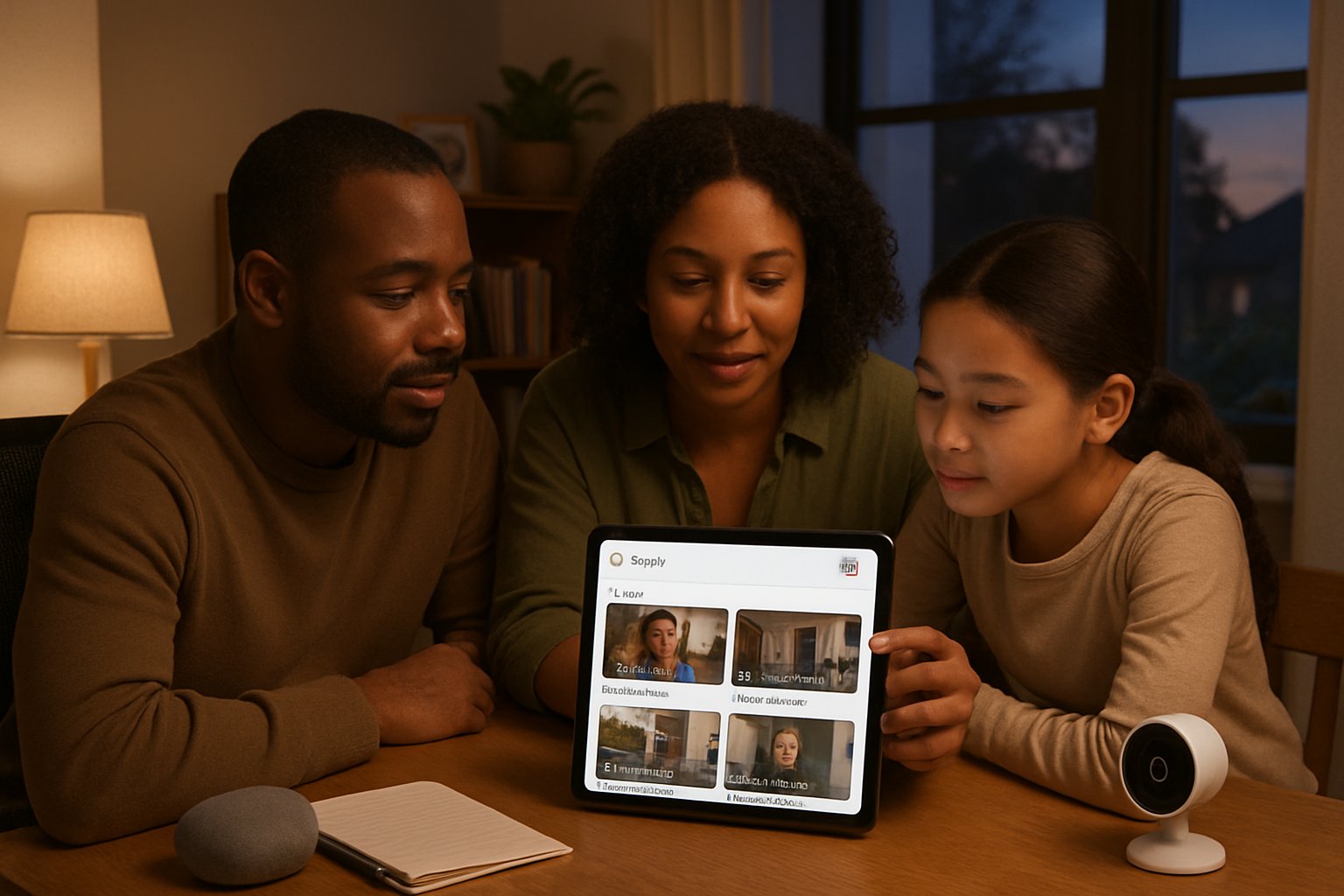
In contrast, Google has not supplied a definitive list for third-party Camera brands during launch week. Journalists tracking the build observed server-side flags that enable the feature per home structure. Consequently, households may see different activation timings even when running identical hardware.
Live Search therefore starts deliberately small, focusing on the most recent Nest hardware. These constraints set the stage for examining the payment layers that govern access.
Subscription Tiers And Costs
Monetization sits at the initiative’s core. Therefore, Google rebranded Nest Aware to Google Home Premium during October 2025. The service now divides into Standard at ten dollars and Advanced at twenty dollars per month. Only Advanced unlocks Live Search, continuous recording, and sixty days of event video history.
Furthermore, Google offers annual billing that shaves twenty percent from monthly equivalents. Market researchers predict subscription revenues for home vision services will exceed hardware margins by 2027. Gemini Vision forms the flagship justification for that higher price, especially among multi-Camera households.
Cost placement mirrors Ring Protect Plus, keeping competitive pressure balanced. Next, we inspect the technical stack powering those dollar signs.
Technical Layers Underpinning Feature
Gemini Vision operates as a multimodal large model combining language queries and frame classification. However, Google has not clarified whether inference runs fully on device or inside proprietary cloud GPUs. Engineers speaking off record suggest a hybrid flow similar to existing Nest descriptive notifications. Edge TPU chips handle early frame filtering, while cloud endpoints finalize object recognition for complex prompts.
Meanwhile, latency hovers near two seconds in lab tests performed by Android Authority reviewers. Bandwidth usage increases because continuous keyframes must reach Gemini servers for query readiness. Security teams should consider network segmentation to isolate Camera traffic from sensitive corporate VLANs.
The mixed architecture delivers speed yet deepens privacy unknowns. Those unknowns become clearer when considering user benefits and potential trade-offs.
Key Benefits For Homeowners
Live Search changes daily routines profoundly. Instead of pushing alerts, the system answers pull requests like, “Is my dog on the sofa?” Moreover, the assistant can trigger automations when specified objects appear or disappear from view. That capability enables lights to switch on when a package lands on the porch.
Top Convenience Use Cases
- Driveway occupancy checks during storms
- Package presence validation for couriers
- Pet monitoring while working remotely
- Gate status queries before bedtime
- Visitor identification during gatherings
Consequently, Gemini Vision reduces time spent scrolling through recordings. Additionally, the feature integrates with Nest routines, letting homes lock automatically when no person remains detected. Smart-home integrators can chain these events into Matter automations for cross brand coordination.
These advantages boost perceived value and justify subscription premiums. Yet added convenience always intersects with privacy and security obligations.
Privacy And Security Concerns
Every new sensor increases surveillance risk. Nevertheless, Google has not published a whitepaper detailing Live Search data retention policies. Researchers warn that conversational access could normalize constant observation by household members and guests. In contrast, Ring only answers queries about stored clips, not truly live streams.
Furthermore, regulatory scrutiny is rising after recent European proposals on biometric real-time monitoring. Security experts also question whether human reviewers may audit misclassified frames to retrain models. Gemini Vision remains impressive yet opaque regarding those review pipelines.
Unanswered questions could slow enterprise adoption until guarantees arrive. Our next section reviews market competition shaping those guarantees.
Competitive Smart-home Market Landscape
Smart-home adoption already exceeds fifty percent of United States broadband households according to Statista. Moreover, IDC forecasts double digit growth for connected Camera shipments through 2028. Amazon’s Ring Protect Plus offers package detection and person alerts for fifteen dollars monthly. However, Ring lacks conversational scene queries, leaving an opportunity for Google differentiation.
Arlo, Wyze, and Ecobee similarly monetise advanced detection but remain push-notification centric. Consequently, analysts frame Gemini Vision as a leapfrogging strategy, not mere parity. Pricing parity nevertheless prevents Google from claiming an unassailable lead.
Competitive pressure will likely accelerate feature releases across the sector. Professionals should therefore prepare for clients demanding equal functionality across heterogeneous ecosystems.
Action Points For Pros
Decision makers need clear next steps. Subsequently, we outline immediate actions for integrators, vendors, and enterprise IT.
Firstly, request Google’s technical disclosure regarding data flow, retention, and on device processing. Secondly, perform lab validation measuring latency, accuracy, and network impact across varied lighting conditions. Thirdly, draft client guidance that balances convenience with privacy protection and Security hardening.
Moreover, Gemini Vision knowledge will strengthen RFP responses where clients request future proof monitoring. These proactive moves protect reputations and expand revenue opportunities. Clear actions empower stakeholders despite technical ambiguities. Our conclusion synthesizes the broader narrative and invites further learning.
Recommended Skill Development Paths
- Enroll in the AI+ Researcher™ credential to master practical vision model evaluation
- Attend vendor webinars on smart-home interoperability standards
- Complete network segmentation courses for Camera traffic isolation
Conclusion And Outlook
Gemini Vision ushers Google Home into an era of conversational video intelligence. Live Search supplies undeniable convenience and differentiates Google within a crowded Camera subscription market. However, unresolved data-handling and security questions require continued scrutiny from journalists and integrators. Consequently, subscription economics may pivot on how transparently Google addresses those doubts.
Smart-home demand remains strong, giving vendors little time to delay competitive responses. Nevertheless, Smart-home professionals who validate performance early will capture first mover advantages. Consider formal training to sharpen evaluation frameworks and strengthen strategic recommendations. Start by reviewing the featured certification and deep dive into hands-on tests of the new release.


