

AI CERTS
3 hours ago
Garuda: Student AI Bike Turns Scrap Into Autonomous Superbikes
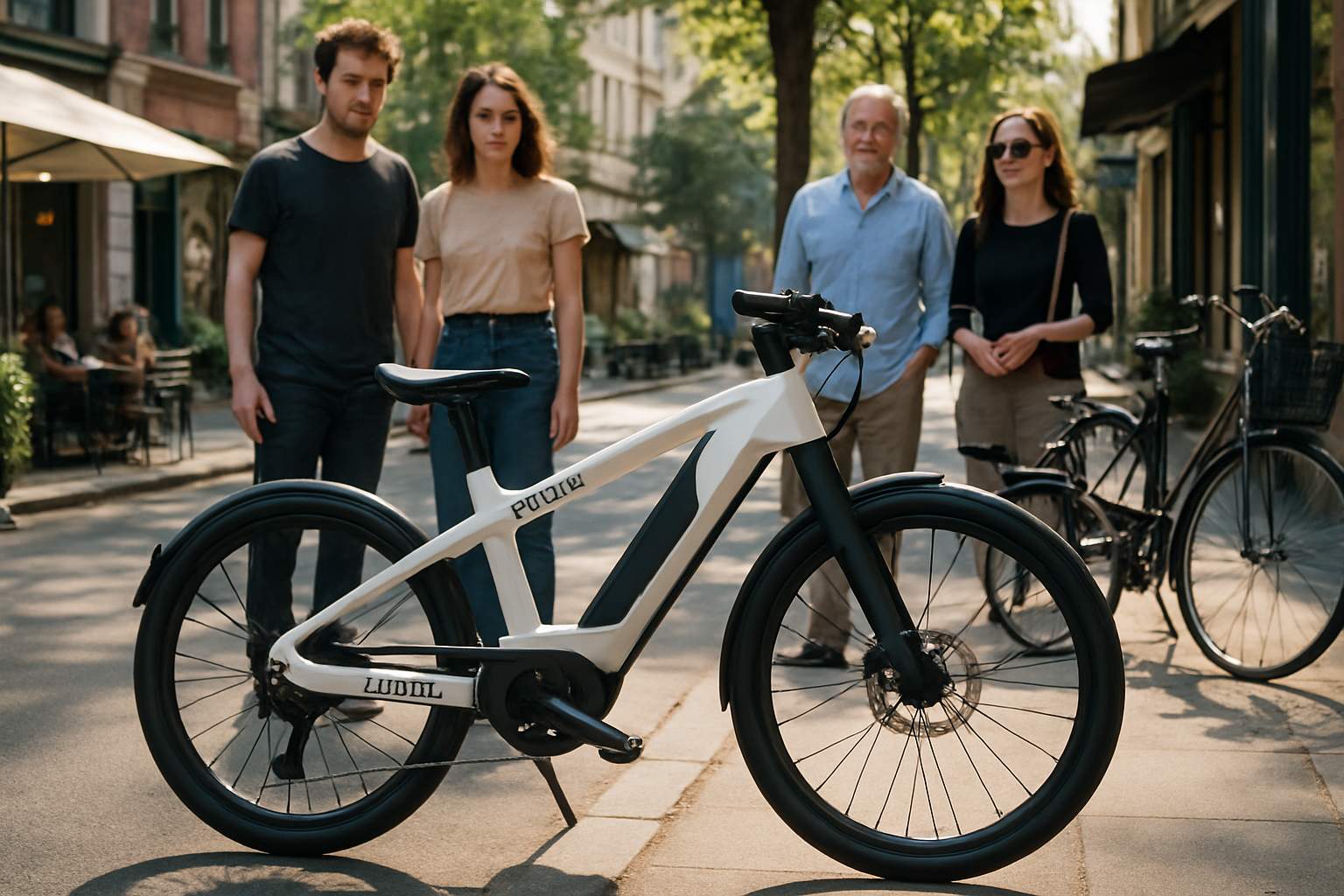
Meanwhile, sustainability advocates praise the clever reuse strategy that turned junkyard debris into a sleek superbike.
However, experts caution that the performance figures remain self-reported until independent testing occurs.
Therefore, this article unpacks the technical choices, sustainability angles, market context, and open questions surrounding the project.
Readers will also discover how emerging certifications can sharpen career prospects in this evolving field.
Viral Scrap Bike Innovation
December headlines from NDTV and India Today showcased Garuda within hours of the students posting their workshop footage.
Subsequently, the clip gathered millions of views, confirming the appetite for frugal engineering success stories.
In contrast, LinkedIn shares pulled corporate innovators into the conversation, widening potential collaboration networks.
The Student AI Bike thus became a case study in organic, social-media driven technology diffusion.
Garuda’s visibility reflects rising interest in accessible mobility research.
Consequently, deeper technical analysis is now essential.
Moving forward, we examine core features.
Core Bike Technical Features
At the heart lies a Raspberry Pi computer that processes sensor data and voice commands in real time.
Moreover, dual long-range sensors detect obstacles, prompting automatic deceleration or stopping within predefined distances.
The students integrated hubless wheels, a touchscreen dashboard, wireless phone charging, and camera feeds into the chassis.
- Eco mode range: 220 km per charge.
- Sport mode range: 160 km with higher torque.
- Recharge time: about two hours on standard outlet.
- Obstacle zones: slow at 12 feet; stop at 3 feet.
Nevertheless, these figures stem from internal tests and require third-party validation before industry adoption.
The Student AI Bike relies on this architecture to simulate autonomous support rather than full riderless operation.
Engineers reported using Python scripts for sensor fusion, executed directly on the Raspberry Pi.
Additionally, Wi-Fi connectivity lets the bike upload ride logs for post-run analysis using cloud dashboards.
Key hardware choices balance cost and functionality for early experimentation.
Consequently, sustainability impacts deserve equal attention.
That topic follows next.
Sustainability And Cost Drivers
Almost half the bike originates from scrap motors, frames, and discarded battery casings sourced locally.
Furthermore, the total spend reached only Rs 1.8 lakh, a fraction of comparable EV research budgets.
In contrast, established manufacturers invest millions before unveiling even an early prototype.
Garuda thus demonstrates that sustainable sourcing can coexist with cutting-edge experimentation.
The Student AI Bike consequently offers a visible model for campus programs promoting circular-economy engineering.
Local scrapyards supplied aluminum swingarms and steel tubing, minimizing transportation emissions and procurement delays.
Moreover, the team disassembled laptop battery packs to harvest healthy cells, then repacked them into balanced modules.
Cost discipline widens access for smaller labs and innovators.
Moving on, safety remains the decisive success factor.
Safety Systems Explained Clearly
Automatic braking on two-wheelers introduces stability challenges absent in four-wheel vehicles.
Moreover, motorcycles lean, making predictive control algorithms more nuanced.
Academic studies in Sensors journal highlight the need for multifocal vision and low-latency actuation.
Nevertheless, the project team claims their sensor suite handles city traffic using simple ultrasonic modules.
Vinod Desai, quoted in Bhaskar English, called the AI responsive and the battery surprisingly light.
The Student AI Bike would still require homologation before legal road deployment.
Researchers note that sudden front-wheel lock can destabilize riders, so the algorithm gradually applies regenerative braking.
Meanwhile, voice commands allow manual overrides, providing an extra safety layer during unpredictable city scenarios.
Safety validation stands between prototype glory and commercial reality.
Next, we survey broader market signals.
Market And Research Context
Analyst forecasts peg the autonomous bike market at USD 35.7 billion by 2035, with 34.9 percent CAGR.
Meanwhile, BMW’s riderless concept and Yamaha’s Motobot suggest strong OEM curiosity.
Furthermore, academic labs across India are prototyping rider-assistance systems tailored for congested roads.
The prototype enters this landscape as a grassroots proof of concept rather than a market-ready product.
Nevertheless, investors often scout viral breakthroughs for potential incubation.
The Student AI Bike showcases how frugality can intersect with venture narratives around sustainable mobility.
Consultants estimate that Indian two-wheeler owners log over 3 billion daily kilometers, presenting a vast automation opportunity.
Consequently, even incremental assistance features could generate significant social benefits and commercial adoption in populous regions.
Market signals encourage continued prototyping and verification.
However, technical hurdles remain significant.
Key Technical Challenges Ahead
Battery thermal management under tropical heat conditions remains untested.
Additionally, reliable steering control during sudden autonomous interventions requires rigorous track trials.
Regulators in India have yet to define safety standards for riderless two-wheelers.
Moreover, public acceptance studies warn about over-reliance on partial automation.
Professionals can benchmark these gaps by reviewing the certification frameworks emerging around AI robotics.
Consequently, strategic skill development becomes urgent.
The Student AI Bike will stall in laboratories unless such gaps close through structured testing and regulatory dialogue.
Sensor housings must endure monsoon rains, extreme dust, and continuous vibration, yet the current enclosures remain improvised.
In contrast, production vehicles undergo accelerated aging tests to simulate five years of abuse within months.
Resolving these issues will unlock safer deployments.
Next, we examine skill pathways.
Future Skills For Engineers
Market demand now favors engineers who blend robotics, power electronics, and sustainability literacy.
Consequently, many professionals pursue micro-credentials in applied AI and embedded systems.
Professionals can enhance their expertise with the AI Robotics Professional™ certification.
Furthermore, university incubators are partnering with industry to provide capstone projects on autonomous mobility.
Aspiring innovators often cite the Student AI Bike as motivation during these training modules.
Hackathons now encourage multidisciplinary teams to retrofit legacy scooters with low-cost perception kits derived from open-source designs.
Consequently, graduates familiar with ROS, CAN bus diagnostics, and life-cycle assessment enjoy widened hiring prospects.
Skill development links classroom theory and workshop reality.
Finally, the article concludes with actionable insights.
Final Takeaways And Action
Garuda proved that determined students from India can convert scrap into an eye-catching autonomous prototype.
The Student AI Bike captures global attention, yet validation remains the next critical milestone.
Moreover, sustainable design, low cost, and social media storytelling form a potent innovation recipe.
Consequently, engineers and investors should monitor independent range tests, safety audits, and regulatory developments.
Professionals seeking an edge can pursue the linked AI Robotics certification to gain practical, project-ready skills.
Take the next step today and transform your own concept into the world’s next Student AI Bike.


