

AI CERTS
2 hours ago
Gallup Workplace Adoption Survey Finds Surge in AI Use
This article unpacks the fresh numbers, industry contrasts, and worker sentiments behind the trend. Readers will also find practical steps and an industry certification that can boost AI readiness.
AI Workplace Use Deepens
Gallup fielded its latest workforce poll from Oct. 30 to Nov. 13, 2025. The firm surveyed 22,368 employed adults and reported a margin of error of one point. Moreover, the results paint a picture of entrenched behavior among existing AI users.
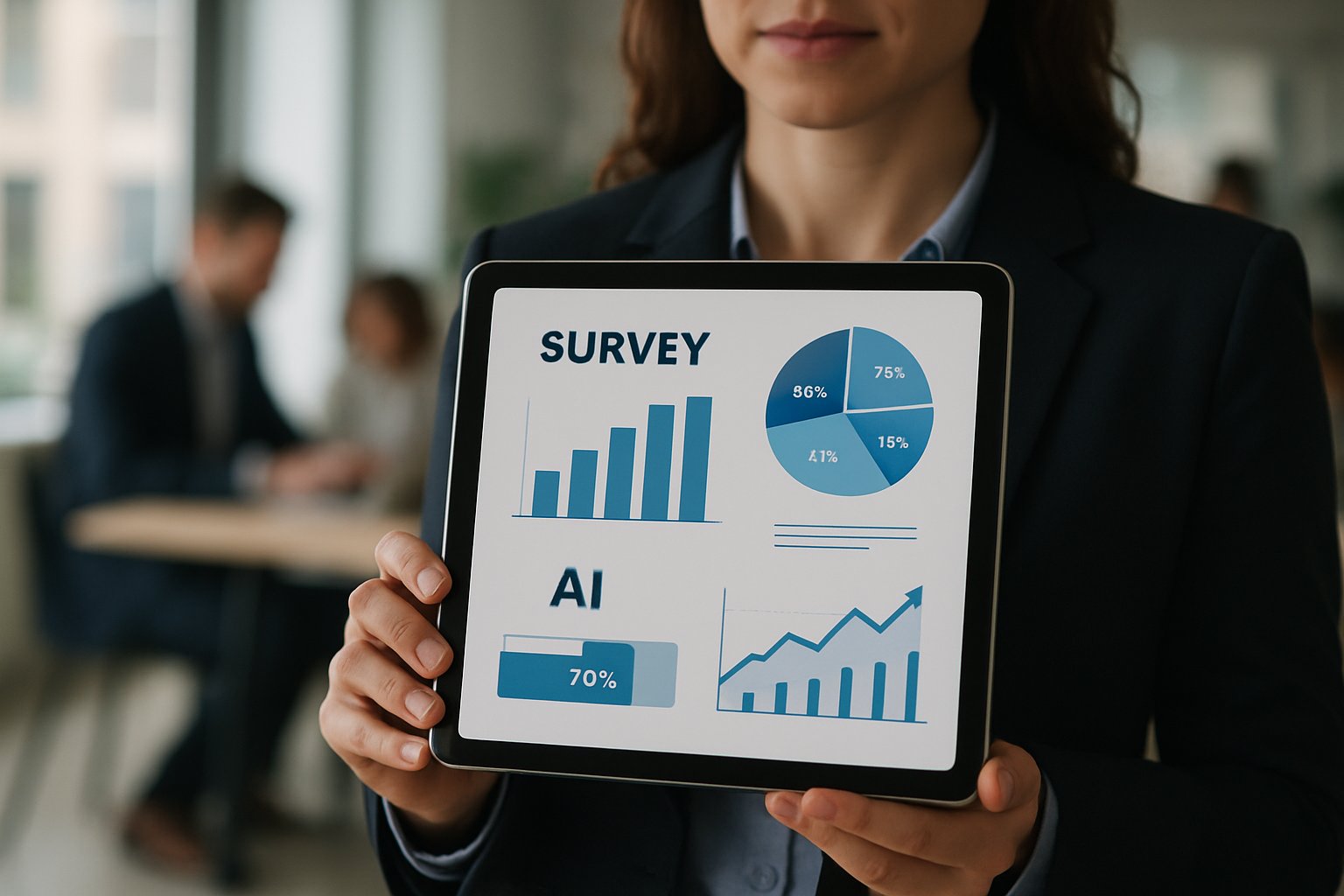
Daily usage reached 12 percent, up two points from the prior quarter. Frequent usage, defined as several times weekly, hit 26 percent. Meanwhile, 49 percent of employees still reported never touching AI at work.
These figures suggest intensity is rising among converts. In contrast, total reach shows signs of saturation that warrant closer scrutiny.
Key Poll Data Points
- Gallup’s Workplace Adoption Survey finds 12 percent Daily workplace AI use in Q4 2025.
- Twelve percent reflect a two-point gain over Q3, confirming momentum.
- Frequent use stands at 26 percent, marking a three-point quarterly rise.
- The Workplace Adoption Survey shows 49 percent of employees never use AI tools.
- Chatbots serve 61 percent of workplace users, topping all feature categories.
These headline metrics confirm deepening engagement. Subsequently, frequency trends clarify why averages mask sharp contrasts.
Plateau Masks Frequency Surge
Quarterly comparisons underline the pattern. Furthermore, frequent use climbed three points while overall penetration advanced only one point year over year. Therefore, the Workplace Adoption Survey indicates that organizations are squeezing more value from existing deployments.
Executives cite improved chatbots, code assistants, and knowledge summarizers as catalysts for deeper engagement. Consequently, training budgets now prioritize power users rather than first-time experimenters. Nevertheless, unchanged reach means many Workers remain untouched by these gains.
Deepening use can boost productivity yet also widen skill gaps. Subsequently, sector analysis reveals who benefits and who lags.
Industry Gaps Persist Widely
Gallup data show sharp variation across sectors. Tech and information services report 77 percent total users with 34 percent operating Daily. In contrast, retail, manufacturing, and healthcare hover near the mid-30s.
Moreover, finance and professional services approach 60 percent adoption, mirroring their knowledge intensity. Brookings researchers warn that exposed but vulnerable clerical Workers could face automation risks. Sam Manning estimates 6.1 million such employees, mainly older women, need reskilling support.
Industry divergence limits the macro productivity upside of AI. Therefore, raising public understanding becomes critical before wider rollout.
Public Awareness Still Low
The Gallup-Telescope population poll highlights a stark perception gap. Nearly every adult used an AI-enabled product last week, yet 64 percent missed that fact. Additionally, majorities fear misinformation, job losses, and weakened social ties.
Ellyn Maese calls this confusion a barrier to informed debate. Consequently, respondents support joint government and business responsibility for AI safeguards. Greater literacy would also help future Workplace Adoption Survey waves capture behaviour more accurately.
Public ignorance clouds risk assessment and slows policy momentum. Meanwhile, enterprise leaders still need actionable guidance.
Strategic Takeaways For Leaders
Management must focus on balanced scaling. First, identify high-value tasks where AI already delivers Daily efficiencies. Then, offer targeted coaching to transform occasional users into confident practitioners.
Second, extend access to lagging frontline Workers through simpler interfaces and job-specific templates. In contrast, knowledge specialists may need guardrails around data privacy and hallucination risks. Moreover, every program should measure frequency, not just enrollment, echoing the Workplace Adoption Survey approach.
Balancing Risks And Benefits
- Gallup respondents expect greater misinformation without guardrails.
- Workplace Adoption Survey highlights productivity gains from consolidation tools.
- Uneven adoption threatens equity across demographic groups.
- Targeted training narrows Daily proficiency gaps.
- Transparent metrics maintain trust with Workers and regulators.
Third, encourage continuous learning with micro-courses and recognized credentials. Professionals can enhance their expertise with the AI for Everyone™ certification. Consequently, formal validation reduces uncertainty for managers and staff.
These strategies translate survey insights into concrete workforce value. Subsequently, executives will want clear metrics for progress.
Looking Ahead And Measuring
Gallup plans another Workplace Adoption Survey release in mid-2026. Additionally, deeper cross-tabs will reveal whether stalled reach resumes growth. Therefore, leaders should track upcoming publications to benchmark progress.
Organizations can also run internal versions of the Workplace Adoption Survey to capture nuanced patterns. Consequently, customised dashboards help tie AI use to productivity, engagement, and retention. Meanwhile, public data provide industry context for every metric collected.
Regular measurement ensures resources target real gaps rather than perceived ones. In contrast, sporadic checks risk overestimating maturity.
Conclusion And Action Steps
Gallup evidence shows that AI use is thickening, not just spreading. Moreover, the Workplace Adoption Survey reveals Daily gains concentrated in knowledge sectors. Industry gaps, low public awareness, and exposed Workers remain pressing concerns. Consequently, leaders must pair targeted training with transparent metrics. They should also consult each new Workplace Adoption Survey wave for timely benchmarks. Finally, bolster workforce confidence through credentials like the linked certification. Act now, and transform data insights into sustainable competitive advantage.


