

AI CERTs
3 months ago
Future Innovation Experience Unites TCL and Microsoft AI
Smart screens are quickly becoming conversational companions. Consequently, device makers need cloud intelligence that scales across form factors. At CES 2026, TCL and Microsoft pushed that vision further. The partners unveiled their marquee phrase, the Future Innovation Experience, spanning televisions, phones, and appliances. Moreover, they framed the rollout as the next logical step after NXTPAPER’s 2024 debut. Microsoft will supply Azure OpenAI, Foundry models, and Copilot while TCL orchestrates hardware. Meanwhile, analysts view the tie-up as proof that generative AI is escaping laptops. Market data shows TCL shipped 29 million TVs in 2024, validating the installation base. Therefore, any software layer riding those screens can influence everyday consumer habits. However, large models introduce privacy, latency, and regulatory challenges that demand scrutiny. This article examines technical foundations, business metrics, and competitive context behind the alliance. Readers will also see how design leaders can prepare for multimodal futures.
Partnership Signals Market Shift
Firstly, TCL and Microsoft formally signed their strategic agreement at IFA 2024. Subsequently, the partnership expanded at CES 2026 to include TVs, wearables, and connected appliances. Azure OpenAI, Azure Speech, and Copilot compose the technology stack running behind each interaction.
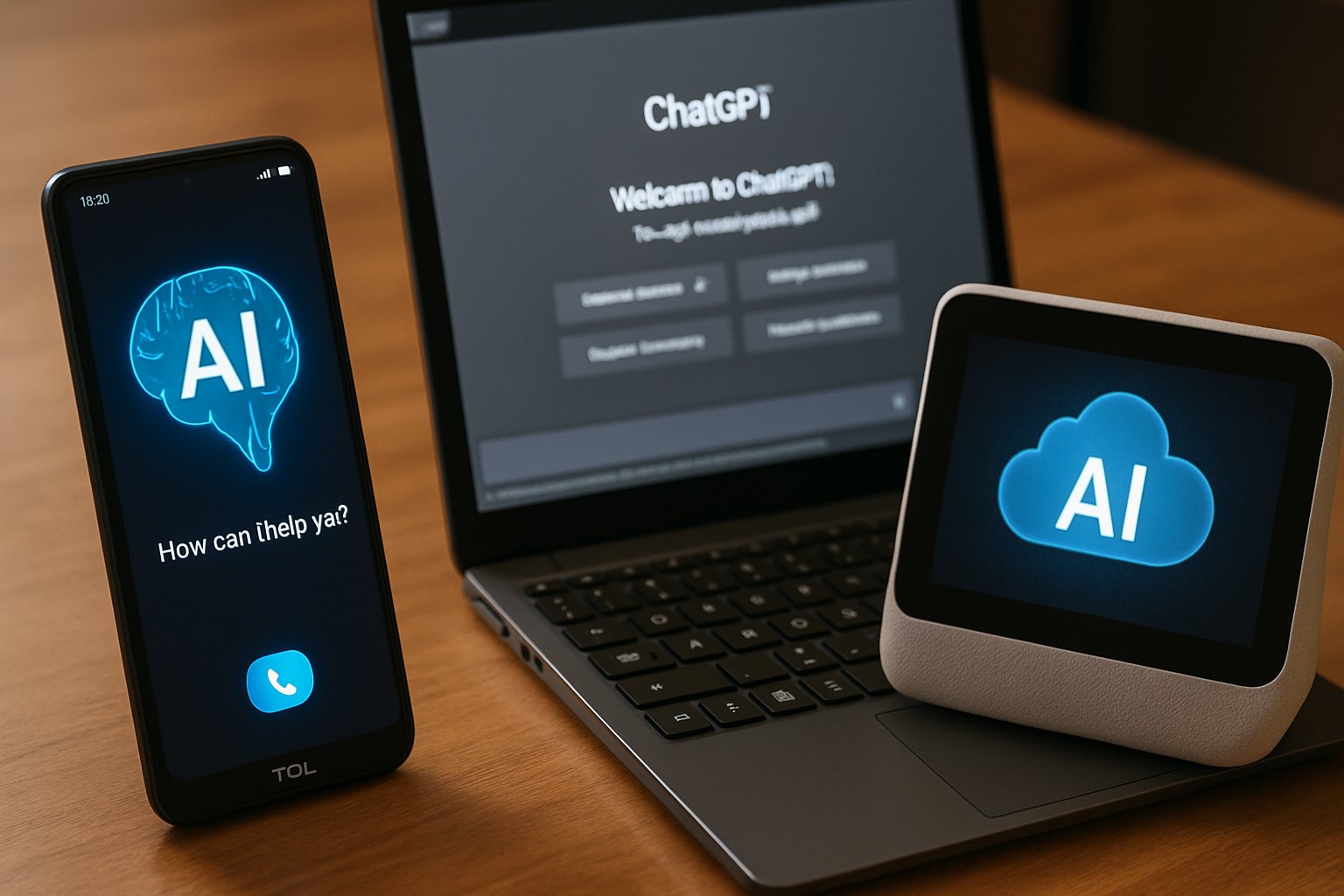
Industry watchers label the collaboration a “Copilot Everywhere” exemplar. In contrast, Samsung adopted similar architecture one year earlier for its 2025 televisions. Nevertheless, TCL controls a 13.9% global shipment share, granting critical scale for experimentation.
The Future Innovation Experience aims to inject context awareness, summarization, and translation into living room scenarios. Furthermore, executives claim the approach will shorten feature deployment across product lines.
These milestones underscore a widening OEM-cloud symbiosis. Consequently, leaders must track governance implications as scope grows.
Multi-modal Design Principles
Designing voice, vision, and text workflows requires disciplined Multi-modal Interface Design from the outset. Moreover, TCL surfaces AI features through subtle UI cues rather than disruptive pop-ups. Buttons labelled “Assist” on NXTPAPER phones open Copilot with the active content context.
Microsoft recommends a hybrid pattern where lightweight on-device models handle wake words. Meanwhile, heavier reasoning, grounded through Foundry, occurs in the cloud to preserve battery.
Experts advise designers to map latency budgets, error recovery states, and privacy disclosures early. Therefore, Multi-modal Interface Design should align with regional compliance constraints like GDPR or PDPA. That alignment feeds directly into the Future Innovation Experience promised on stage.
Sound design disciplines improve trust and engagement. Subsequently, they set the stage for richer cross-device continuity.
Cross-Platform AI Roadmap
TCL promises feature parity across phones, TVs, tablets, and refrigerators. Consequently, a Cross-Platform AI approach underpins roadmap decisions.
Shared Azure identity tokens allow Copilot to remember preferences and handoff tasks between screens. Moreover, Foundry hosts over 11,000 models, giving engineers modular choices per device class.
Key 2026 rollouts include:
- Smart TV captions generated by large language models for live sports.
- NXTPAPER phones offering offline summarization with on-device TinyBERT.
- Wearable earbuds translating conversations through Cross-Platform AI sessions.
- Appliances projecting recipe steps via voice and vision fusion.
- A consolidated dashboard branded Future Innovation Experience for household management.
Nevertheless, consistent updates demand rock-solid DevOps and regional staging.
Unified architecture enables seamless experiences. Therefore, product managers must budget for significant backend monitoring. Next, we inspect the business metrics driving investment.
Business Metrics Underpin Strategy
TCL reported 2024 revenue of HK$99,322 million, rising 25.7% year over year. Furthermore, Mini-LED shipments hit 1.7 million units, giving TCL 22.5% category share.
Meanwhile, Canalys noted global cloud spending climbed to roughly US$330 billion in 2024. Azure captured about 20% share, with AI services credited for momentum.
Consequently, the Future Innovation Experience aligns TCL hardware growth with Microsoft consumption targets. Analysts expect OEM-cloud revenue sharing to evolve toward subscription upsells or ad-supported models.
Financial indicators validate aggressive AI rollouts. However, finances matter little if users distrust data handling. Therefore, potential risks deserve equal attention.
Privacy And Latency Concerns
Embedding cloud assistants forces new privacy negotiations with consumers. Nevertheless, TCL says all data transfers within the Future Innovation Experience follow consent-first workflows and regional laws.
Microsoft offers private endpoints and encryption, yet traffic still leaves the device. In contrast, some competitors opt for fully offline models, sacrificing reasoning depth.
Latency also shapes perception. Foundry plans combine on-device wake-word engines with cloud forecasting to mask delay.
Industry reviewers will test translation speed and transcription accuracy once firmware ships.
Transparent opt-ins and hybrid models can build confidence. Subsequently, attention shifts to policy and competition dynamics. Let us examine the regulatory environment.
Competitive And Regulatory Landscape
Regulators already scrutinize Microsoft cloud dominance. Reuters reports Google filed an EU complaint in 2024 about alleged bundling practices.
Consequently, any OEM relying heavily on Azure must anticipate potential region-specific restrictions. Samsung faced similar questions after announcing Copilot televisions in 2025.
Moreover, antitrust debates intersect with data residency demands, especially across Europe and Asia.
The Future Innovation Experience could face feature gating if legal challenges intensify.
Monitoring regulators helps companies pre-empt compliance shocks. Therefore, strategic planning must stay flexible. Finally, professionals can prepare their careers for the coming wave.
Skills Development Opportunities Ahead
Product teams need deeper expertise in Multi-modal Interface Design and prompt engineering. Moreover, Cross-Platform AI orchestration skills will differentiate candidates in device companies and consultancies.
Professionals can validate skills through the AI+ UX Designer™ certification.
Furthermore, workshops on usability testing for large language interfaces are gaining traction. Ultimately, these skills ensure teams can ship features that embody the Future Innovation Experience vision.
Continuous learning keeps teams ahead of rapid platform shifts. Consequently, readiness translates into faster product cycles.
Conclusion And Next Steps
In summary, TCL and Microsoft are transforming everyday hardware through the Future Innovation Experience. Moreover, disciplined Multi-modal Interface Design and Cross-Platform AI will dictate user satisfaction. Financial metrics justify the investment, yet privacy and regulation remain pivotal. Nevertheless, proactive governance can preserve momentum. Therefore, leaders should monitor rollouts, refine design playbooks, and invest in talent.
Explore certifications, evaluate emerging tools, and contribute to shaping the next Future Innovation Experience for global consumers.


