

AI CERTS
2 months ago
Foundation Giving: OpenAI’s $40.5M Impact
However, questions persist about transparency, governance, and alignment with the Foundation’s massive $25 billion pledge. This article unpacks the numbers, explores community impact, and analyzes the strategic implications for grantmakers and practitioners. Moreover, it weaves in actionable insights for professionals seeking to navigate an evolving funding landscape.
OpenAI Steps Up Philanthropy
Grant Numbers Fully Explained
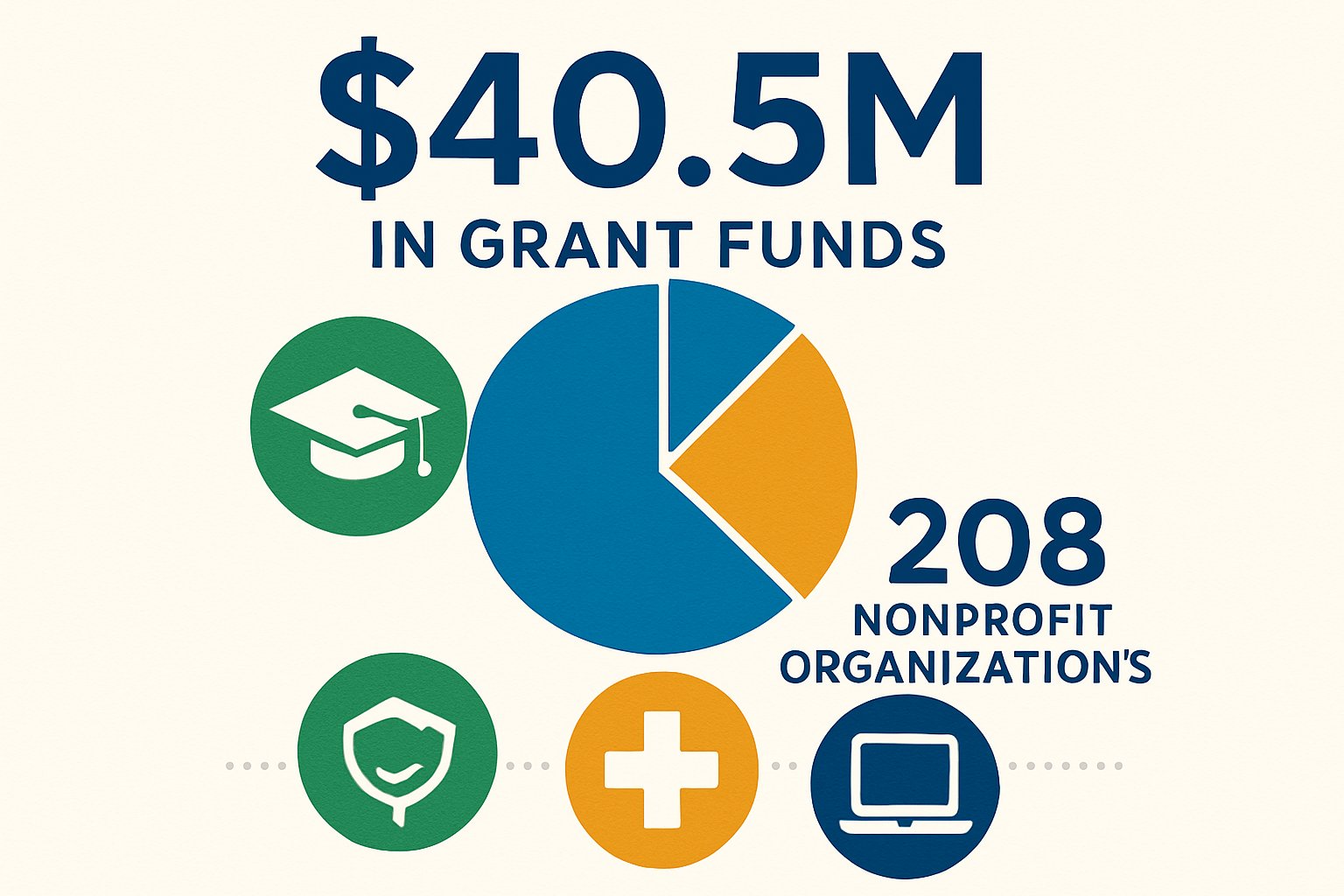
The People-First AI Fund marks the Foundation’s first major injection since its October 2025 recapitalization. OpenAI awarded $40.5 million to 208 recipients, representing every U.S. region. Meanwhile, nearly 3,000 organizations applied during the month-long window. Therefore, the approval rate hovered near 7%.
Furthermore, awards are unrestricted, allowing flexible deployment toward staffing, technology, or program expansion. Bret Taylor, Foundation chair, stated that the fund “supports a wide range of organizations advancing work that strengthens communities.” In contrast, most corporate philanthropy restricts line-item spending.
Foundation Giving now operates at a pace rarely seen among AI-aligned donors. Additionally, a second board-directed wave worth $9.5 million is expected soon. These upcoming grants will push total 2025 disbursements to the originally promised $50 million.
Key takeaways: OpenAI combined speed, scale, and geographic diversity to launch its philanthropic era. However, deeper analysis of the selection process provides further context.
These points set the financial stage. Subsequently, we turn to how recipients were chosen.
Key Selection Process Details
Eligibility And Review Steps
Applicants needed 501(c)(3) status, annual budgets above $500,000, and below $10 million. Therefore, mid-sized community institutions dominated the pool. Notably, prior AI experience was optional, widening access to arts, health, and journalism groups.
- Application window: 8 September – 8 October 2025
- External advisors: 60 independent reviewers
- Foundation board: Final approval authority
Additionally, reviewers assessed mission alignment, community leadership, and potential for scalable impact. Consequently, a multi-step vetting compressed months of due diligence into eight weeks. OpenAI emphasized accelerated timelines to ensure funds reach grantees before year-end.
Foundation Giving surfaced as a competitive, yet transparent, opportunity. Nevertheless, critics ask whether compressed evaluations can fully capture longer-term risk.
These procedural insights clarify rigor and speed. In contrast, recipient stories reveal on-the-ground influence.
Deep Community Impact Insights
Diverse Voices From Grantees
Lindsey Nova, executive director of Three Rivers Young People’s Orchestras, told the Associated Press that her $90,000 grant will fund AI-infused music education. “It’s a tool for good,” she added. Moreover, rural health clinics in Montana plan to deploy conversational triage software, while Native-led media collectives intend to bolster digital sovereignty.
OpenAI’s grantee list spans youth coding bootcamps, investigative journalism outlets, and agricultural cooperatives. Consequently, the fund aims to seed AI literacy across divergent missions. Furthermore, unrestricted support lets leaders pivot as community needs evolve.
Foundation Giving now intersects with sectors traditionally excluded from advanced technology conversations. This inclusive approach could democratize AI benefits. However, sustaining momentum requires clear governance structures, explored next.
Community anecdotes highlight early promise. Nevertheless, governance debates remain unresolved.
Ongoing Governance Questions Persist
Equity And Oversight Dynamics
TechCrunch and the Financial Times note governance tension inside the revamped structure. The Foundation owns equity in the for-profit OpenAI Group PBC. Therefore, successful commercial performance expands philanthropic resources. In contrast, critics warn about mission drift if revenue priorities overshadow community benefit.
Additionally, observers seek transparency on conflict-of-interest safeguards. The Foundation has yet to publish a detailed roadmap for its $25 billion commitment toward health and AI resilience. Consequently, watchdogs press for clearer metrics, timelines, and external audits.
Yet, the current $40.5 million rollout demonstrates operational capacity. Moreover, unrestricted Grants reduce administrative burdens on grantees, signaling trust-based Philanthropy.
Foundation Giving gains credibility from decisive action. Nevertheless, long-term legitimacy depends on consistent reporting and continued stakeholder engagement.
Governance scrutiny shapes public perception. Subsequently, comparing actual disbursements with headline pledges offers perspective.
Comparing Pledge Scale Realities
Program Pace Versus Promise
The headline $25 billion pledge eclipses most sector commitments. However, only $50 million enters communities during 2025. Therefore, the deployment rate represents 0.2% of the total promise.
Furthermore, philanthropic historians note that large pledges often roll out over decades. In contrast, critics argue accelerated AI disruption demands quicker response. Additionally, unrestricted Funding can only drive impact if sufficient volume reaches frontline organizations.
Foundation Giving, while substantial, remains a small fraction of OpenAI’s stated ambition. Nevertheless, early execution may build processes needed for larger waves.
This scale comparison underscores urgency and realism. Consequently, sector leaders must extract strategic lessons.
Scale analysis informs planning. Now, we pivot to actionable takeaways.
Critical Strategic Takeaways Ahead
Key Insights For Leaders
Firstly, flexibility matters. Unrestricted Grants empower swift adaptation amid evolving community demands. Secondly, compressed application cycles attract fresh actors by minimizing resource strain. Moreover, multi-stakeholder reviews balance speed with due diligence.
Thirdly, transparent communication is vital. Stakeholders crave clarity on selection metrics, disbursement schedules, and impact reporting. Therefore, funders should publish dashboards detailing progress. Finally, pairing cash support with capacity-building resources ensures sustainable outcomes.
Foundation Giving illustrates these principles through its debut program. Consequently, practitioners can replicate similar models within regional ecosystems.
The strategic lessons shape future initiatives. Subsequently, professionals may consider upskilling to navigate AI-driven philanthropy.
Upskilling Paths For Practitioners
Certifications That Add Value
Sector professionals increasingly manage AI-enabled programs and data-intensive evaluations. Therefore, continuous learning becomes essential. Professionals can enhance their expertise with the AI Network Security™ certification. Moreover, such credentials provide frameworks for ethical deployment, risk assessment, and technical oversight.
Additionally, grantee staff benefit from structured training in prompt engineering, bias mitigation, and data stewardship. Consequently, certified talent accelerates nonprofit innovation while safeguarding beneficiary interests.
Foundation Giving gains maximal impact when skilled practitioners translate resources into measurable outcomes. Nevertheless, organizations must allocate time and budget for professional development.
Upskilling closes capability gaps. Therefore, the article concludes with a concise overview.
Conclusion
OpenAI’s People-First AI Fund demonstrates decisive Foundation Giving at scale. The $40.5 million disbursed to 208 non-profits showcases rapid, unrestricted Grants that prioritize community leadership. Furthermore, inclusive eligibility widened access beyond typical tech circles. However, governance transparency and pledge pacing remain critical watchpoints. Consequently, sector leaders should monitor forthcoming board-directed allocations and published metrics.
Moreover, practitioners must pursue continuous learning, leveraging certifications to guide ethical, effective AI adoption. Engage with evolving standards, strengthen institutional readiness, and champion community-centric innovation. Explore advanced credentials today and position your organization to thrive in the next wave of AI-powered philanthropy.


