

AI CERTs
2 hours ago
Ford’s Fleet Telematics Assistant Redefines Commercial Operations
Time pressures are squeezing fleet managers like never before.
Data floods dashboards, but actionable insight often hides.
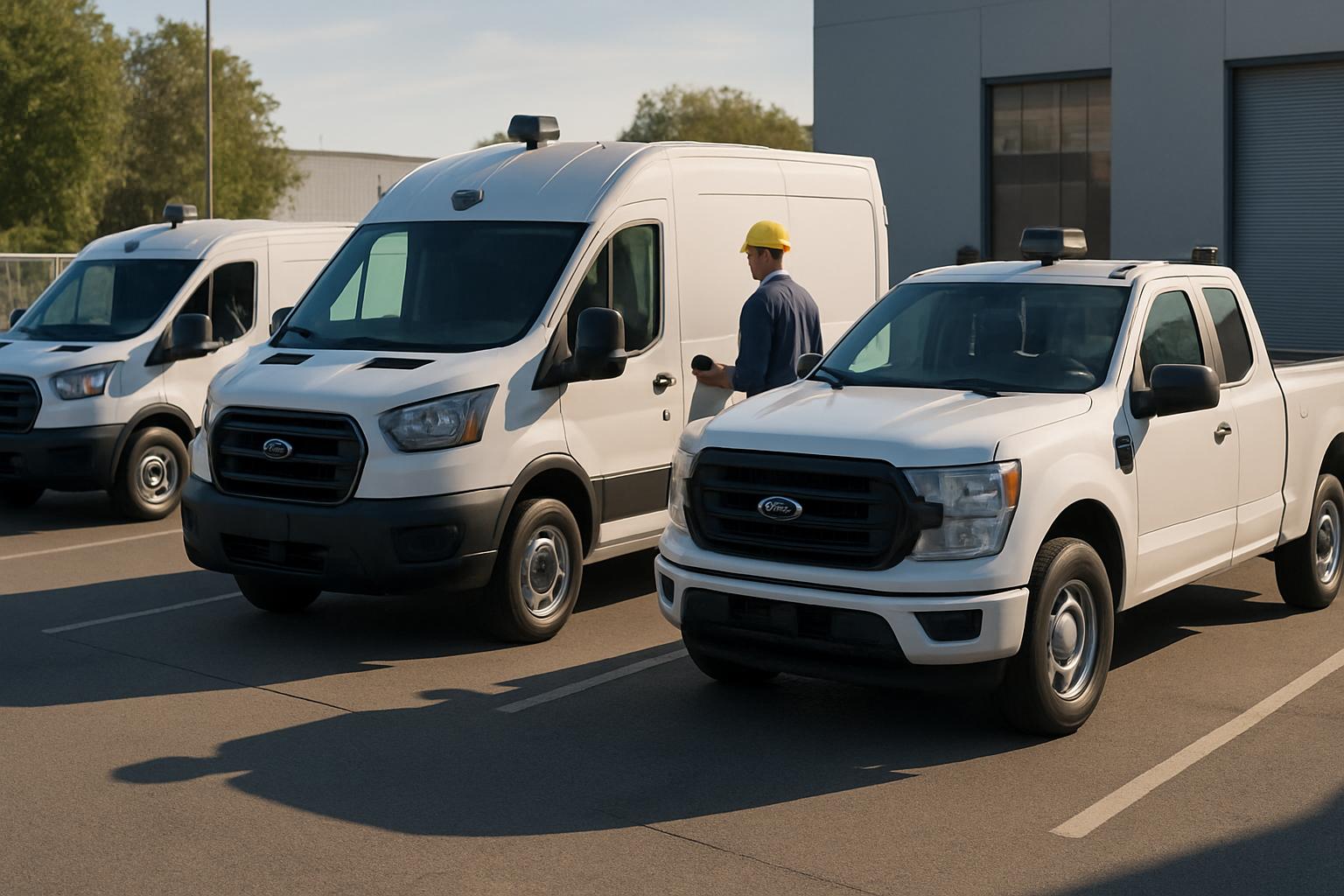
Consequently, many leaders crave tools that translate raw telemetry into clear direction.
Ford recently answered that call with a conversational analytics layer inside its telematics platform.
The new Fleet Telematics Assistant promises faster answers, safer operations, and lower costs.
Powered by Google Cloud, the assistant leverages more than a billion daily vehicle signals.
Moreover, the tool arrives without added hardware or subscription fees for existing users.
Analysts predict AI driven telematics will soon become table stakes across the sector.
This article unpacks the launch, technology, and business impact for commercial fleets.
Along the way, we examine competitive context, privacy debates, and implementation tips.
Read on for a pragmatic, data-driven view of this emerging capability.
Global Telematics Market Shift
Worldwide demand for fleet software continues to rise at double-digit rates.
MarketsandMarkets forecasts multi-billion growth through the decade, fueled by electrification and tight margins.
Meanwhile, commercial fleets face rising labor, fuel, and compliance costs that intensify efficiency hunting.
Consequently, telematics vendors race to add AI that turns raw data into strategic guidance.
Analysts link adoption growth to falling sensor costs and rising regulatory reporting obligations.
These trends create fertile ground for the Fleet Telematics Assistant concept.
Therefore, Ford seized the moment with a purpose-built conversational layer.
The following section details how that launch unfolded.
Inside Ford Pro Launch
Ford unveiled the assistant at Work Truck Week on 10 March 2026.
Additionally, subscribers to Ford Pro Telematics received immediate access at no extra cost.
No new modems were required because supported vehicles already carry embedded OEM connectivity.
The Fleet Telematics Assistant sits inside current web and mobile dashboards, beside maintenance tools.
Furthermore, Google Cloud handles model hosting and scaling, allowing rapid iteration without on-premise strain.
Media coverage highlighted seatbelt analytics as an immediate example of applied OEM data depth.
Launch strategy focused on frictionless adoption and buzz within trade media.
Consequently, subscription value rose without immediate price hikes.
Next, we explore the mechanics powering those insights.
Assistant Mechanics Explained Thoroughly
Under the hood, multiple specialized agents analyze structured vehicle data before query generation.
Subsequently, a language model composes concise answers, constrained by rule-based checks to curb hallucinations.
Google Cloud provides compute, encryption, and monitoring across the workflow.
In contrast, many rivals rely on aftermarket sensors that lack OEM depth.
The Fleet Telematics Assistant therefore references seatbelt status, fault codes, and driver events with manufacturer precision.
Latency stays below two seconds for most queries, maintaining conversational pacing.
Developers used synthetic fleet scenarios to pre-train domain agents before live deployment.
Architecture choices prioritize accuracy and regulatory defensibility.
Consequently, managers can trust recommendations with higher confidence.
Benefits become clear in daily workflow, as the next section shows.
Benefits For Fleet Managers
Early users report dramatic time savings on routine reporting.
Brian Girer claims afternoon tasks now finish in minutes.
- Faster maintenance triage reduces unplanned downtime.
- Aggregated driver behavior insights sharpen safety programs.
- Idle time analysis guides fuel cost reduction.
- Plain-language summaries speed executive communication.
Moreover, many commercial fleets expect up to 40 percent administrative time reclaimed.
One manager from CentiMark praised instant retrieval of 2,000 vehicle health statuses.
The Fleet Telematics Assistant also drafts emails that coaches drivers, saving managers additional effort.
Uptime gains ripple into customer satisfaction and revenue because vehicles stay productive.
Quantified savings often justify hardware upgrades for legacy assets lacking embedded modems.
Collectively, these wins translate to tangible operating margin gains.
Therefore, interest is building across mixed-brand operators.
However, no technology arrives without concerns, as the following section discusses.
Risks And Ethical Considerations
Driver surveillance anxiety surfaces whenever seatbelt and speed data appear on dashboards.
Furthermore, privacy regulations like GDPR demand transparent consent and strict retention policies.
Ford mitigates risk by limiting the Fleet Telematics Assistant to read-only guidance.
Nevertheless, employers must craft policies that balance safety goals with worker trust.
Google Cloud encryption and access controls bolster regulatory compliance, yet accountability remains shared.
Labor unions continue to scrutinize data collection practices and demand joint governance committees.
Cybersecurity assessments should verify isolation between vehicle networks and cloud interfaces.
Ethical deployment hinges on transparency and opt-in culture.
Consequently, policy design should accompany technical rollout.
Competitive pressures further shape adoption decisions, as outlined next.
Competitive Landscape Snapshot Today
Independent telematics leaders like Geotab, Samsara, and Verizon Connect dominate multi-make environments.
In contrast, Ford bets its embedded data depth will offset narrower brand coverage.
Moreover, the Fleet Telematics Assistant, paired with Google Cloud partnership, differentiates through enterprise-grade security certifications.
Analysts expect deeper integrations with ServiceTitan and dealer networks to strengthen stickiness.
Commercial fleets therefore face a classic build, buy, or partner decision when consolidating dashboards.
Some independent vendors answer with open APIs that aggregate multiple OEM feeds.
Smaller OEMs may join alliances to offset scale disadvantages against established giants.
Competition will likely drive innovation in predictive analytics and autonomous scheduling.
Therefore, buyers should evaluate roadmap transparency alongside current features.
Implementation tactics can maximize near-term value, as the final section explains.
Implementation Best Practice Tips
Start with a pilot on a small vehicle subset before fleet-wide activation.
Additionally, define key metrics such as downtime hours and fuel spend to quantify impact.
Train staff to phrase plain-language questions because the Fleet Telematics Assistant responds conversationally.
Subsequently, integrate alerts with existing maintenance scheduling workflows to avoid dual entry.
Professionals can enhance governance skills through the AI in Healthcare™ certification.
The course includes modules on responsible data collection and workforce communication.
Meanwhile, change-management workshops can align drivers and supervisors around clear success metrics.
Disciplined rollouts accelerate adoption and prove ROI quickly.
Consequently, pilots build momentum for longer term automation features.
A final recap ties the narrative together.
This conversational leap arrives amid surging demand for actionable data.
Moreover, the Fleet Telematics Assistant demonstrates how embedded telemetry and cloud AI can harmonize.
Commercial fleets stand to reclaim hours, boost safety, and tame fuel expenses through prompt insights.
Nevertheless, ethics, privacy, and interoperability demand vigilant governance.
Stakeholders should deploy pilots, track metrics, and refine policies before scaling.
Consequently, continuous learning through industry certifications will sharpen competitive edge.
Take the next step today by reviewing the linked certification and scheduling a platform demo.
Early adopters suggest the Fleet Telematics Assistant already feels indispensable.


