

AI CERTs
2 hours ago
Ford Pro AI Turns Data Point Telematics Into Fleet Intelligence
Fleet managers wrestle daily with torrents of vehicle data, rising costs, and strict compliance demands.
However, Ford believes conversational analytics will help, and its new Ford Pro AI assistant promises exactly that.
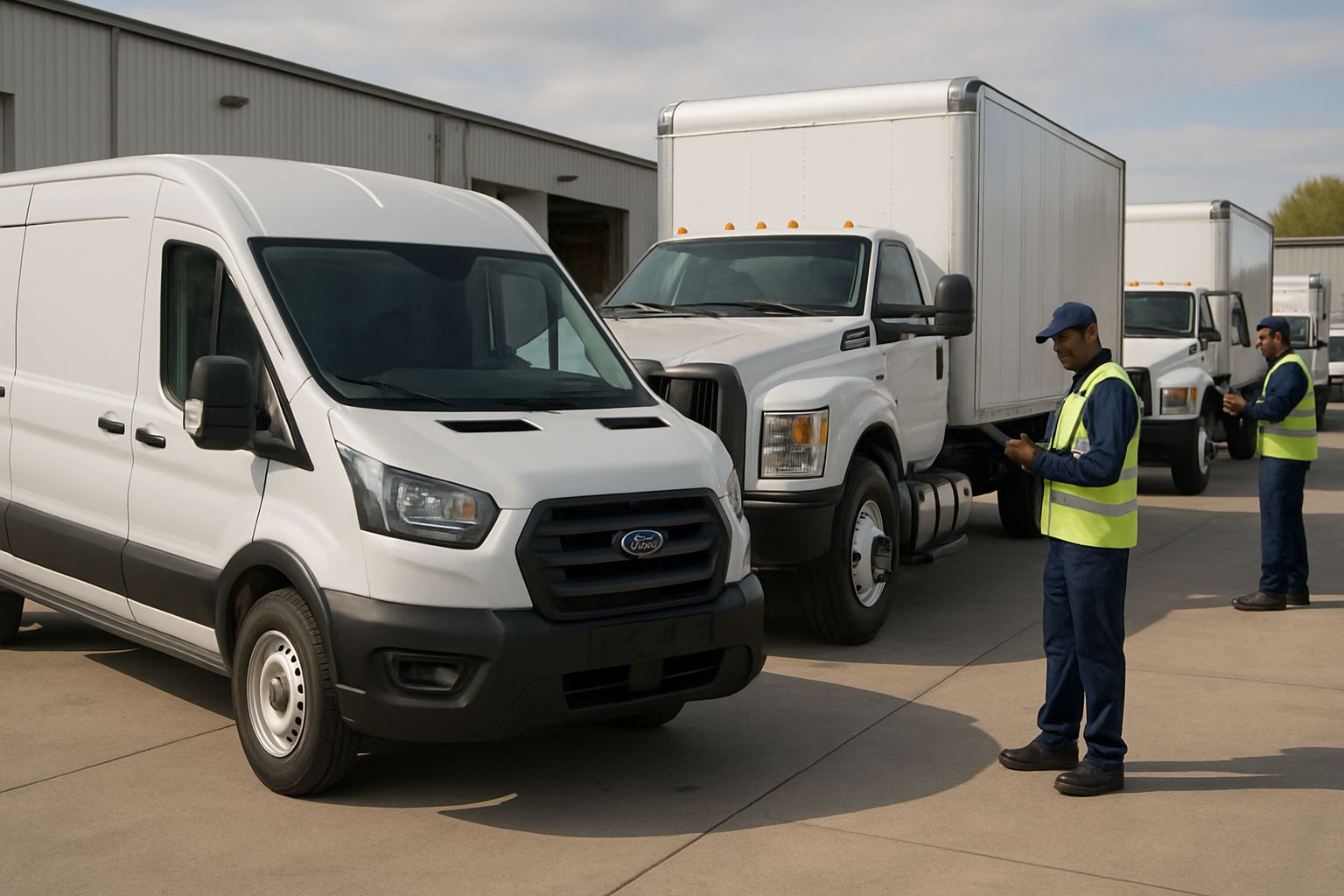
Unveiled on March 10, 2026, the tool sits inside the Ford Pro dashboard.
It interprets Data Point Telematics signals in plain English, then returns concise recommendations.
Consequently, complex maintenance, safety, and cost questions now require seconds rather than hours.
This article examines the architecture, business context, and potential risks behind the launch.
Commercial leaders, Logistics planners, and technology teams will gain practical Insights for data-driven Driving decisions.
Global Market Context Snapshot
Ford Pro anchors Ford’s Commercial software push, delivering subscription telematics to roughly 840,000 paying users.
Moreover, the ecosystem covers about 5.2 million connected vehicles, a 40% jump since 2023.
The platform already processes over one billion Data Point Telematics records every day, providing vast raw material.
Meanwhile, rival Geotab crossed five million subscriptions in 2025, highlighting an intensely competitive Logistics landscape.
Consequently, strong data moats have become strategic currency.
Ford Pro generated approximately $66.3 billion revenue in 2025, with $6.8 billion operating profit.
Therefore, even small efficiency gains matter at scale for investors and fleet clients.
These numbers set the scene for the assistant’s rollout.
Nevertheless, raw numbers alone never guarantee adoption; product design also matters.
The next section explains how Ford built the system.
Ford AI Architecture Details
Ford engineered the assistant as a multi-agent architecture hosted on Google Cloud.
Additionally, it leans on structured, manufacturer-grade Data Point Telematics streams rather than open web content.
This constraint reduces hallucination risk because signals arrive directly from engine and safety modules.
In contrast, generic language models often invent figures when asked for fleet Insights.
The assistant converts natural questions into secure BigQuery calls, then summarizes the results.
Subsequently, managers can export reports, schedule maintenance, or push coaching messages without writing SQL.
Most 2020-newer Ford Commercial vehicles include embedded modems, easing deployment.
Mixed-brand fleets connect through approved plug-ins or partner APIs, keeping Logistics coverage broad.
Better routing also cuts unnecessary Driving miles.
Professionals seeking deeper technical mastery can pursue the AI Engineer™ certification.
Ford claims linear scalability, yet independent validation remains pending.
The next part highlights tangible business benefits.
Key Benefits And Value
Kevin Dunbar summarizes the mission: “simplify the complex and make the routine effortless.”
Consequently, early users report measurable productivity boosts.
- Time savings: CentiMark cut weekly report preparation by several hours.
- Safety visibility: seat-belt usage alerts surface risky Driving behavior quickly.
- Maintenance prioritization: component health scores flag vehicles needing immediate service, reducing downtime.
- Cost control: fuel and idle summaries reveal wasteful Commercial practices.
Furthermore, the system synthesizes over one billion Data Point Telematics observations daily to rank issues by urgency.
These prioritized Insights guide managers toward actions with the highest financial impact.
Meanwhile, conversational access lowers the learning curve for non-technical Logistics staff.
Nevertheless, Ford has limited the assistant to read-only recommendations for now.
Therefore, human approval still stands between analysis and execution.
These advantages improve margins, yet unresolved privacy matters deserve equal attention.
The following section addresses those questions.
Privacy And Security Stakes
Seat-belt and behavior monitoring spark legitimate labor concerns, especially where employee surveillance laws apply.
Moreover, continuous capture of Data Point Telematics metrics raises questions about retention and consent.
Several states already regulate biometric or in-cab monitoring, and union representatives watch closely.
Ford counters by noting that the assistant is read-only and relies on anonymized vehicle identifiers for aggregate Insights.
However, granular VIN data still resides in Google Cloud, introducing governance responsibilities.
Ford cites SOC and ISO attestations but has not published region-specific residency details.
Consequently, public agencies and regulated Logistics sectors must perform additional audits.
Security researchers highlight supply-chain risk from integrations, including ServiceTitan and Fleetio.
Nevertheless, encryption at rest and role-based access mitigate many common attack vectors.
These protective layers help, yet competitive pressure demands continuous improvement.
The next section studies that competition.
Competitive Landscape Analysis Overview
Geotab, Samsara, and Verizon Connect market AI dashboards that surface fleet Insights within seconds.
However, few combine proprietary OEM signals with generative chat like Ford.
Geotab announced natural-language queries in 2025, though it still leans on mixed sensor sources.
In contrast, Ford roots every answer in certified Data Point Telematics feeds.
This approach strengthens accuracy but limits cross-brand depth until more integrations mature.
Samsara differentiates with real-time video, a feature Ford has yet to announce.
Consequently, buyer decisions hinge on which pain points—safety, compliance, or cost—rank highest.
Commercial enterprises favor total cost reduction, while municipal Logistics fleets prioritize regulatory reporting.
Nevertheless, vendor lock-in remains a shared risk.
Understanding forthcoming features therefore becomes critical.
The final section explores remaining roadmap gaps.
Future Roadmap Open Questions
Ford has hinted at autonomous actions such as automatic service scheduling based on Data Point Telematics thresholds.
Additionally, executives mention potential fuel-card controls that trigger when Data Point Telematics patterns suggest fraud.
However, no public timeline exists for those capabilities, and pilot metrics remain undisclosed.
Analysts also want clarity on how non-Ford vehicles will share Data Point Telematics streams without losing warranty safeguards.
Subsequently, customers seek assurances that human supervisors can always override AI decisions.
Independent audits of hallucination rates and message accuracy would further strengthen trust.
Therefore, journalists and buyers press Ford for transparent benchmarks.
These unanswered issues will shape adoption trajectories during the next 24 months.
Consequently, decision makers must build flexible strategies that accommodate rapid platform evolution.
Effective planning today prepares fleets for tomorrow’s capabilities.
Conclusion And Next Steps
Ford Pro AI turns Data Point Telematics mountains into practical fleet knowledge.
Moreover, one billion daily signals create unmatched context for maintenance, safety, and fuel optimization.
However, privacy, security, and roadmap uncertainties require diligent oversight from Commercial and Logistics stakeholders.
Consequently, leaders should pilot the assistant, measure productivity gains, and demand transparent metrics.
Professionals eager to deepen AI fluency can revisit the linked certification for structured learning.
Act now to harness data-driven Insights and keep fleets Driving toward sustained efficiency.


