

AI CERTS
6 months ago
Fintech Product reaches Brazil via DeFi BDR
Moreover, the issuer’s Valour unit will list four crypto ETPs on the same day. These paired launches illustrate how foreign fintechs now tailor multichannel access for Brazilian demand.
Brazilian Market Context Now
Banks and brokers describe Brazil as Latin America’s deepest liquidity pool. Chainalysis ranks the nation fifth globally for crypto adoption. Moreover, approximately US$319 billion in on-chain value flowed through Brazil during July 2024-June 2025. These figures dwarf regional peers and validate B3’s aggressive product roadmap. Meanwhile, B3 hosts several hundred BDRs, reflecting rising appetite for foreign shares traded in reais. Market participants therefore welcomed DEFT31 as another gateway.
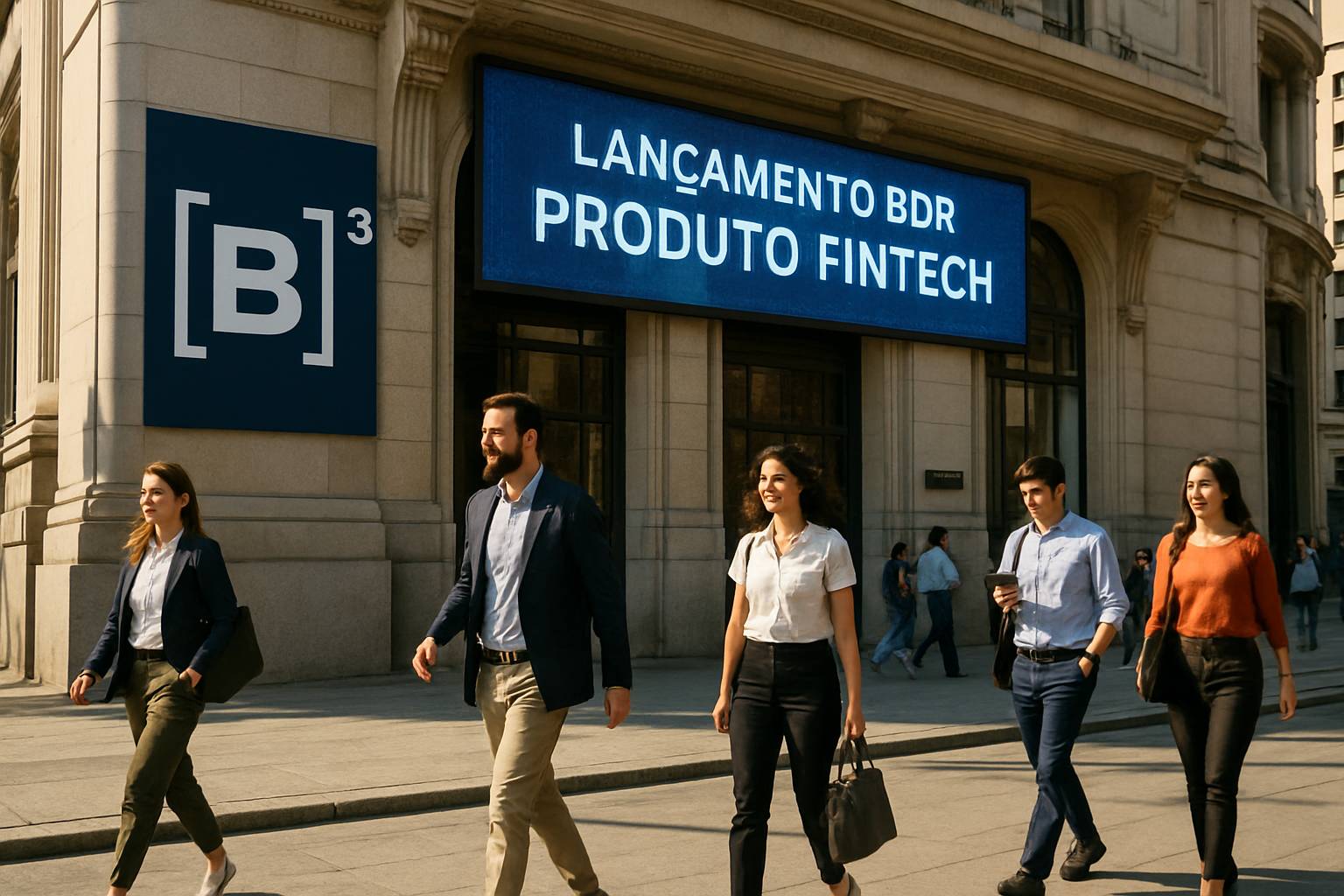
Additionally, policy frameworks have matured. Law 14,478/2022 formalized virtual-asset rules while Decree 11,563/2023 empowered the Central Bank to supervise service providers. Consequently, corporate issuers can structure combined equity and crypto exposures with clearer guidance. That supportive backdrop fuels DeFi Technologies’ latest move.
Crypto Activity Statistics Snapshot
Key figures illustrate the landscape:
- US$319 billion crypto value received in Brazil during the last 12 months.
- Ranked 5th on the 2025 Global Crypto Adoption Index.
- Hundreds of BDRs already active on B3 Exchange.
These metrics underscore strong local engagement. Therefore, aligning a Fintech Product with local rails appears timely. These conditions set the stage for understanding the new certificate’s structure. However, mechanics matter for risk assessment.
Understanding BDR Mechanics Clearly
A Brazilian Depositary Receipt represents foreign equity held by a custodial bank. Trades settle in reais on B3 Exchange. Consequently, investors gain economic rights similar to common shares without wiring funds abroad. DEFT31 will mirror DeFi Technologies stock that continues trading on Nasdaq, Cboe Canada and Frankfurt.
The filing did not specify whether DEFT31 is sponsored. Nevertheless, most recent tech issuers favor sponsored structures because they allow direct information flow and marketing. In either format, the depositary converts dividends and handles corporate actions under CVM supervision.
Notably, BDR prices can diverge briefly from underlying shares. FX moves, local liquidity and differing market hours create spreads. Therefore, arbitrage desks play an essential role when volumes scale.
The launch timeline follows predictable stages:
- 15 Dec 2025 – B3 approval announced.
- 17 Dec 2025 – Trading expected to open.
- 19 Dec 2025 – Market-close bell ceremony.
This sequence mirrors other tech listings. Consequently, analysts can benchmark first-day volume against prior Depositary Receipts. Collectively, these mechanics frame how the new Fintech Product will function inside Brazil’s settlement ecosystem. The next section explores corporate motives.
DeFi Strategy Explained Simply
DeFi Technologies leverages twin channels: equity via BDRs and asset exposure via ETPs. Moreover, its Valour arm will float Bitcoin, Ethereum, XRP and Sui products under tickers BTCV, ETHV, XRPV and VSUI. Pairing instruments allows cross-selling to portfolio managers needing both thematic equity and direct token tracking.
CEO Johan Wattenström labeled the approval “an important next step in our international capital-markets strategy.” President Andrew Forson added that “the DEFT31 BDR program is designed to meet local demand at the corporate level.” These statements highlight how leadership views B3 as an Institutional door to Latin America.
Furthermore, indigenous brokers can bundle DEFT31 with Valour ETPs in model portfolios. That combination enables diversified crypto participation without self-custody hurdles. Consequently, DeFi consolidates brand awareness among professional desks. This alignment strengthens the perceived value of the Fintech Product.
Nevertheless, product success relies on sustained liquidity. Therefore, strategic partnerships with market makers remain crucial. These considerations lead naturally into demand catalysts.
Institutional Demand Drivers Key
Several forces spur Institutional interest. Firstly, pension funds face declining domestic yields and seek uncorrelated assets. Secondly, regulatory clarity improves confidence to allocate toward crypto-linked products. Thirdly, large banks have expanded prime services for digital assets, removing logistic barriers.
Additionally, B3 Exchange offers familiar KYC processes, reducing onboarding frictions. Therefore, accessing Depositary Receipts or ETPs fits existing workflows. Moreover, local managers prefer products denominated in reais to avoid hedging budget constraints.
Professionals can enhance their expertise with the Bitcoin Security Professional™ certification. Such credentials deepen risk-management skills when integrating novel structures.
Consequently, the expanded toolbox, including this Fintech Product, accelerates portfolio innovation. These drivers suggest healthy initial volumes. However, every opportunity carries parallel risks.
Risks And Compliance Factors
Regulators monitor Depositary Receipts closely. Disclosure lags may arise because the underlying company follows foreign GAAP and SEC timelines. In contrast, CVM expects timely information translated into Portuguese. Therefore, sponsors must coordinate reporting rigorously.
Moreover, crypto ETPs introduce custody and proof-of-reserve obligations. CVM Rule 175 mandates transparent asset segregation and periodic attestation. Consequently, Valour will depend on reputable custodians to safeguard on-chain holdings.
Liquidity And FX Risk
Liquidity risk deserves attention. Newly listed BDRs often experience wider spreads until market depth builds. Additionally, foreign exchange volatility can distort local returns even when underlying shares remain flat. Market makers will arbitrage price gaps, yet short-term dislocations may persist.
Nevertheless, hedging tools exist. Futures on the dollar and crypto assets trade actively in Brazil. Therefore, sophisticated desks can manage exposures efficiently. Collectively, these mitigation paths enhance the attractiveness of the Fintech Product. Yet, investors must remain vigilant. The next section examines forward-looking metrics.
Future Performance Indicators Key
Analysts will track several variables after launch. Firstly, first-day DEFT31 turnover and closing premium relative to Nasdaq printing. Secondly, assets under management for BTCV, ETHV, XRPV and VSUI after one month. Thirdly, research coverage expansion by Brazilian brokerages.
Moreover, press narratives will monitor how many Institutional mandates integrate the Depositary Receipts. Subsequent quarterly earnings from DeFi Technologies may reveal Latin American investor composition changes.
Consequently, early data points could influence other foreign crypto firms evaluating B3 Exchange entry. Positive momentum might trigger a pipeline of similar listings, reinforcing the strategic importance of Brazil.
Altogether, these indicators provide a framework to judge whether the Fintech Product meets its ambitious objectives. The final section summarizes insights and suggests next actions.
In summary, DeFi Technologies will deploy a groundbreaking Fintech Product through DEFT31 BDRs and parallel crypto ETPs. The initiative aligns with Brazil’s huge crypto flows, evolved regulation and deep Institutional appetite. Furthermore, B3 Exchange’s established infrastructure offers convenient, BRL-denominated access. Nevertheless, disclosure, liquidity and FX risks require active oversight. Investors should monitor trading metrics, regulatory updates and Valour’s custody transparency. Therefore, professionals seeking to navigate these assets should pursue continuous education. Explore the listed certification and stay updated on forthcoming market data.
Disclaimer: Some content may be AI-generated or assisted and is provided ‘as is’ for informational purposes only, without warranties of accuracy or completeness, and does not imply endorsement or affiliation.


