

AI CERTs
2 hours ago
Financial Robotics: Algorithms Outperforming Human Traders
Traders now face accelerating rivals that never sleep.
Financial Robotics has moved from lab demo to dominate live order books.
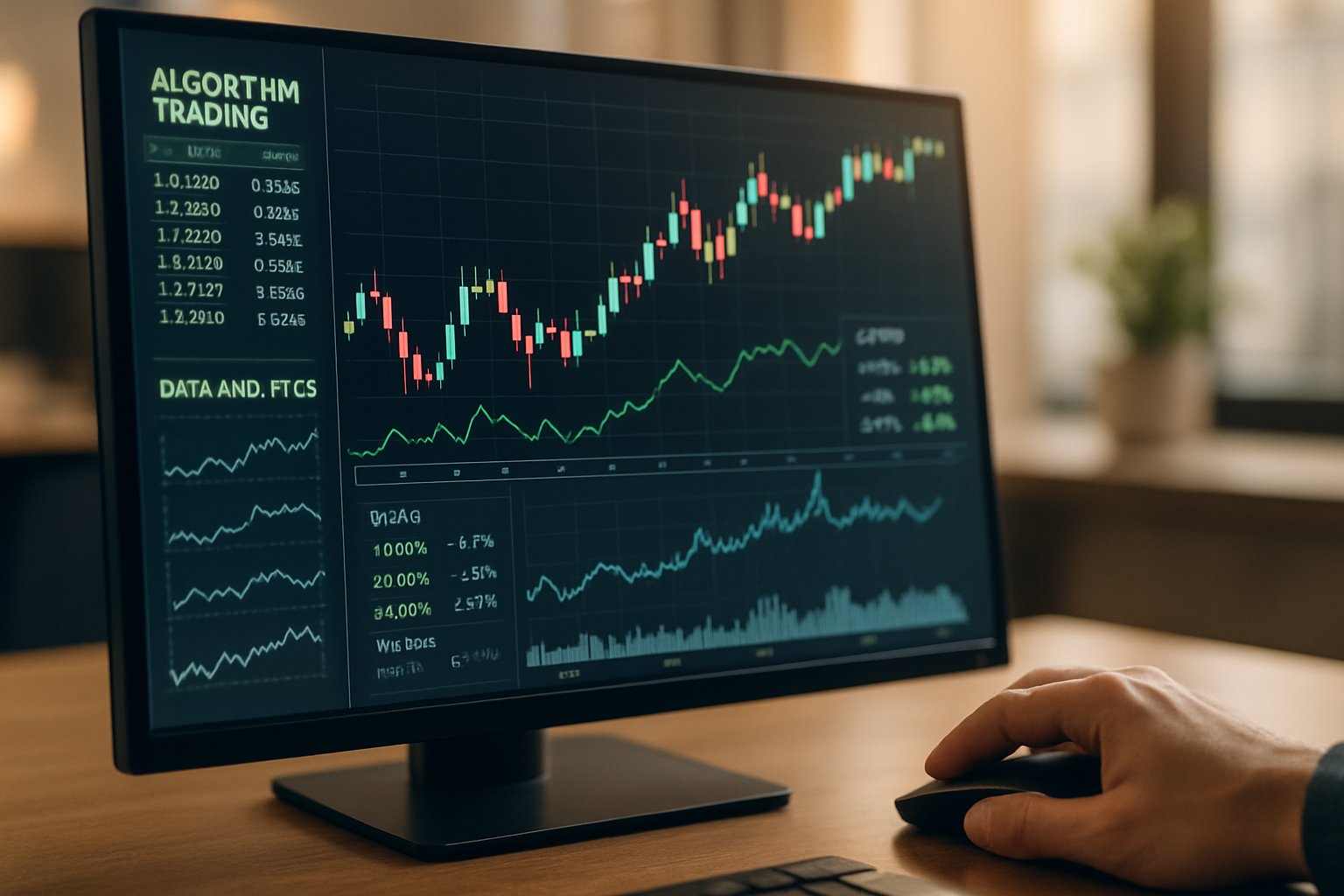
Consequently, algorithmic agents capture microsecond opportunities beyond any human response window.
Recent Quant research confirms machines frequently outrun discretionary desks on speed, data digestion, and risk metrics.
Industry reports echo the academic findings, yet reveal performance heterogeneity across market regimes.
Moreover, regulators scrutinize opaque models after several flash-like episodes rattled liquidity.
Efficiency gains still lure capital despite transparency worries.
Meanwhile, human traders pursue hybrid tactics, blending strategic context with machine execution.
Therefore, understanding when algorithms truly outperform humans becomes essential for boardroom decisions.
This report unpacks the evidence, highlights persistent gaps, and maps skill paths for the next wave.
Lightning Fast Execution Edge
Financial Robotics algorithms submit and cancel orders in microseconds, exploiting fleeting spreads unreachable by manual desks.
Consequently, machine efficiency scales as latency drops toward exchange clock limits.
Recent DeepTrader experiments showed automated agents outperform reference humans by 22% on risk-adjusted intraday returns.
Furthermore, roughly 70% of developed equity volume now flows through algorithmic channels, Bloomberg data indicate.
Speed offers undeniable alpha capture for specific microstructure games.
However, the data breadth advantage may matter even more.
Expansive Data Exploration Power
Financial Robotics platforms ingest tick feeds, news, satellite images, and social streams without fatigue.
Moreover, deep learning models parse millions of features, discovering subtle cross-asset signals invisible to human pattern search.
Quant academics used hierarchical reinforcement networks to weight signals adaptively, lifting backtest Sharpe ratios by 0.3.
Additionally, machine classifiers enforce discipline, selling losers exactly when probabilities deteriorate.
- Automation succeeded 69.5% versus 47.6% manual success in recent red-team tests.
- AI funds reported 15% lower bid-ask costs compared with discretionary peers last quarter.
- High-frequency market makers processed 100,000 quotes per second during peak events.
Systematic data mining delivers breadth no human can replicate.
Nevertheless, people still outperform in ambiguous situations.
Persistent Human Competitive Roles
Discretionary teams excel when geopolitics, regulation, or pandemics trigger novel price regimes outside model history.
Despite Financial Robotics progress, contextual judgment remains valuable during uncertain crises.
In contrast, rigid algorithms may misprice assets during such structural breaks.
Additionally, human oversight curbs uncontrolled model drift and detects spurious correlations that mislead naive learners.
Quant veterans increasingly manage meta-strategy selection, leaving millisecond execution to code.
Competition now centers on optimal human-machine orchestration rather than outright replacement.
Humans guard against rare tail events and narrative surprises.
Consequently, governance demands transparent, auditable pipelines.
Compliance And Audit Hurdles
Financial Robotics successes invite tougher oversight from global regulators worried about flash crashes and systemic amplification.
Therefore, firms must log orders, decisions, and model versions for post-trade forensic review.
Moreover, black-box opacity complicates risk committees and investor disclosures.
SEC and ESMA staff seek interpretable features and documented stress tests before approving advanced Trading systems.
Professionals can enhance their expertise with the AI Security Compliance™ certification.
Robust documentation now differentiates credible desks from speculative code shops.
Meanwhile, adoption continues as metrics support the investment case.
Adoption Metrics And Players
Bloomberg estimates place algorithmic share of developed equity Trading between 60% and 75%.
Consequently, market-making giants such as Citadel Securities and Jane Street invest heavily in low-latency stacks.
EmergenResearch values the algorithmic infrastructure market in the tens of billions for 2025.
Quant funds Renaissance, Two Sigma, and D. E. Shaw report continued hiring, signaling aggressive roadmap execution.
- Citadel Securities dominates US equity liquidity provision.
- Two Sigma advances machine learning research for systematic portfolios.
- PLUTUS community open-sources reference strategies for retail innovators.
Additionally, traditional asset managers integrate partial automation to cut slippage and boost Efficiency.
Market penetration shows Financial Robotics is no passing fad.
Yet skills gaps threaten equitable participation.
Upskilling With Key Certifications
Demand for cross-functional talent rises as code, finance, and compliance converge.
Consequently, education providers expand modules on model validation, latency engineering, and ethical AI.
The earlier mentioned AI Security Compliance™ path equips engineers to document, test, and harden fragile pipelines.
Furthermore, many Quant bootcamps now bundle micro-internships on live Trading desks to accelerate practical learning.
Efficiency improvements follow when staff understand both mathematics and production DevOps.
Structured learning speeds safe algorithm deployment.
Subsequently, strategic planning turns to the next five years.
Future Outlook And Strategy
Financial Robotics adoption will likely deepen across asset classes as compute costs decline.
However, rising Competition erodes easy gains.
Intensifying Competition pushes desks toward proprietary data, superior execution hardware, and closer human oversight.
Moreover, regulators could mandate explainability standards, reshaping model design incentives.
Boards should demand audited, net-of-fee reports before scaling capital allocations.
Therefore, success hinges on balanced capabilities: advanced algorithms, resilient controls, and adaptive human judgment.
The coming cycle favors teams that learn faster than markets change.
These insights set the stage for a decisive conclusion.
Financial Robotics now sits at the core of modern market infrastructure, yet myths persist.
Moreover, evidence shows algorithms dominate narrow tasks while people steer broader narratives.
Quant studies confirm speed, data depth, and Efficiency advantages that compound Trading profitability.
However, documented live returns remain mixed once fees and survivor bias enter calculations.
Consequently, firms pursuing Financial Robotics strategies must pair governance with vigilant human oversight.
Intensifying Competition also demands stress tests, interpretable features, and diversified contingencies.
Professionals should explore the listed compliance certification to validate skills immediately.
Act now to future-proof your desk and secure edge before the next structural shock arrives.


