

AI CERTS
3 hours ago
FDA Clears Copilot Tools: New Era for Medical Imaging
Moreover, the company unveiled Harrison.rad.1, a generative radiology copilot that drafts reports and answers image questions. These developments signal a pivotal moment for Medical Imaging professionals weighing AI integration.
However, regulatory nuance matters. Only the triage components carry formal clearance. Meanwhile, the generative assistant remains in evaluation with regulators and partners. Additionally, Medicare granted a New Technology Add-on Payment for Annalise’s obstructive hydrocephalus module, improving hospital economics. Therefore, hospitals and vendors now examine how reimbursement, safety oversight, and workflow impact intersect. This article unpacks the milestones, opportunities, and caveats shaping next-generation Medical Imaging AI.
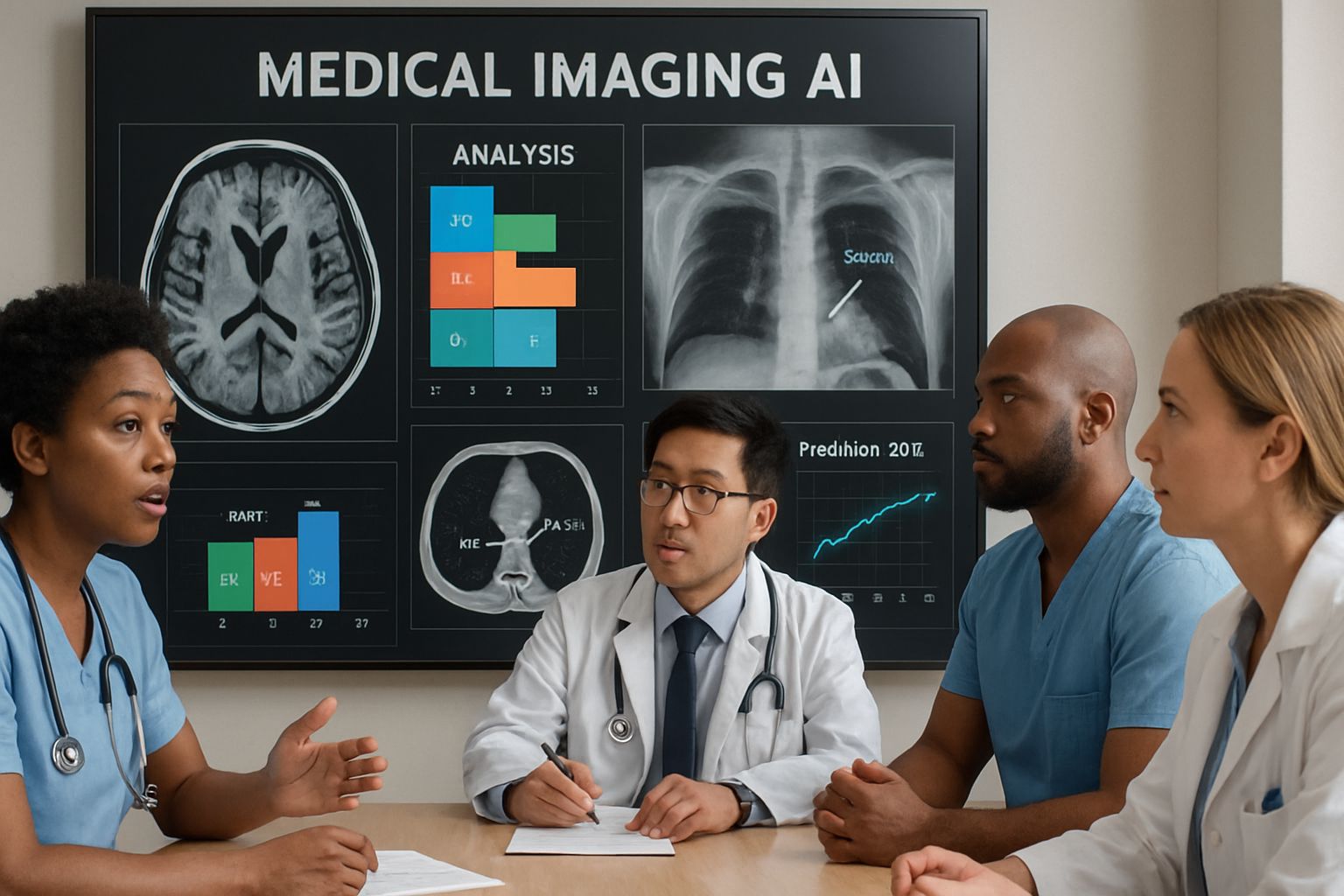
Regulatory Milestones Driving Adoption
The FDA 510(k) pathway underpins many imaging AI launches. Recently, Annalise Enterprise earned clearance K250831 on 23 April 2025 for chest X-ray triage. Previously, clearance K231767 covered non-contrast head CT trauma triage. Moreover, Harrison.ai now lists 12 total clearances across chest and brain modalities.
Consequently, hospitals gain confidence because each clearance confirms substantial equivalence to a predicate device. Nevertheless, experts caution that clearance does not equal clinical proof of outcome benefit. Therefore, many Medical Imaging leaders demand post-market data before rolling out AI system-wide.
These milestones validate core functions. However, stronger evidence still drives purchasing decisions.
With regulation charted, attention turns to the generative assistant.
Generative Copilot In Focus
Harrison.rad.1 represents a multimodal large language model trained on millions of annotated studies. Moreover, the system achieved 51.4 out of 60 on the FRCR 2B Rapids exam, matching experienced radiologists. Additionally, benchmark accuracy reached 82% on VQA-Rad closed questions. The company calls this progress next-level Medical Imaging automation.
Unlike the triage modules, the Copilot lacks independent FDA clearance. Nevertheless, Harrison.ai distributes it to partners and regulators for sandbox testing. Consequently, providers must separate assistive text generation from regulated triage when marketing capabilities.
This Copilot promises richer context for clinicians. However, regulatory clarity will dictate broad deployment.
Next, clinical impact reveals real-world momentum.
Clinical Impact And Scale
Annals of Radiology report growing uptake across 40 countries and over 1,000 sites. Moreover, NHS England imaging networks awarded contracts covering 2.8 million chest X-rays yearly, equal to 35% of national volume. Consequently, Annalise Enterprise now prioritizes urgent cases before human review, trimming report turnaround. Therefore, Harrison.ai now influences Medical Imaging workflows at national scale.
Independent clinicians highlight tangible benefits. Dr Fahmid Chowdhury from Leeds stated, “The AI is a copilot rather than a pilot.” Furthermore, preliminary audit data there showed 30% faster flagging of critical pneumothorax findings.
Core Performance Indicators Listed
- Obstructive hydrocephalus AUC 0.987 (company data)
- Sensitivity 97.5% and specificity 95.3% on head CT triage
- Average worklist reprioritization time reduced by 43% in NHS pilot
These numbers suggest real efficiency gains. Nevertheless, peer-reviewed confirmation remains limited.
Financial incentives now magnify clinical momentum.
Reimbursement Boosts Commercial Viability
In August 2024, CMS granted an NTAP for Annalise Obstructive Hydrocephalus. Consequently, U.S. hospitals can receive up to $241.39 per eligible patient. Moreover, NTAP status often accelerates budget approvals because finance teams see quicker return on investment.
Furthermore, Harrison.ai closed a $112 million Series C in February 2025 to expand its Boston hub. Therefore, the company possesses fresh capital for U.S. sales, regulatory filings, and support teams. In contrast, many smaller vendors struggle to finance costly validation studies. Such resources are critical for complex Medical Imaging deployments.
Reimbursement and funding unlock deployment scale. However, market access still depends on proven outcomes.
That dependency surfaces notable challenges.
Challenges Temper Industry Enthusiasm
Regulators warn of automation bias and opaque algorithms. Moreover, studies in Pathology and Radiology reveal occasional hallucinations from large language models. Consequently, clinicians must verify outputs before finalizing reports.
Additionally, liability questions persist. If AI suggestions mislead diagnoses, legal responsibility could fall on hospitals, vendors, or individual physicians. Nevertheless, clear governance frameworks remain nascent.
Peer literature in npj Digital Medicine calls for stronger post-market surveillance. Therefore, Medical Imaging teams should monitor real-world accuracy continuously and recalibrate models when drift occurs.
Risks highlight the importance of vigilant oversight. However, proactive planning can mitigate most issues.
Stakeholders now refine forward strategies.
Strategic Outlook For Stakeholders
As Medical Imaging workloads grow, governance becomes essential. Healthcare executives increasingly form multidisciplinary AI committees. Moreover, many insist on phased rollouts that measure key safety endpoints. Consequently, vendor scorecards now include regulatory status, reimbursement coverage, and evidence depth. Likewise, Pathology teams face similar validation hurdles.
Professionals can enhance their expertise with the AI Project Manager™ certification. Additionally, structured training helps teams evaluate algorithm performance and compliance documentation.
Meanwhile, competitors such as Nuance and Gleamer push their own assistant offerings. In contrast, Harrison.ai leverages a growing FDA portfolio and NTAP status to differentiate.
Strategic planning aligns technology, policy, and people. Therefore, adopters will scale benefits while containing risk.
The final section synthesizes these insights.
Conclusion And Next Steps
Harrison.ai’s journey illustrates rapid innovation balanced by careful oversight. Moreover, multiple FDA clearances validate triage tools, while the generative assistant pushes boundaries. Consequently, Medical Imaging now enters an era where AI augments, not replaces, clinicians.
Nevertheless, outcome evidence, reimbursement pathways, and governance structures determine ultimate success. Therefore, leaders should pilot responsibly, measure impact, and invest in staff training. Robust Medical Imaging governance will separate leaders from laggards. Finally, explore advanced certifications to drive safe, profitable deployment across Radiology and Pathology departments.
Take the next step and formalize your AI leadership skills through the AI Project Manager™ program today.


