

AI CERTs
1 month ago
Farmers Fuel AI Infrastructure Backlash
Ida Huddleston’s simple statement, “I’m not for sale,” echoed far beyond Kentucky. Consequently, investors scouting rural parcels for hyperscale data hubs faced unexpected resistance. The growing AI Infrastructure Backlash now links landowners, activists, and local officials across continents. Moreover, their coalition questions massive projects’ effects on Land Rights, Environment, Sustainability, and regional Energy grids. This article unpacks the trend, tracks pivotal data, and examines future scenarios for industry and communities.
Farmland Deals Collapsing
Mason County headlines capture only part of the story. Meanwhile, farmers in Pennsylvania and Wisconsin also refused multimillion-dollar offers. Organizers cite cultural heritage, soil stewardship, and distrust of speculative “powered land” pitches. The AI Infrastructure Backlash intensifies whenever buyers mention onsite substations or massive cooling plants.
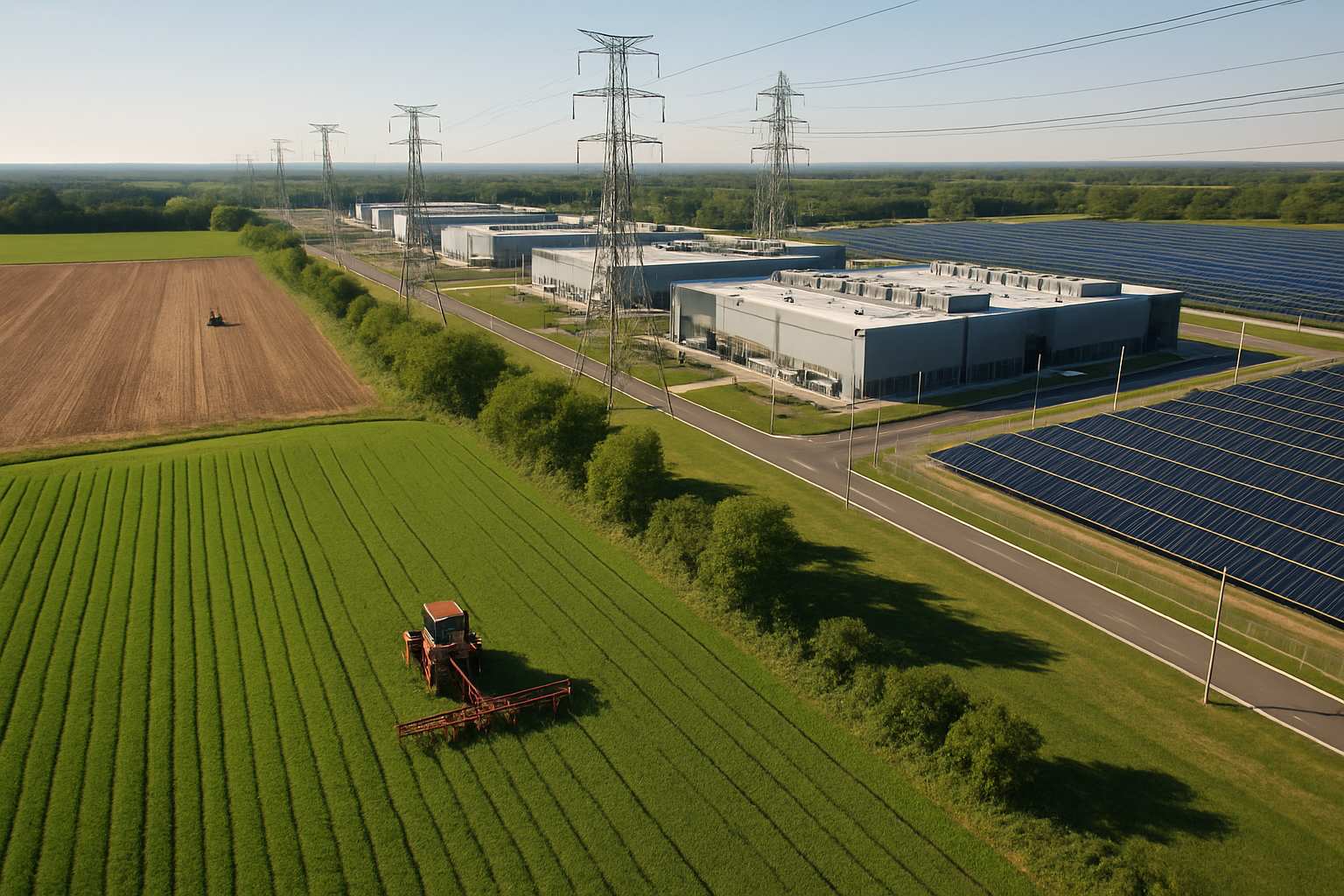
Key motivations behind recent refusals include:
- Preservation of family legacies and local Land Rights
- Fear of water depletion harming surrounding Environment
- Concern that promised jobs vanish after construction
- Mistrust of corporate commitments amid shifting Sustainability targets
- Noise and traffic altering rural lifestyles
These drivers reveal deep social roots. Nevertheless, cash offers continue rising, pressuring vulnerable owners. The section shows why most proposals falter early. However, investor outreach persists unabated.
Water And Power Strains
Electricity demand already climbed from 58 TWh in 2014 to 176 TWh in 2023. Furthermore, Berkeley Lab projects 325–580 TWh possible by 2028. Water stress parallels that surge. Pew estimates 17 billion gallons withdrawn by U.S. data centers during 2023 alone. Developers often promise efficient cooling. Nevertheless, local planners doubt claims when evaporative towers dominate blueprints.
Therefore, hydrology studies now form the backbone of zoning hearings. The AI Infrastructure Backlash references these numbers to argue cumulative Energy and water footprints. In contrast, designers tout advanced liquid loops that trim consumption. Sustainability advocates say savings remain theoretical without binding limits.
Escalating resource tension summarizes this section. Consequently, grid operators face public scrutiny before approving new interconnections.
Economic Promises Scrutinized
Developers highlight tax inflows and construction payrolls. Moreover, local executives point to Loudoun County’s booming budget as proof. Critics counter with Data Center Watch findings: $18 billion in blocked investments signal hidden risks. Additionally, permanent staff counts rarely exceed a few dozen per campus.
Opponents weave these facts into the AI Infrastructure Backlash narrative. They argue subsidies undermine fiscal Sustainability while shifting costs onto residents. Consequently, some county boards now demand escrow funds before issuing permits. The debate over benefits versus burdens frames every town-hall meeting.
This analysis clarifies why financial arguments lose power. However, corporate lobbying remains vigorous, anticipating policy swings.
Policy And Legal Push
Court battles in Prince William County halted the “Digital Gateway” megaproject. Subsequently, similar suits expanded to the Midwest and Europe. Lawyers challenge rezoning, eminent domain for transmission, and opaque incentive packages. Meanwhile, state regulators reassess rate structures to shield small customers from industrial surges.
The AI Infrastructure Backlash increasingly wields Land Rights statutes to stall projects. Moreover, environmental impact reviews lengthen as advocates demand climate assessments. These combined levers give communities leverage over global firms.
Legal maneuvers underline mounting compliance complexity. Therefore, strategic site selection now includes political risk scoring.
Industry Mitigation Efforts
Cloud giants respond with renewable power contracts and reclaimed-water cooling. Additionally, some propose onsite micro-nuclear units to stabilize regional Energy flows. Compass Datacenters and Hines market smaller, distributed builds that fit stricter zoning envelopes.
Professionals can deepen expertise through the AI Foundation Essentials™ certification. Consequently, teams learn to balance performance with Sustainability metrics and community impact.
Nevertheless, opponents label offsets insufficient because local aquifers still supply makeup water. The AI Infrastructure Backlash thus persists, though some negotiations yield conditional approvals.
Mitigation options illustrate flexible design pathways. However, capital costs rise when firms adopt every safeguard.
Global Energy Forecasts
The IEA warns global data-center demand could double by 2030. Fatih Birol calls AI one of today’s biggest Energy stories. Furthermore, projected acreage for “powered land” reaches 40,000 in five years. International observers watch U.S. county fights as bellwethers for wider rural unrest.
The AI Infrastructure Backlash resonates abroad, where farmers also guard Land Rights and fragile Environments. Consequently, European Union regulators debate stricter water disclosure rules.
These forecasts elevate local disputes onto global stages. Therefore, multinational strategies must harmonize planetary limits with regional politics.
Future Path Forward
Stakeholders increasingly explore compromise. Moreover, modular facilities near urban brownfields reduce farmland pressure. Community benefit agreements earmark funds for soil health and renewable microgrids, enhancing rural Sustainability. Data transparency around resource draw builds overdue trust.
The AI Infrastructure Backlash remains a potent checkpoint. However, integrated planning could convert contention into cooperative innovation.
This closing section highlights actionable solutions. Consequently, readers gain direction for upcoming negotiations and project assessments.
Key Takeaways Recap
• Farmers resist offers to protect culture and Land Rights.
• Water and Energy demands trigger environmental alarms.
• Legal tactics slow multibillion-dollar pipelines.
• Mitigation and certification efforts foster adaptive design.
• Global projections amplify urgency for lasting Sustainability.
These insights summarize the landscape. Nevertheless, rapid AI growth means vigilance and collaboration must continue.
In conclusion, rural communities have reframed data-center siting debates worldwide. Furthermore, authoritative studies validate concerns over power and water stress. The AI Infrastructure Backlash forces companies to quantify local impacts, respect Land Rights, preserve the Environment, and retool Energy strategies. Consequently, design teams integrating rigorous standards gain a competitive edge. Engage proactively, pursue transparent dialogue, and consider certifications to strengthen responsible project leadership.


