

AI CERTs
2 months ago
Factory process autonomy platforms cut downtime in U.S. plants
Unexpected line stoppages still haunt even the most advanced U.S. factories.
However, a new generation of factory process autonomy platforms promises measurable relief.
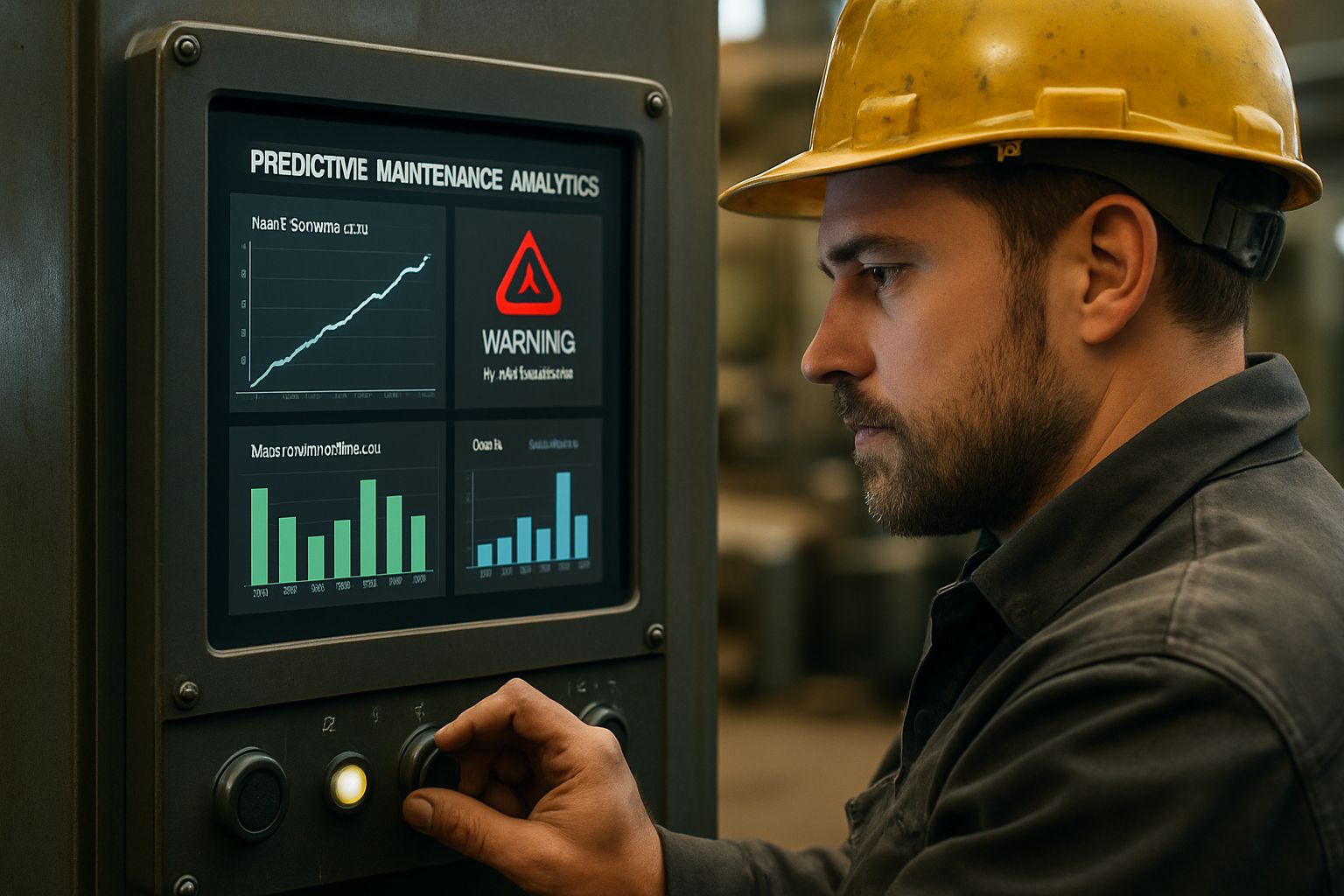
These integrated software stacks merge sensors, digital twins, and edge analytics inside production control loops.
Consequently, plants gain near-real-time decision making that reduces unplanned downtime and stabilizes yield.
Industry surveys peg average downtime costs at $125,000 each hour, with automotive exposures far higher.
Therefore, leadership teams are prioritizing autonomy investments despite budget pressures and cybersecurity concerns.
This article examines market momentum, technologies, vendor moves, and implementation realities across U.S. smart-manufacturing sites.
Along the way, we highlight practical steps for verifying gains and upskilling workforces.
Finally, readers receive guidance on certifications that accelerate adoption and career growth.
Market Momentum Overview Today
Over the past year, capital spending on autonomy accelerated despite macro uncertainty.
Moreover, Honeywell, Rockwell, ABB, Siemens, Emerson, and Yokogawa all released roadmap updates emphasizing downtime elimination.
Consultancies estimate successful programs cut 20-50% of unplanned outages, boosting throughput by double-digit percentages.
Consequently, factory process autonomy platforms have shifted from pilot curiosity to enterprise priority within multiple verticals.
Momentum remains strong, fueled by proven ROI and competitive pressure.
Meanwhile, executives face mounting expectations to deliver similar gains at every domestic site.
Downtime Costs Explained Clearly
Financial exposure drives urgency more than any technology trend.
ABB’s 2023 Value of Reliability survey reported average losses of $125,000 per outage hour.
In contrast, automotive assembly stoppages can exceed $2.3 million per hour, according to Siemens research.
Moreover, indirect costs include quality recalls, missed shipments, and morale issues that rarely appear in ledgers.
Because the stakes are high, boardrooms scrutinize every minute of stoppage and every mitigation proposal.
Therefore, proponents of industrial AI control highlight autonomy’s potential to attack high-frequency minor failures first.
Key statistics underscore the challenge.
- Average outage costs $125,000 per hour across sectors.
- Automotive losses can top $2.3 million every hour.
- Industry 4.0 programs report 20-50% downtime reductions when fully scaled.
- Payback periods often fall below two years, according to McKinsey analyses.
These figures make downtime a board-level risk indicator.
Consequently, finance teams now demand measurable results from any autonomy investment.
Technology Building Blocks Core
Multiple technologies converge inside modern autonomy stacks.
Sensors feed operational data into edge gateways that run lightweight analytic models.
Digital twins replicate assets virtually, enabling safe scenario exploration and ML training.
Furthermore, reinforcement-learning agents can execute control actions directly, forming closed loops with deterministic fallbacks.
Industrial AI control orchestrates these components, ensuring decisions respect physics and safety constraints.
Predictive maintenance algorithms watch for early fault signatures and schedule repairs before failures cascade.
Additionally, autonomous mobile robots handle intralogistics, keeping lines supplied and reducing buffer-related stoppages.
Together, these building blocks constitute factory process autonomy platforms that act faster than human teams.
The stack remains modular, letting teams modernize incrementally.
However, true value emerges only when subsystems integrate seamlessly with legacy controls.
Key Vendor Initiatives Unveiled
Major suppliers spent 2025 expanding autonomy portfolios.
Honeywell’s Digital Prime suite embeds AI agents across control, maintenance, and scheduling workflows.
Meanwhile, Rockwell partnered with NVIDIA to accelerate digital-twin simulation through Omniverse and Emulate3D.
ABB added visual SLAM and fleet management to Flexley Mover robots, enabling autonomous intralogistics.
Emerson, AspenTech, and Yokogawa pushed physics-informed control agents that stabilize energy-intensive processes.
Moreover, specialist firms like Instrumental applied computer vision to pinpoint defects and prevent line halts.
Across these offerings, vendors consistently market factory process autonomy platforms as quick routes to double-digit ROI.
Consequently, many portfolios now advertise turnkey factory process autonomy platforms rather than isolated analytics modules.
Vendor momentum creates choice but complicates due-diligence.
Therefore, buyers must evaluate support models, integration depth, and cybersecurity maturity carefully.
Implementation Challenges Ahead Now
Despite optimism, real deployments face legacy headwinds.
Older PLCs and proprietary networks limit data access and safe actuation.
Legacy hardware often resists integration with factory process autonomy platforms, requiring staged migration strategies.
Additionally, safety certification of learning systems inside control loops remains a regulatory grey zone.
Cybersecurity risk also grows as digital twins expose new attack surfaces.
Nevertheless, structured risk assessments and layered defenses can mitigate many concerns.
Change management is equally critical because autonomy shifts operator roles and accountability.
Consequently, cross-functional training programs must accompany every roll-out.
Industrial AI control vendors supply playbooks, yet cultural adoption still depends on local leadership.
Moreover, proving ROI requires baseline data, disciplined measurement, and transparent reporting.
Challenges are real but manageable with rigorous engineering and governance.
Subsequently, focus turns to measurement practices that validate vendor promises.
Measuring Real Impact Accurately
Plant executives insist on verifiable metrics.
Therefore, teams should track mean time between failures, mean time to repair, and overall equipment effectiveness.
Raw before-after downtime logs provide the clearest evidence of autonomy benefits.
Moreover, third-party audits enhance credibility and support budget expansion requests.
A simple three-step verification framework helps.
- Document baseline downtime hours and cost per asset.
- Capture post-deployment data continuously for at least six months.
- Publish variance analysis with context on maintenance or process changes.
Predictive maintenance dashboards often supply this evidence automatically.
Additionally, factory process autonomy platforms should export open logs for independent review.
Auditors must verify that factory process autonomy platforms maintain safety margins while trimming downtime.
In contrast, black-box systems invite skepticism and slow scaling decisions.
Robust measurement converts early pilots into sustained enterprise programs.
Consequently, workforce skills become the next bottleneck.
Skills Certification Pathways Forward
Autonomy demands hybrid expertise spanning controls, data science, and operations.
Manufacturers therefore invest in upskilling schemes that blend classroom learning with on-the-job coaching.
Professionals can boost expertise via the AI-Everyone™ certification program.
Moreover, many vendors offer role-specific micro-credentials aligned with industrial AI control tooling.
Predictive maintenance courses complement these paths and shorten onboarding time for maintenance technicians.
Consequently, skills development accelerates safe adoption of factory process autonomy platforms across multi-site enterprises.
Human capital remains as crucial as silicon and code.
Meanwhile, early adopters report smoother scaling when certification milestones tie directly to promotion criteria.
Factory autonomy has moved beyond hype into proven operational strategy.
Moreover, early movers are already banking sizable savings and agility dividends.
Yet many hurdles remain, including legacy integration, safety validation, and workforce adoption.
Therefore, disciplined measurement and transparent governance must accompany every rollout of factory process autonomy platforms.
Complementary investments in industrial AI control and predictive maintenance further magnify returns and hedge risk.
Consequently, professionals who upskill now position themselves as indispensable change agents.
Explore certification pathways and push your plant toward autonomous, resilient, and profitable operations.


