

AI CERTs
2 months ago
Fabric Simulation Renderers Transform Fashion Design Workflows
Last year, digital garment rendering felt experimental for many apparel studios. Today, Fabric Simulation Renderers power enterprise design floors and global supply chains. Moreover, brands credit the technology with slashing sample rounds and carbon intensive shipments. The shift reflects rapid advances in physics solvers, material digitization, and cloud collaboration. Consequently, executives now list 3D workflow acceleration among their top strategic priorities. McKinsey’s 2025 State of Fashion underscores that urgency amid unpredictable consumer demand. Fashion Innovation now depends on agile, data-driven iteration cycles. Furthermore, vendors such as CLO, Browzwear, and Optitex deliver industrial-grade toolchains and services. These offerings promise faster creativity, tighter inventory control, and measurable sustainability gains. Stakeholders compare vendor Digital Design Tools to legacy CAD for ROI. This article unpacks how the ecosystem matured, which metrics matter, and where limitations remain. Readers will gain a pragmatic road map for evaluating investments and training their teams.
Fabric Simulation Renderers Market
CLO’s July 2025 acquisition of Swatchbook signaled consolidation around material content and tooling. Moreover, the subsequent zFab Kit launch bundled hardware and software for precise fabric capture. Meanwhile, Marvelous Designer targeted studios with Linux builds and Python automation pipelines. Consequently, competition shifted from feature checklists to full-stack ecosystems linking capture, simulation, and rendering. Industry reports now track these renderers separately from legacy pattern CAD solutions. Fabric Simulation Renderers now represent the fastest-growing slice of apparel CAD budgets.
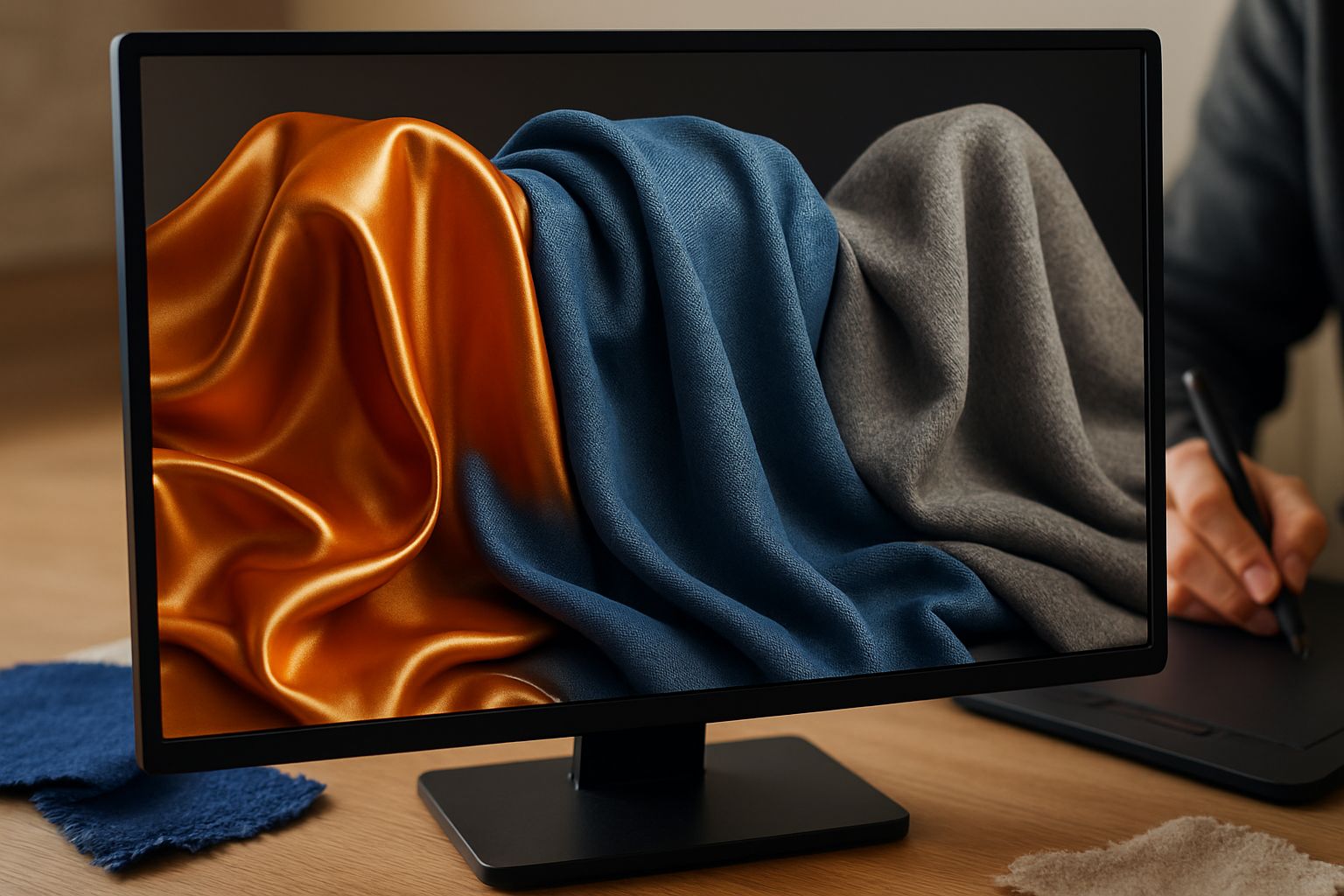
Taken together, these moves confirm industrial momentum. However, understanding workflow impact is essential before budgeting transformative rollouts.
Workflow Impact Broad Overview
Virtual sampling compresses design review from weeks to hours. Designers drape patterns, tweak fit, and resend versions within a single meeting. Consequently, merchandising decisions accelerate, and planners commit to styles sooner. Moreover, marketing teams reuse simulated turntables for e-commerce, AR try-ons, and social teasers.
- 50% reduction in physical samples (Perry Ellis, Browzwear case)
- 30% shorter development cycles (bonprix pilot)
- Up to 70% logistics cost avoidance via digital sell-in
Fabric Simulation Renderers support that efficiency by linking material physics to visual twins. Additionally, the systems export parametric tech packs for factories, reducing clarification emails. Therefore, downstream manufacturing starts earlier, improving on-time delivery rates.
The quantitative gains look compelling on paper. Yet, technical advances explain why realism now convinces wary fit engineers.
Key Technical Advances Explained
Modern solvers blend position-based dynamics for speed with finite elements for accuracy. Furthermore, parameter calibration tools ingest stretch, bend, and friction values from lab tests. Consequently, simulated drape aligns closely with physical try-ons for many woven fabrics. Nevertheless, multilayer assemblies still challenge even the best algorithms.
High-resolution PBR materials complement geometry by capturing microstructure and optical anisotropy. Moreover, HDR environment lighting and path tracing remove plastic looks once common in previews. GPU ray tracing inside Fabric Simulation Renderers now runs interactively on studio workstations. Digital Design Tools integrate these solvers into familiar patternmaking workflows.
Together, solver and renderer progress delivers the visual trust designers require. The next section quantifies adoption at brand scale.
Core Simulation Science Basics
Most Fabric Simulation Renderers expose stretch, bend, and damping sliders mirroring lab measurements. A cloth solver represents fabric as mass-spring particles or FEM tets. Each node tracks position, velocity, and forces every timestep. Additionally, collision detection prevents intersection with avatars and trims. Renderers then convert resulting meshes into shaded pixels under staged lighting. Therefore, measurement errors propagate visually, underscoring the need for precise material testing.
These fundamentals clarify why digitization hardware now appears in vendor roadmaps. Enterprise metrics further illustrate the payoff.
Enterprise Adoption Metrics Rise
Browzwear quotes Perry Ellis achieving 50% fewer physical samples after rollout. Meanwhile, bonprix shortened average cycles by 30% using Digital Design Tools. Moreover, several denim labels report 60% logistic savings through virtual showroom approvals.
Early adopters of Fashion Innovation cite improved designer retention. Although numbers originate from vendor case studies, patterns remain consistent across regions. Independent verification is emerging through academic partnerships and sustainability audits. In contrast, pre-digital baselines rarely documented hidden freight emissions.
- Sample material costs
- Sewing labor and overtime
- Express shipping fees
- Retail launch delays
The renderers surface metrics through API dashboards and PLM analytics. Consequently, executives monitor style velocity and sustainability KPIs in real time.
These metrics validate executive investment decisions. However, integration headaches still confront IT leads.
Integration Challenges Still Persist
File format fragmentation complicates cross-tool pipelines. USD, FBX, and proprietary caches translate parameters with varying precision. Moreover, solver settings rarely map one-to-one between vendors. Therefore, teams build custom scripts or rely on middleware to maintain fidelity. Interoperability suffers when Fabric Simulation Renderers interpret material parameters differently across file exchanges.
Skill gaps present another hurdle. Patternmakers must learn 3D topology concepts while developers learn apparel construction. Yet, Fashion Innovation stalls if toolchains remain siloed. Additionally, hardware investment for fabric scanners and GPUs requires capital approvals. Nevertheless, training programs and certification paths reduce ramp-up time.
Experts can validate knowledge via the AI Researcher™ certification.
Technical friction remains real yet surmountable. The final section explores strategic directions.
Strategic Industry Outlook Ahead
Analysts expect hybrid pipelines combining virtual and selective physical samples for five more years. Furthermore, standard bodies pursue common parameter schemas to unlock cross-platform interchange. Meanwhile, AI models start predicting fabric properties from smartphone photos, promising democratized capture. Consequently, vendor lock-in may lessen as open specifications mature.
Metaverse commerce and virtual showrooms also benefit from accurate garment twins. Fashion Innovation narratives now include manufacturing efficiency alongside digital self-expression. Additionally, Digital Design Tools intersect with sustainability agendas, reinforcing board-level commitment.
Fabric Simulation Renderers will underpin that convergence by providing believable physics at scale. Therefore, early adopters gain compounding competitive advantages.
The strategic horizon appears both dynamic and promising. Consequently, actionable insights deserve concise recapping.
The evidence reveals an industry entering operational maturity. Fabric Simulation Renderers now deliver demonstrable speed, cost, and sustainability wins. Nevertheless, accuracy gaps and integration costs demand informed oversight. However, road-mapped standards and training programs continue to close those gaps. Brands that pilot, measure, and iterate will capture outsized benefits. Meanwhile, secondary gains in marketing content and metaverse initiatives offer additional upside. Therefore, decision-makers should evaluate workflows, align stakeholders, and prototype high-impact categories first. Act now to experiment, upskill teams, and secure competitive resilience. Explore the AI Researcher™ credential and related resources to guide your transformation journey today.


