

AI CERTs
2 hours ago
EU v Meta: Antitrust Interoperability Clash Over WhatsApp Bots
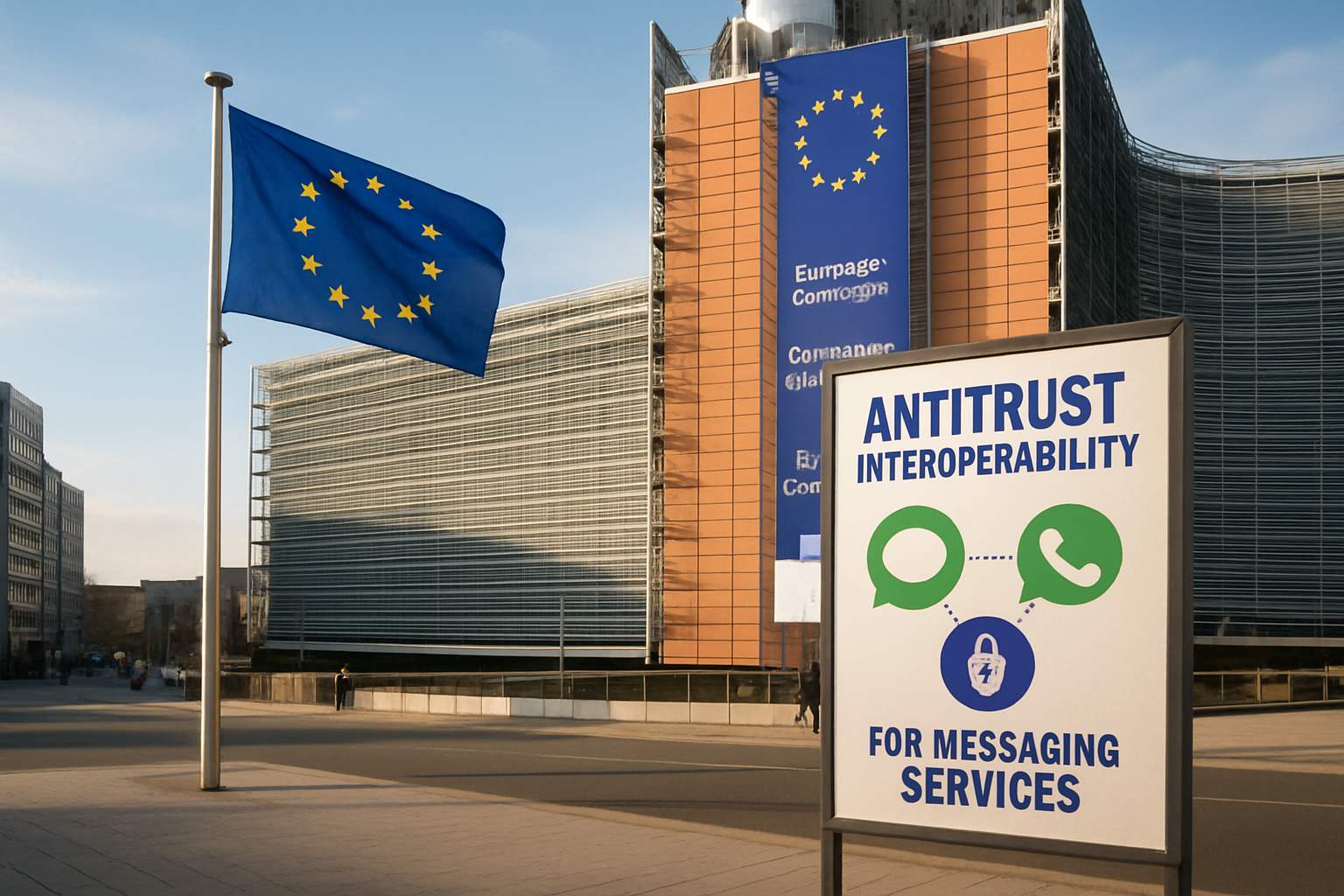
Europe’s antitrust spotlight has turned toward Meta’s recent WhatsApp policy on AI assistants. Consequently, Competition regulators argue the shift may lock rivals out of a critical messaging gateway. The European Commission has issued a Statement of Objections and threatened interim measures across the European Economic Area. Meanwhile, Italy and Brazil have already ordered Meta to suspend the contested terms domestically. This escalating pressure exposes a classic clash between platform governance and Antitrust Interoperability principles. Industry stakeholders now seek clarity on potential fines, timelines, and technical justifications. Moreover, billions of users rely on the service for business discovery, magnifying competitive stakes. In contrast, Meta claims system strain and security risks justify its restrictive stance. Therefore, the dispute offers a vivid test case for digital Regulation and market access doctrines. The following analysis maps the legal arguments, commercial implications, and strategic options ahead. Consequently, executives must monitor each procedural step to anticipate operational impacts.
Regulators Intensify Market Scrutiny
On 4 December 2025, the Commission opened a formal probe into the new WhatsApp Business Solution Terms. Subsequently, investigators warned that the ban on rival chatbots could inflict serious and irreparable harm. The Statement of Objections issued on 9 February 2026 elevates the risk of immediate interim remedies. Furthermore, fines under Article 102 TFEU can reach ten percent of Meta’s global turnover. At 2024 revenue levels, exposure approaches sixteen billion dollars, underscoring regulatory leverage. Italy’s AGCM and Brazil’s CADE have already imposed local suspensions, signaling coordinated enforcement momentum. Consequently, the company faces a multi-front defense posture across key jurisdictions. Antitrust Interoperability concerns remain central to each authority’s narrative. These developments highlight growing legal peril. However, deeper insights emerge when assessing evolving Regulation trends.
Platform Strategy And Defense
The company frames the restriction as a technical necessity rather than exclusionary intent. Accordingly, company spokespeople cite infrastructure strain caused by high-volume conversational queries. Moreover, they assert security risks could rise if unknown models received direct WhatsApp access. The firm offers its own branded assistant under controlled parameters. Critics respond that such self-preferencing exemplifies Antitrust Interoperability hazards. Furthermore, startups argue capacity issues could be solved through rate limits or pricing tiers. Regulators will likely request the technical evidence underlying every system-strain claim. Consequently, the company must balance transparency against commercial confidentiality during discovery. The company’s narrative stresses operational prudence. Nevertheless, antitrust enforcers appear unconvinced so far.
Legal Foundations In Focus
EU law prohibits abuse of dominance under Article 102 of the Treaty on the Functioning of the European Union. Self-preferencing that forecloses rivals can constitute an exclusionary abuse. Meanwhile, interim measures require proof of imminent and irreparable harm. The Commission rarely employs this tool, yet the WhatsApp case meets its high threshold. Moreover, the Digital Markets Act does not directly govern this investigation, leaving traditional antitrust frameworks predominant. Scholars emphasize that Antitrust Interoperability considerations strengthen the interim argument by stressing user lock-in. Consequently, the company could face behavioral remedies such as mandated API access while proceedings continue. Competition authorities will test proportionality when weighing any mandated access remedy. Therefore, procedure now centers on evidence exchange and proportionality tests. Next, market impact analysis becomes decisive for sanctions.
Global Ramifications For AI
WhatsApp enjoys billions of monthly active users across continents. Accordingly, access to that channel can jump-start customer acquisition for emerging conversational agents. Startups like Luzia and Poke warn that losing the platform will stifle international growth. Moreover, investors weigh distribution uncertainty when valuing AI ventures. The platform owner’s position therefore shapes capital allocation across the broader ecosystem. In contrast, backers argue alternative channels such as web widgets or mobile apps remain available. However, network effects favor entrenched messaging gateways, amplifying Antitrust Interoperability stakes. International regulators observe Europe’s playbook and may adopt similar enforcement strategies. Subsequently, multinational compliance teams must model divergent outcomes. Global distribution dynamics hinge on messaging access. Consequently, every AI roadmap now factors regulatory contingencies.
Business Stakes And Data
Quantifying exposure helps boards evaluate risk. The platform’s share of Europe’s mobile user base approaches eighty percent in several markets. Furthermore, antitrust fines can reach sixteen billion dollars given Meta’s recent revenue figures. In addition, interim measures could impose technical integration duties that reshape product roadmaps.
Key numbers at a glance:
- Oct 15 2025: Policy introduced for new providers
- Jan 15 2026: Terms applied to existing providers
- Dec 4 2025: EU investigation announced
- Feb 9 2026: Statement of Objections issued
- 10%: Maximum EU fine under Article 102
Moreover, reputational costs often exceed direct penalties, especially when user trust erodes. Boards seeking proactive mitigation can pursue internal audits of data flows and API dependencies. Professionals can enhance their expertise with the AI-Ethics Strategist™ certification. Consequently, organisations build credibility when demonstrating compliance literacy to regulators. Data illustrates the sheer financial and operational stakes. However, process deadlines also influence near-term strategy decisions.
Next Procedural Milestones Ahead
The company now has several weeks to reply formally to the Commission’s charge sheet. Subsequently, an oral hearing may occur, offering direct engagement with case handlers. Meanwhile, the Commission can adopt interim measures at any moment after reviewing the company’s arguments. Moreover, national regulators could escalate parallel enforcement if European measures stall. In contrast, the company might propose commitments to avoid harsher outcomes. Therefore, observers should monitor the Official Journal for notice of any adopted remedies. Antitrust Interoperability will likely dominate the public debate during these procedural exchanges. Timelines remain fluid pending the company’s response. Consequently, risk modelling requires frequent updates.
Strategic Takeaways For Leaders
Executives must translate legal uncertainty into actionable governance plans. Firstly, map critical dependencies on WhatsApp APIs for customer engagement. Secondly, prepare fallback channels in case interim measures disrupt service continuity. Moreover, align data retention and consent policies with evolving Regulation guidance. Thirdly, monitor Antitrust Interoperability dialogue to anticipate possible access obligations. Additionally, engage with trade associations to share technical evidence that clarifies infrastructure capacity. In contrast, silence may allow regulators to shape the narrative unchallenged. Consequently, proactive outreach often mitigates reputational fallout. Antitrust Interoperability savvy therefore becomes a board-level competency. These practices embed resilience amid shifting enforcement. However, sustained vigilance on Antitrust Interoperability will distinguish agile leaders.
The WhatsApp chatbot dispute exemplifies modern Competition and antitrust challenges in high-velocity AI markets. Regulators appear prepared to deploy both interim and final remedies if evidence confirms foreclosure. Meanwhile, the firm’s technical justification will face intense scrutiny under European procedural safeguards. Consequently, organisations that master Antitrust Interoperability insights can navigate uncertainty with greater confidence. Moreover, investing in ethical governance skills, such as the linked certification, strengthens stakeholder trust. Act now to evaluate dependencies, brief leadership teams, and secure the expertise required for sustained advantage.


