

AI CERTS
3 months ago
EU GPAI Code Sets New Regulatory Compliance Race
This article unpacks the GPAI timetable, key Code elements, and divergent stakeholder reactions. Furthermore, it offers concrete preparation steps validated by legal experts across Oxford and Bologna workshops. Read on to benchmark your programme against emerging EU AI Act expectations and avoid costly surprises.
Compliance Deadlines Approaching Fast
Deadlines define the coming year for GPAI providers. Moreover, the EU AI Act applies its GPAI chapter on 2 August 2025. New models face inspections from 2026, while existing systems have until 2027. Consequently, executives must align product roadmaps with Regulatory Compliance checkpoints well before codes freeze. Failure invites fines up to €35 million or seven percent of global turnover.
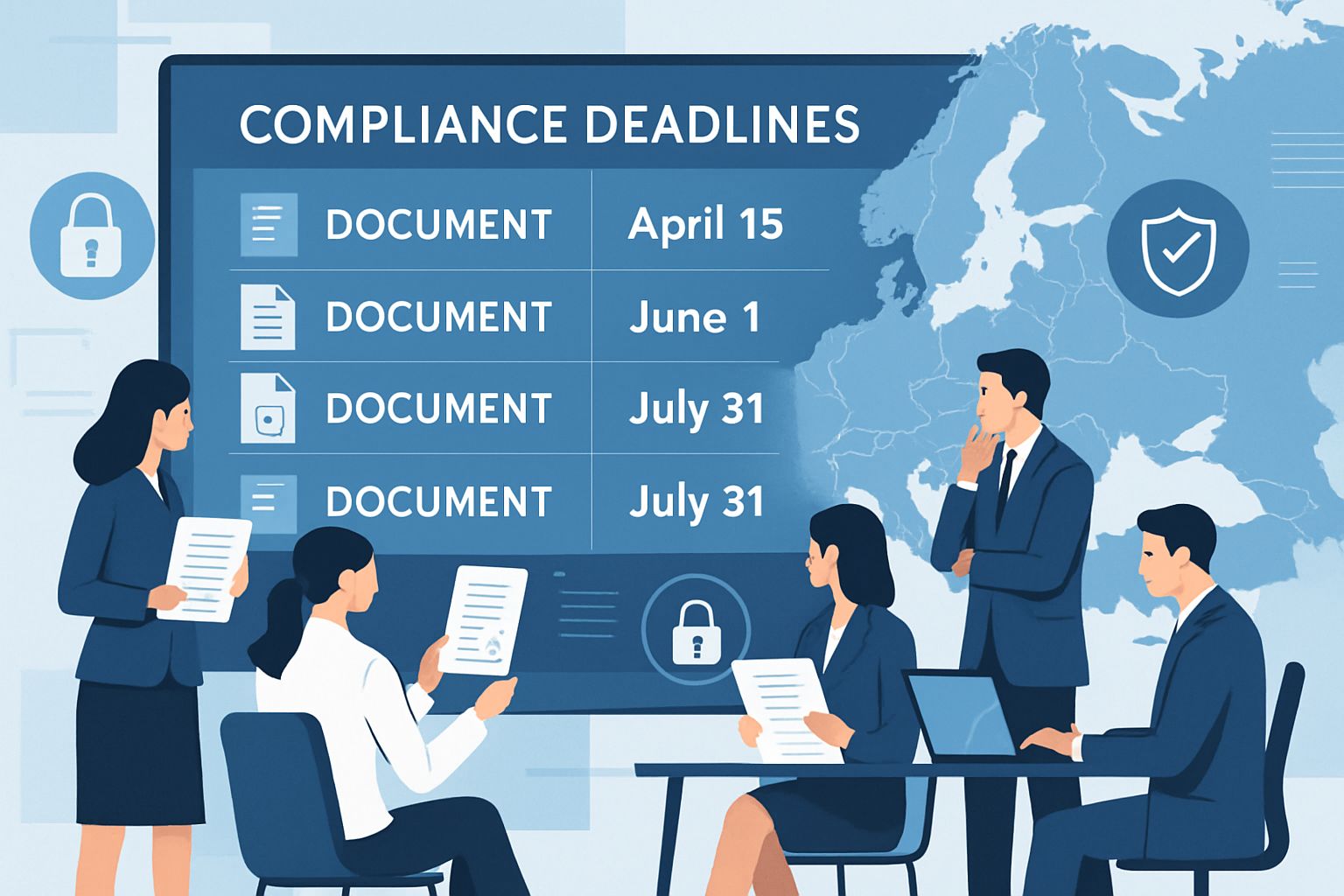
- 10 July 2025: Code published, signatory window opens immediately.
- 1 August 2025: Commission releases public signatory list online.
- 2 August 2025: EU AI Act obligations start for GPAI documentation and transparency.
These dates compress technical planning cycles. Nevertheless, early action lets teams spread Assessment workloads and budget security tooling sensibly. In contrast, late movers risk parallel code freezes and rushed audits across Oxford consultancies.
Upcoming dates lock in predictable milestones. Therefore, disciplined planning underpins the next section’s dive into Code requirements.
GPAI Code Core Elements
The Code clusters duties into Transparency, Copyright, and Safety chapters. Additionally, each chapter maps directly to Articles 53 and 55 of the EU AI Act. Providers must publish a training-data summary, maintain technical documentation, and establish a copyright notice channel. Moreover, systemic-risk models exceeding 10^25 FLOPs undergo red-teaming, incident reporting, and cybersecurity testing. Completing these tasks strengthens Regulatory Compliance evidence during future national audits. Oxford privacy researchers praised the documentation template for balancing detail against trade-secret protection. Bologna legal scholars nevertheless warned about varying disclosure expectations across member states. Their Assessment highlighted uncertainty around redacted training data references.
The Code translates abstract law into implementable checkpoints. Subsequently, signatories gain a defensible position before enforcement kicks in.
Voluntary Framework Signatory Benefits
Signing the voluntary Framework signals goodwill and grants structured dialogues with the AI Office. Furthermore, signatories receive early feedback on Assessment methodologies and incident templates. The Commission will publicly highlight compliant firms, offering reputational upside. Therefore, marketing teams can showcase proactive Regulatory Compliance during procurement talks. Bologna venture investors suggest the badge could ease due-diligence checks for emerging suppliers. In contrast, non-signatories expect heavier document requests when national authorities investigate. Oxford-based startup accelerators already coach members through the signatory workflow. However, critics argue the voluntary Framework may morph into a de facto obligation. Commission officials reply that the EU AI Act remains the sole binding text.
Signatory status offers practical and reputational gains. Consequently, many giants have already committed, as the next section details.
Industry Reactions Remain Split
Tech titans present a mixed front. Google, Microsoft, and Amazon embraced the Framework and signed within hours. Meanwhile, Meta declined, citing legal uncertainty and disclosure fears. xAI joined only the Safety chapter, illustrating partial engagement. Moreover, civil-society groups like Corporate Europe Observatory allege Big Tech diluted safeguards. Consequently, watchdogs question whether Regulatory Compliance proof may become a box-ticking exercise. Oxford media unions and Bologna publishers threaten lawsuits over training data use. Nevertheless, Commission Vice-President Henna Virkkunen argues the balance between innovation and protection is sound.
Stakeholders therefore remain vocal and divided. The following section shifts from debate to concrete provider action.
Practical Steps For Providers
Action must begin with a model inventory. Identify GPAI models and compute footprint to check systemic-risk thresholds. Subsequently, complete the Model Documentation Form and publish the training-data summary. Furthermore, establish an internal Regulatory Compliance steering committee reporting to senior leadership. EU AI Act guidance suggests including privacy, security, and legal officers in this team. Prepare red-teaming scenarios covering disinformation, copyright, and bias. Moreover, design an Assessment calendar aligned with quarterly release cycles.
- Establish a cross-functional risk register updated monthly.
- Link incident metrics to board dashboards for visibility.
- Secure budget for penetration testing and staff training programmes.
Professionals can enhance expertise with the AI Researcher™ certification. The credential supports evidence-based Regulatory Compliance conversations with auditors.
Systemic Risk Mitigation Plan
Systemic models demand deeper controls. Consequently, providers must implement intrusion detection, continuous monitoring, and post-deployment Assessment. Incident reports must reach authorities within 72 hours, mirroring GDPR timelines. Therefore, automate alerting workflows to sustain swift Regulatory Compliance under stress. Finally, maintain evidence repositories, enabling Bologna inspectors to trace decisions quickly.
A disciplined roadmap reduces fire-drill vulnerabilities. Subsequently, firms face audits with confidence, as the penalties overview shows next.
Penalties And Enforcement Timeline
Financial stakes add urgency. Fines for prohibited behaviours reach €35 million or seven percent of turnover. Additionally, intermediate breaches trigger €15 million or three percent penalties. Therefore, every team must embed Regulatory Compliance checks into release gates. Enforcement for new models begins August 2026, while legacy systems follow in 2027. Meanwhile, national agencies across Europe staff up for inspections. Consequently, providers gain a brief window to mature incident playbooks and documentation.
Penalties scale with severity. Strict timelines make preventive controls cheaper than ex-post damage control.
Europe’s GPAI landscape now shifts from talk to action. Providers that track deadlines, master the Code, and engage the Framework will minimise shocks. Consequently, early investments in tooling, audits, and security testing pay exponential dividends. Nevertheless, political scrutiny and activist monitoring ensure accountability will stay intense. Teams should therefore embed continuous Regulatory Compliance dashboards and upskill staff regularly. For deeper expertise, pursue the linked AI Researcher™ credential and stay ahead of evolving European guidance. The clock is ticking; proactive action beats reactive fines every time.


