

AI CERTS
3 months ago
EU Digital Omnibus Signals Regulatory Softening of AI Act
Industry groups welcomed the breathing room. In contrast, civil-society coalitions warned of weakened safeguards and legal confusion. Moreover, data professionals are studying possible overlaps with GDPR changes embedded in the same bundle. The debate now centers on whether Europe can retain strategic leadership without eroding Privacy standards. Therefore, understanding the political logic, technical hurdles, and next steps is critical for any technology leader. This article dissects the proposal, tracks stakeholder positions, and outlines actionable Compliance strategies before legislators decide.
Omnibus Proposal Overview Insights
The Digital Omnibus proposal bundles several deregulatory tweaks. Firstly, it aims to postpone selected high-risk AI duties until December 2027. Additionally, it introduces a potential one-year grace period for already deployed generative systems. Reuters reports that the Commission framed these moves as administrative streamlining worth up to €5 billion by 2029. Meanwhile, narrow procedural AI tools would skip certain registration steps.
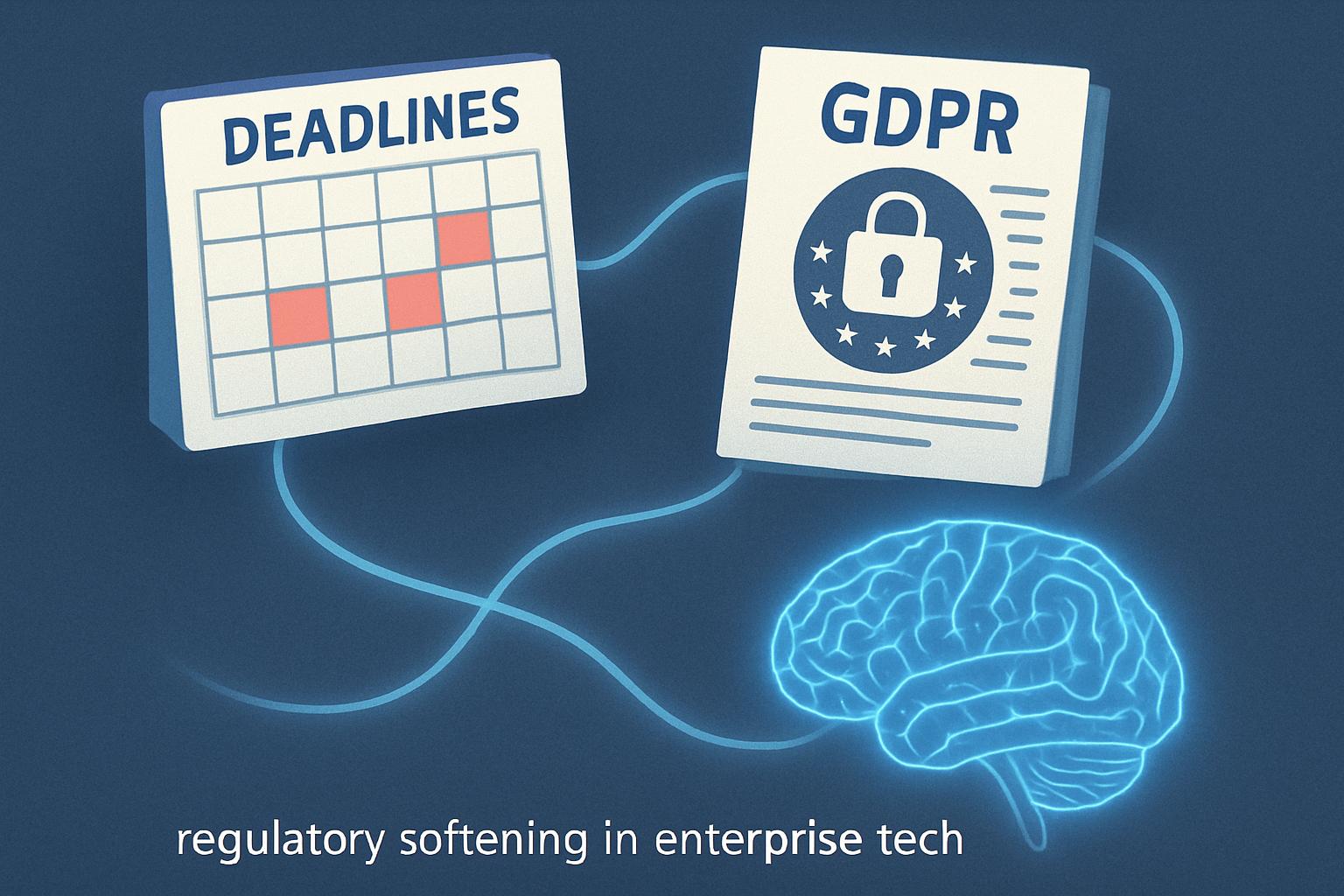
The European Commission insists that Regulatory Softening will not dilute core protections. Nevertheless, observers note the package reopens negotiated text only sixteen months after the AI Act entered force. Moreover, legal counsel from DLA Piper stresses that member states still lack enough notified bodies to run conformity checks.
Key points from the proposal include:
- Delayed high-risk enforcement to late 2027
- Grace period discussions for general-purpose AI transparency
- Slimmer reporting for procedural systems
- Possible data rule alignment with GDPR flexibility
These elements spotlight the Commission’s economic rationale. However, political acceptance remains uncertain.
Section takeaway: The Omnibus sets the scene for broader Regulatory Softening while promising cost relief. Nevertheless, Parliament scrutiny now begins, directing attention to detailed amendments.
High-Risk Deadline Changes Explained
High-risk systems sit at the heart of the AI Act. However, the Commission now proposes to push several technical and governance requirements back sixteen months. Consequently, providers gain extra time to build quality datasets, test bias, and secure human oversight pipelines. Regulatory Softening appears again in the suggestion to waive fines during an interim grace period.
Furthermore, companies have complained about missing harmonised standards. CEN-CENELEC confirmed that essential benchmarks will likely arrive only in 2026. Therefore, Compliance teams struggle to design audit processes without stable criteria. In contrast, consumer advocates fear the gap enables opaque credit scoring and predictive policing.
Consider the timeline shifts:
- Original high-risk deadline: 2 August 2026
- Proposed new deadline: December 2027
- Optional enforcement grace: August 2027
This calendar reveals tangible benefits for resource planning. Yet the second wave of Regulatory Softening could weaken deterrence if fines remain dormant.
Section takeaway: Deadline extensions illustrate deep implementation hurdles. Consequently, the spotlight moves to data governance debates shaping the next battleground.
GDPR And Data Debates
Data questions sit at the crossroads of innovation and rights. Moreover, the Omnibus floats tweaks that would let developers reuse personal data for model training under certain safeguards. Critics argue this move clashes with GDPR purpose-limitation rules. Meanwhile, Commission lawyers describe it as Regulatory Softening necessary to harmonize overlapping laws.
Subsequently, Privacy activists warn of downstream profiling risks. A Finance Watch spokesman noted potential discriminatory lending outcomes. Furthermore, BEUC described the data proposal as deregulation benefiting large platforms almost exclusively.
Legal experts advise firms to upgrade consent management portals now. Therefore, proactive alignment with both GDPR and forthcoming AI Act duties can avoid sudden pivots. Professionals can enhance their expertise with the AI+ Sales™ certification, which offers structured guidance on ethical data pipelines.
Section takeaway: Data provisions reveal the delicate balance between openness and Privacy. Nevertheless, industry lobbying will intensify as senators evaluate the Digital Omnibus chapter.
Industry Lobbying And Reactions
Large technology vendors have lobbied vigorously since early 2025. Moreover, forty-plus European CEOs demanded a two-year “clock-stop” on the AI Act. The Commission rejected that idea in July yet embraced partial Regulatory Softening five months later.
Consequently, Google, Meta, and regional champions like Airbus praised the Digital Omnibus for restoring competitive parity with the United States. Additionally, trade associations cite Compliance cost savings for small suppliers.
In contrast, the proposal’s opponents dismissed the narrative. Access Now called the delay “regulatory retreat,” while BEUC said consumers would pay the price through lost Privacy safeguards.
Section takeaway: Lobbying success illustrates policymaker sensitivity to growth concerns. However, civil-society pushback sets the stage for heated parliamentary debates next spring.
Civil Society Concerns Spotlight
Rights groups view the Omnibus through a very different lens. Consequently, they fear the cumulative effect of Regulatory Softening will normalise biased algorithms across employment, credit, and policing.
Furthermore, activists highlight the unchanged penalty ceilings. Fines of up to €35 million remain on paper, yet delayed application could mute deterrence. Moreover, they argue that incomplete standards undermine the AI Act’s risk-based logic.
Euronews quoted Peter Norwood warning that opaque models may deny loans without applicants’ knowledge. Subsequently, fifteen privacy scholars urged lawmakers to maintain GDPR integrity throughout negotiations.
Section takeaway: Civil voices frame the Omnibus as a threat to fundamental rights. Therefore, legislators must weigh economic relief against systemic harm before voting.
Compliance Planning For Firms
Despite political flux, enterprise roadmaps cannot pause. Instead, companies should treat Regulatory Softening as temporary breathing space rather than amnesty. Firstly, build an inventory of all AI systems, classifying them under the AI Act risk taxonomy. Secondly, map data flows to ensure GDPR alignment even if future carve-outs emerge.
Additionally, firms should engage in emerging standard-setting committees. Participation offers early insights that shorten audit cycles. Meanwhile, document every model change to support future inspection by national authorities. Moreover, risk committees must embed Privacy impact assessments into project checkpoints.
A concise playbook includes:
- Create a cross-functional Compliance steering team
- Schedule mock conformity assessments semi-annually
- Track Digital Omnibus amendments weekly
- Invest in explainability tooling for high-risk workflows
Section takeaway: Proactive governance mitigates uncertainty and positions firms for advantage. Subsequently, attention turns to the legislative timeline guiding final obligations.
Legislative Path Ahead Details
The Digital Omnibus now moves to the Council and Parliament. Moreover, rapporteurs in LIBE and Internal Market committees will draft amendments by mid-2026. Consequently, trilogue negotiations could stretch into late autumn. Regulatory Softening may shrink, expand, or vanish during this process.
Meanwhile, member states must still nominate notified bodies. Furthermore, the Code of Practice for General-Purpose AI remains in draft, limiting practical guidance.
Section takeaway: The law remains fluid until final votes. Nevertheless, organisations should monitor each procedural milestone to adjust plans promptly.
Conclusion And Next Steps
Europe’s attempt to balance innovation with rights has entered a pivotal phase. Consequently, the current Regulatory Softening trajectory offers limited relief yet introduces new uncertainties. Technology leaders should keep building risk registers, refining data governance, and joining standards initiatives. Moreover, tracking parliamentary sessions will reveal whether deadline extensions survive.
Meanwhile, adding formal credentials strengthens internal credibility. Therefore, explore the AI+ Sales™ certification to deepen practical Compliance expertise.
Ultimately, decisive governance today mitigates costly surprises tomorrow. Act now by aligning teams, documenting models, and engaging policymakers.


