

AI CERTS
2 hours ago
Essex Pause Highlights Racial Bias Surveillance Debate
Meanwhile, media outlets reported that Essex quietly paused deployments for software adjustments. This article unpacks events, explains implications for policing, and offers balanced analysis. Moreover, it supplies hard numbers, expert views, and governance insights for professionals.
Essex Surveillance Pause Details
Essex Police deployed live cameras between August 2024 and February 2025. During that span, officers scanned about 1.3 million faces. Furthermore, 123 alerts yielded 48 arrests, with one mistaken intervention recorded. Media coverage framed the pause as evidence of Racial Bias Surveillance undergoing review. Observers linked the decision to escalating public scrutiny nationwide. Nevertheless, the force has not issued a dated pause statement. However, internal sources say vans stayed parked while engineers reviewed similarity thresholds. Consequently, the pause aims to align performance with fairness promises and to reassure communities.
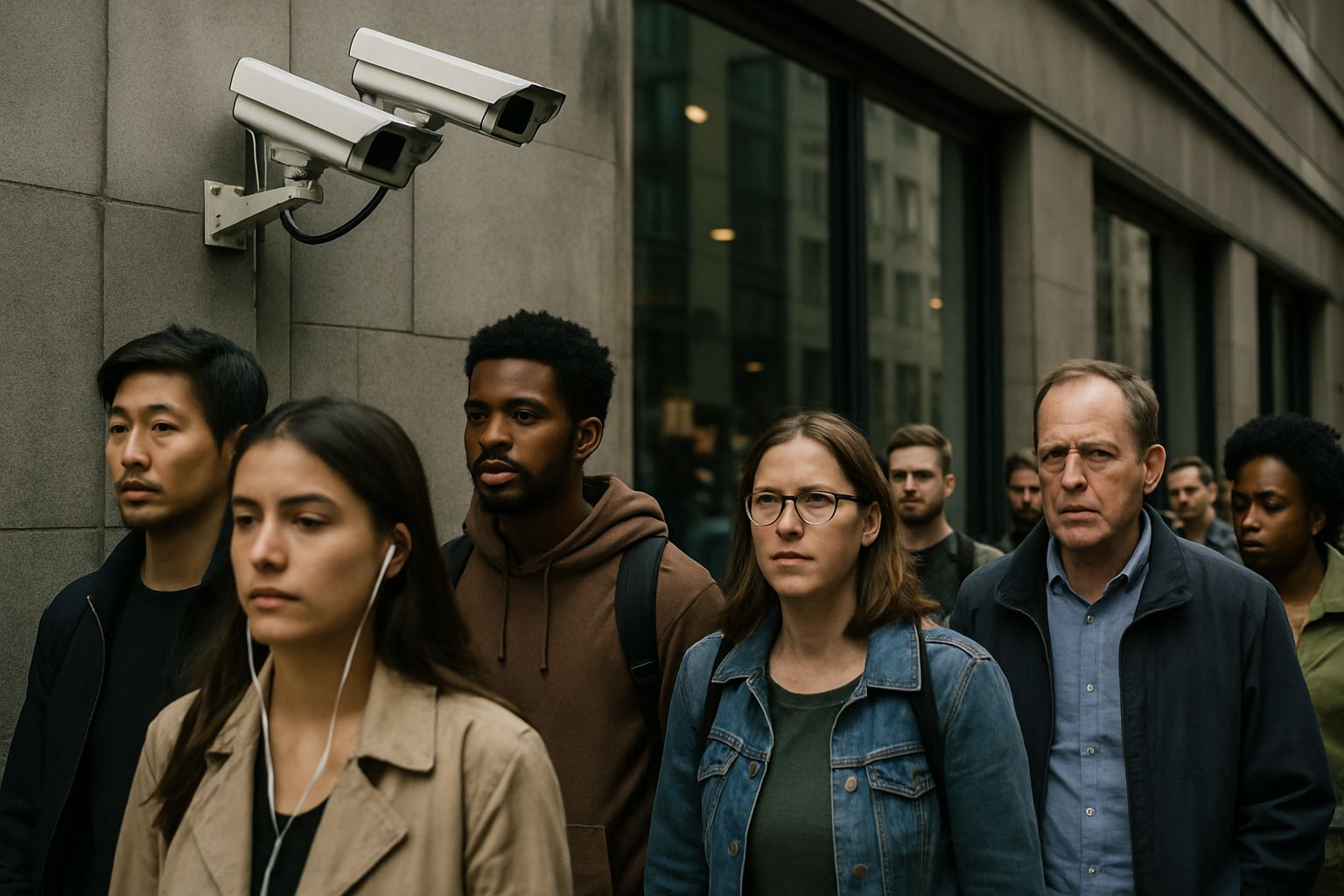
These events created an accountability spotlight. Consequently, stakeholders demanded transparent next steps.
That demand gained momentum once the Cambridge Study Findings Report reached public folders.
Cambridge Study Findings Report
The Cambridge team staged a controlled field experiment with 188 volunteers. Additionally, researchers reviewed operational logs for deeper context. They found the system correctly matched about half the watch-list members at Essex’s chosen threshold. Incorrect alerts remained rare within the experiment. However, statistical tests showed higher true-positive rates for men and for Black participants compared with other ethnic groups.
The study became a touchstone in the Racial Bias Surveillance discourse. Moreover, the deterrence analysis detected no measurable crime reduction. Therefore, authors recommended demographic monitoring, watch-list reviews, and expanded testing conditions.
In essence, Cambridge delivered granular evidence of uneven performance. Nevertheless, it also showed that configuration choices influence outcomes.
Those configuration variables became central in the NPL Testing Insights Revealed.
NPL Testing Insights Revealed
The National Physical Laboratory evaluated the Corsight Apollo 4 algorithm under controlled conditions. Consequently, it tested multiple similarity thresholds and watch-list sizes. At thresholds 55 and 63, demographic differences in true- and false-positive rates were not statistically significant. NPL’s evidence complicated the Racial Bias Surveillance narrative. Furthermore, the lab emphasised that results shift with thresholds, image quality, and context. In contrast, conclusions cannot be generalised to other vendors. Nevertheless, the report proved that careful tuning can mitigate observable bias. Importantly, NPL supplied public methodology notes for verification.
These findings suggest technology alone is not destiny. Therefore, governance and parameter selection carry real weight.
The contrast between both studies intensified Fairness Concerns Raised Widely across civic arenas.
Fairness Concerns Raised Widely
Civil liberties groups, including Liberty and Big Brother Watch, highlighted Racial Bias Surveillance risks to marginalised communities. Moreover, they criticised mass data collection without proven deterrence. Regulators joined the dialogue. The Information Commissioner’s Office requested urgent clarity after earlier national tests exposed elevated false positives for some ethnic groups. Meanwhile, the Home Office signalled a forthcoming biometric consultation. Consequently, forces now face potential legal action if demographic monitoring lags. Public sentiment also matters; community leaders fear a chilling effect on public space use. Therefore, building trust demands transparent reporting and accountable oversight.
Stakeholder pressure has grown louder and more coordinated. Subsequently, Essex and other forces must justify every camera activation.
To understand those justifications, we examine the Operational Impact Assessment Results.
Operational Impact Assessment Results
Operational data, analysed by Cambridge, revealed crucial ratios. 1.3 million scans produced 48 arrests, representing a hit rate near 0.004%. Furthermore, one mistaken intervention surfaced, indicating low recorded harm from false alerts. However, that metric ignores unverified false negatives and privacy costs. Several factors shape impact:
- Watch-list composition influences which ethnic groups appear.
- Threshold settings shift true- and false-positive balance.
- Officer discretion affects final decisions after alerts.
- Community perception shapes legitimacy and cooperation.
- Ongoing Racial Bias Surveillance audits track disparities.
Moreover, proponents argue that finding any high-risk offender justifies the effort. In contrast, critics contest proportionality when millions are scanned passively. Consequently, the operational assessment remains a battleground for value judgments.
Metrics alone do not settle the debate. Therefore, structured governance must accompany technical metrics.
That governance conversation underpins our final section, Future Governance Pathways.
Future Governance Pathways
Policing leaders now draft policy templates that mandate demographic reporting each quarter. Additionally, many explore algorithmic threshold audits before every deployment. Professionals can enhance their expertise with the AI+ UX Designer™ certification. Such programmes teach human-centric design that minimises unintended bias. Moreover, cross-disciplinary review boards, including ethicists and statisticians, gain traction. Consequently, forces weigh benefits against litigation costs. Meanwhile, lawmakers discuss statutory codes addressing Racial Bias Surveillance head-on. Facial recognition suppliers may need to expose training-data lineage to retain contracts. In contrast, failure to adapt could halt deployments nationwide.
Governance innovations accelerate, yet many details remain unsettled. Nevertheless, professionals now possess tools to influence responsible outcomes.
The conversation shifts from theory to implementation, as summarised below.
Essex Police’s pause illustrates the evolving balance between public safety and equitable technology. Furthermore, the Cambridge and NPL reports prove that Racial Bias Surveillance challenges hinge on settings, oversight, and data stewardship. Facial recognition can locate suspects, yet its social licence depends on fair treatment across ethnic groups and transparent policing processes. Consequently, continuous evaluation, robust community engagement, and skilled design professionals will define future deployments. Meanwhile, practitioners seeking deeper expertise should consider certifications like the linked AI+ UX Designer™ programme. Ultimately, responsible innovation demands vigilance and collaboration. Therefore, stay informed and help shape surveillance policy that protects both security and civil rights.


