

AI CERTS
3 months ago
Enterprise Adoption Slows as Firms Dodge Rigorous AI ROI Metrics
Only five percent of companies extract measurable enterprise-level gains, while many celebrate isolated pilot wins. However, those headline numbers mask deeper organisational challenges around ROI attribution, governance, and incentives. This article dissects why many corporate clients resist robust measurement, how that Resistance manifests, and what leaders can change. Moreover, we outline a practical playbook grounded in current data, expert quotes, and emerging certification paths.
Readers will leave with concrete steps to sustain Enterprise Adoption while tracking genuine Value-Add for every stakeholder. Additionally, we consider how unmeasured costs, including ongoing cloud Pricing, erode long-term margins. Nevertheless, disciplined leaders demonstrate that transparent metrics can transform experimentation into durable competitive advantage.
Elusive Enterprise AI Returns
Many organisations trumpet impressive prototype statistics, yet enterprise-level numbers tell another story. BCG’s 2025 study shows five percent classify as “future-built” and capture measurable gains. Meanwhile, McKinsey reports only 39 percent see EBIT impact beyond isolated use cases. Furthermore, Deloitte finds typical payback windows stretch two to four years, challenging quarterly expectations.
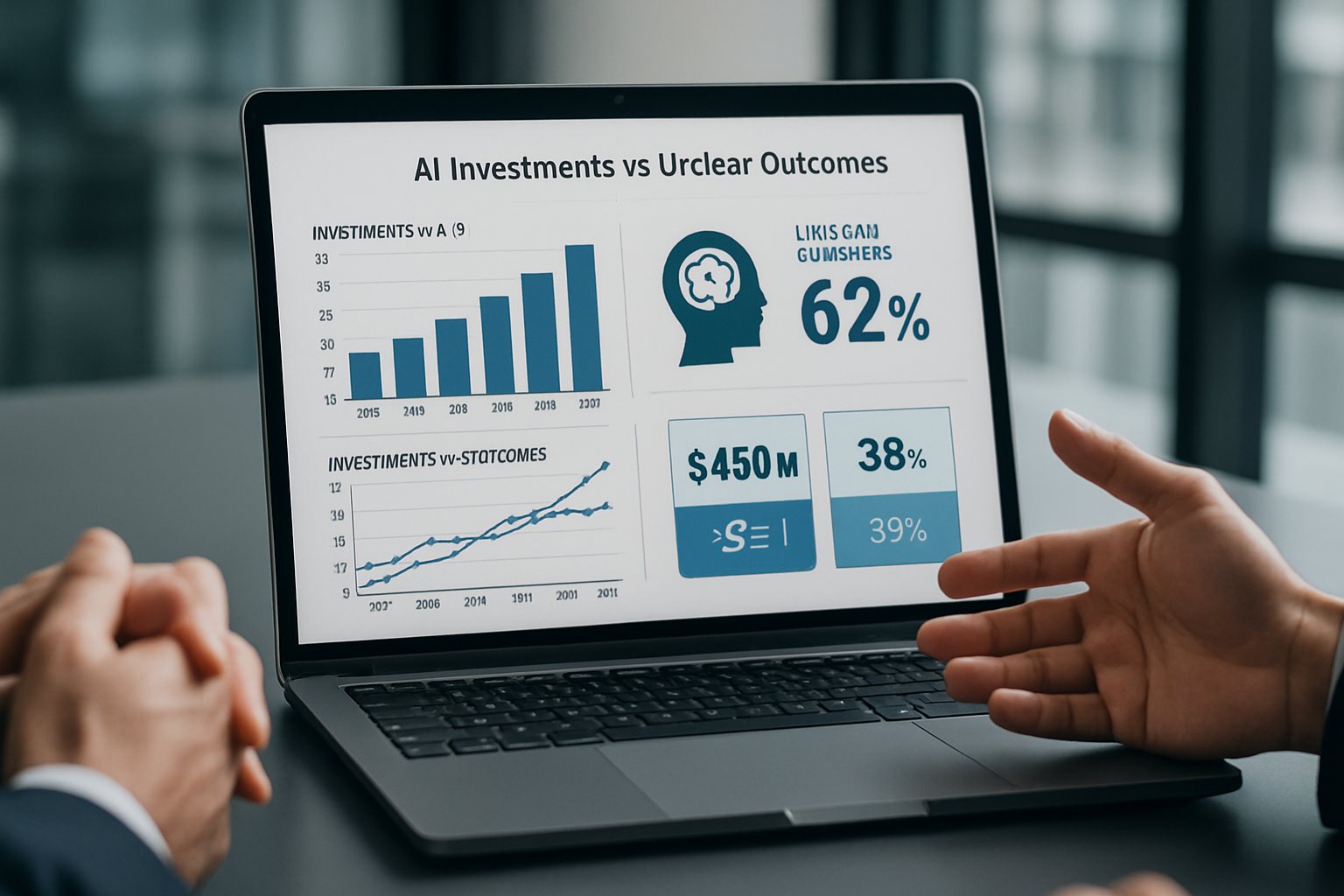
Such findings complicate Enterprise Adoption narratives promoted by vendors and consultants. Leading indicators like reduced call handling time delight the Customer, yet lagging metrics often remain blank. In contrast, leaders that integrate both indicator classes realise stronger Value-Add at scale. Therefore, the gulf between hype and hard cash continues widening.
These statistics confirm that financial benefits stay elusive for most investors. However, understanding why measurement lags is the next critical step. Accordingly, we now explore the structural reasons metrics fall behind innovation speed.
Why Metrics Still Lag
Measurement complexity starts with attribution. AI projects often launch alongside process redesign, new Pricing models, and marketing campaigns. Consequently, isolating AI’s marginal effect becomes technically demanding. Baselines, control groups, and experimentation culture remain rare across large enterprises.
Moreover, many teams underestimate total cost of ownership. Recurring cloud fees, model retraining, and governance tooling eat into anticipated ROI. Yet business cases seldom reflect such realities. Subsequently, finance departments doubt the projections and delay enterprise KPIs.
Siloed incentives intensify the issue. Business units track local throughput while corporate finance seeks consolidated benefit reporting. Nevertheless, without shared dashboards, numbers never align. Executives therefore postpone enterprise decision rights, stalling Enterprise Adoption. Measured Enterprise Adoption yields sustainable competitive gains.
Complexity, cost blindness, and organisational silos combine to obscure truth. Still, human factors of Resistance deserve closer inspection. Let us examine those behavioural barriers next.
Key Measurement Resistance Drivers
Fear of accountability tops the list. Leaders embracing experimentation language avoid hard commitments if early ROI disappoints. Meanwhile, public announcements create reputational stakes that discourage transparency about misses. Additionally, career incentives reward visible activity over financial clarity.
Short investor horizons heighten the pressure. Boards demand swift payback, yet transformative AI needs multi-year horizons. In contrast, declaring small Customer satisfaction wins feels safer than promising EBIT impact. Consequently, formal measurement frameworks face executive Resistance.
Measurement tooling also incurs budget. Setting up data instrumentation, control cohorts, and analytics workflows requires fresh Pricing negotiations with cloud vendors. Therefore, teams may skip rigorous design to protect headline margins. Nevertheless, that shortcut undermines credible Value-Add stories.
Current industry snapshots underline the stakes:
- BCG reports 60 percent of firms see little measurable benefit from AI programmes.
- McKinsey finds only 39 percent record enterprise EBIT impact across surveyed companies.
- Deloitte shows merely six percent achieve payback within the first year.
- Gartner notes 63 percent of high-maturity leaders run consistent financial analyses.
- EY indicates 77 percent report function-level gains, yet Enterprise Adoption success remains limited.
These numbers expose systemic Resistance to disciplined metrics. However, proven practices can reverse the trend. Next, we outline a repeatable playbook adopted by “future-built” leaders.
Building A Winning Playbook
Successful organisations start with business-outcome hypotheses, not model fascination. They select use cases tied to revenue per Customer or cost per ticket. Moreover, they establish counterfactual baselines before writing any code. Randomised rollouts or A/B designs create credible comparisons for ROI audits.
Centralised governance follows. Dedicated AI steering committees reconcile local metrics with enterprise finance dashboards. Consequently, leadership sees aggregated Value-Add without drowning in noisy details. Regular cadence reviews maintain momentum and spotlight underperforming assets early.
Current Hard Data Snapshot
Quantitative evidence supports this playbook. BCG notes over 60 percent of “future-built” firms track AI value rigorously. Meanwhile, Gartner indicates regular assessments triple the chance of high generative returns. Additionally, Deloitte connects transparent costing with shortened payback windows.
Professionals can reinforce governance skills through the AI Security Compliance™ certification. Therefore, combining strong governance with certified talent anchors sustainable Enterprise Adoption.
Tactics such as baselines and certified oversight convert pilots into profitable programs. However, ecosystem incentives also influence measurement behaviour. Let us turn to vendor and consultancy dynamics.
Vendor And Consultancy Incentives
Software providers benefit when clients value activity metrics like model calls instead of EBIT outcomes. Consequently, some contracts emphasize uptime, not measurable profit. Pricing terms linked to usage can obscure true cost drivers and delay enterprise clarity. Nevertheless, forward-looking clients negotiate shared-success clauses that align fees with documented impact.
Consultancies also occupy a delicate position. They diagnose measurement gaps while selling frameworks to fill those gaps. Moreover, high billing rates create subtle incentives to prolong experimentation cycles. In contrast, mature consultancies now offer outcome-based engagements to encourage disciplined Enterprise Adoption.
Cloud hyperscalers add another layer. Metered services encourage rapid experimentation yet complicate holistic cost capture. Therefore, procurement teams must integrate cloud invoices with financial dashboards early.
Aligning incentives across vendors, advisors, and finance teams strengthens measurement culture. Still, leaders need a forward lens to sustain progress. We conclude by examining the road ahead and tangible next steps.
Future Outlook And Steps
Industry evidence suggests the measurement gap will narrow within three years. Regulatory scrutiny and investor demands for transparent ESG-style metrics accelerate the trend. Additionally, growing marketplaces for benchmark datasets will standardise impact reporting. Consequently, firms delaying structured ROI tracking risk competitive erosion.
Meanwhile, insurance and telecom sectors showcase measurable EBIT from scaled projects, validating disciplined Enterprise Adoption paths.
Certification For Trusted Governance
Boards increasingly demand independent validation of security and compliance. Therefore, professionals holding the AI Security Compliance™ credential signal readiness for stringent oversight. Such certification aligns technical rigour with board-level confidence, ultimately supporting measurable Value-Add initiatives.
Market pressures and emerging standards point toward a data-driven future. However, that future rewards leaders acting today.
In summary, the AI investment boom continues, yet reliable measurement remains scarce. Executives must confront technical hurdles, incentive misalignments, and cultural Resistance simultaneously. Fortunately, proven playbooks, aligned incentives, and certifications provide clear guidance. Therefore, now is the time to integrate baselines, cost visibility, and accountable governance into every Enterprise Adoption initiative. Act decisively, measure relentlessly, and secure your competitive edge. Explore the linked certification to strengthen trust and accelerate enterprise value creation.


