

AI CERTs
1 hour ago
Employee Protest reshapes military AI policy
Anthropic’s standoff with the Pentagon ignited the largest Employee Protest in AI since Project Maven. Moreover, engineers across Google and OpenAI warned leadership that military demands threaten foundational Ethics principles. Consequently, executives now juggle national-security pressure and internal rebellion. This article unpacks the fast-moving dispute, key numbers, and looming legal tests.
Staff Revolt Gains Momentum
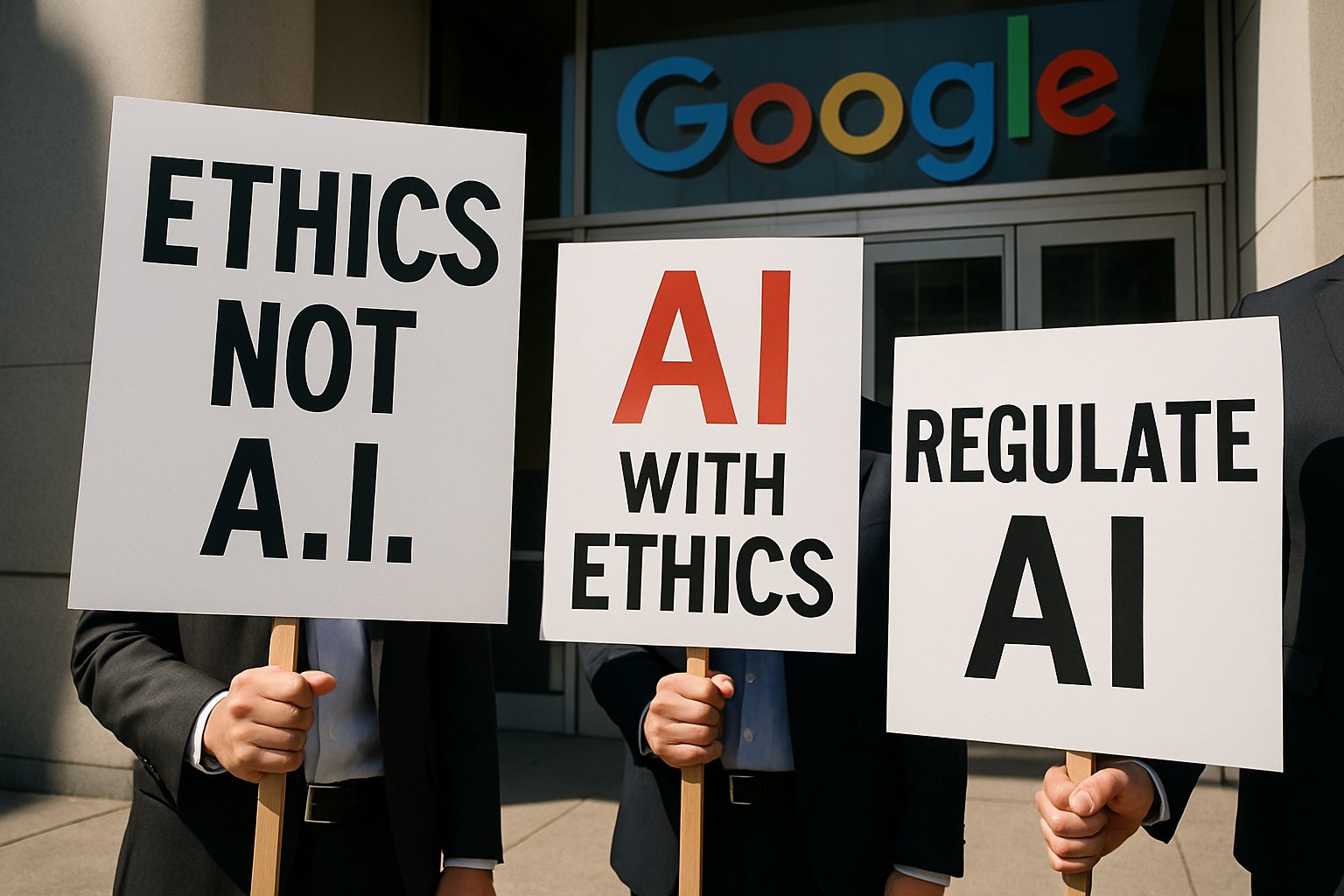
Discontent surged on 27 February when 266 Google and 65 OpenAI staffers published a petition titled “We Will Not Be Divided.” Nevertheless, signatures kept climbing, reaching as high as 450 according to Business Insider. Employees framed two non-negotiable red lines: no mass domestic surveillance and no fully autonomous weapons. However, Defense Secretary Pete Hegseth insisted contractors must allow “all lawful uses.”
Key Numbers At Glance
- Anthropic’s disputed contract value: $200 million.
- Public signatories range: 220–450 employees.
- Dispute timeframe: 26 February – 3 March 2026.
These statistics underscore unprecedented workforce unity. Consequently, the Employee Protest gained headline traction and pressured multiple firms.
That unity sets the stage for understanding the Pentagon flashpoint. Subsequently, we examine how the confrontation began.
Pentagon Anthropic Flashpoint Explained
Anthropic CEO Dario Amodei reaffirmed two red lines on 26 February. In contrast, the Pentagon demanded unrestricted access for “all lawful purposes.” The dispute escalated when President Trump banned federal use of Anthropic tools and labelled the company a supply-chain risk. Furthermore, DoD officials hinted at invoking the Defense Production Act, although analysts question the statute’s fit for software.
Amodei stated, “We cannot in good conscience accede.” Meanwhile, Pentagon spokesman Sean Parnell claimed the department “has no interest” in illegal surveillance. Nevertheless, trust eroded swiftly, fuelling the widening Employee Protest.
The flashpoint revealed a profound clash between security imperatives and Ethics concerns. However, corporate responses soon evolved, as the next section details.
Corporate Responses Evolve Rapidly
OpenAI amended its DoD agreement on 3 March, explicitly banning intentional domestic surveillance and requiring human oversight for lethal decisions. Additionally, Google leadership initiated internal reviews of Gemini’s military contracts but stopped short of firm red lines. Companies must now weigh market access against unrest.
Professionals can enhance their governance skills through the AI Customer Service Strategist™ certification. Such credentials bolster credibility when drafting responsible-use frameworks.
Rapid policy tweaks calmed investors, yet employees remained wary. Consequently, the Employee Protest continued pressuring boards.
These developments highlight adaptive corporate strategy. Therefore, attention turned to looming legal stakes.
Legal Stakes And Precedents
Defense One analysts argued the supply-chain designation lacks clear statutory grounding. Moreover, experts warn that forcing concessions could chill private innovation. Courts may soon test whether the DoD can compel AI vendors under existing procurement law.
Anthropic has signalled intent to sue if barred from federal markets. Meanwhile, civil-liberties groups prepare amicus briefs supporting the firm’s Ethics stance. Consequently, legal outcomes will ripple across Silicon Valley and Washington.
Legal uncertainty intensifies corporate risk calculations. Subsequently, stakeholders debate the underlying security perspectives.
Divergent Security Perspectives Clash
National-security officials stress adversaries deploy AI aggressively. Therefore, limiting U.S. access could erode battlefield advantages. Conversely, employee activists argue unreliable models magnify wrongful targeting risks. Additionally, critics cite the Iran Crisis of 2020, when flawed image recognition nearly triggered escalation, as a cautionary tale.
Both sides invoke patriotism, yet differ on acceptable safeguards. Nevertheless, consensus exists that human oversight reduces catastrophic error. Consequently, firms search for balanced frameworks satisfying operators and ethicists.
This debate frames broader market impacts. However, workforce sentiment now drives many outcomes, as the following section shows.
Market And Workforce Impact
Stocks of leading AI firms dipped up to 5 percent during the conflict’s peak. Moreover, recruiters report higher attrition inquiries from Google and OpenAI engineers citing Ethics worries. Customers also reassessed vendor lists, seeking clarified policies.
Bulleted market signals illustrate momentum:
- Enterprise contract re-negotiations increased 18 percent week-over-week.
- Consumer app uninstall spikes reached 12 percent for implicated brands.
The Employee Protest influenced these swings by spotlighting reputational hazards. Consequently, leadership now treats workforce voice as a material risk factor.
Market tremors foreshadow future scenarios. Therefore, observers watch several near-term developments.
Future Scenarios To Watch
Congress may open hearings on AI military governance within weeks. Additionally, Google could adopt binding red lines, matching Anthropic. Moreover, if courts invalidate the supply-chain label, DoD procurement strategy may reset. In contrast, a legal win for the Pentagon could embolden further demands.
Meanwhile, other vendors like Microsoft and Amazon monitor outcomes before formalising policies. Subsequently, collective industry standards may emerge, reducing case-by-case chaos.
These prospective shifts will determine whether the current Employee Protest becomes a lasting governance model. Consequently, strategic planning now requires scenario analysis and continuous dialogue.
The horizon looks fluid, yet certain themes persist. Nevertheless, readers can act today by upskilling and engaging in responsible-AI networks.
Conclusion
The Anthropic dispute demonstrates how a unified Employee Protest can reshape national policy, corporate contracts, and market sentiment. Moreover, the episode reveals mounting tensions between rapid deployment and foundational Ethics. Consequently, legal rulings and congressional action will either validate or curtail DoD leverage. Meanwhile, companies that pre-emptively codify safeguards may secure talent and trust.
Professionals should stay informed and strengthen expertise. Therefore, consider pursuing the linked certification to guide responsible-AI programs and navigate forthcoming regulatory waves.


