

AI CERTs
2 hours ago
Emotion-Aware Advertising Engines: Real-Time Creative Impact
When a streaming ad shifts tone mid-view, technology is sensing more than clicks. Marketers now pilot systems that read real-time emotional cues and instantly update visuals, sounds, or calls-to-action. These systems, called Emotion-Aware Advertising Engines, promise deeper resonance and measurable business lift. Moreover, tightening privacy laws force brands to weigh innovation against compliance. This article unpacks market momentum, mechanics, case results, legal pitfalls, and strategic guidance for practitioners. Consequently, advertisers must grasp technical and regulatory nuances before scaling pilots. In contrast, rivals that hesitate risk losing attention and sales share. Furthermore, secondary trends in affective computing and audience targeting accelerate the shift toward emotion-aligned creative. Therefore, a clear roadmap can convert experimental insights into durable competitive advantage. Read on for data-rich analysis, expert quotes, and practical next steps.
Market Momentum Snapshot Now
Market analysts position emotion AI as a multibillion-dollar segment growing near 22 percent annually. Grand View and MarketsandMarkets both forecast nine-billion revenue potential by 2030. Meanwhile, dynamic creative optimization tools from Meta and Google simplify operational rollout.
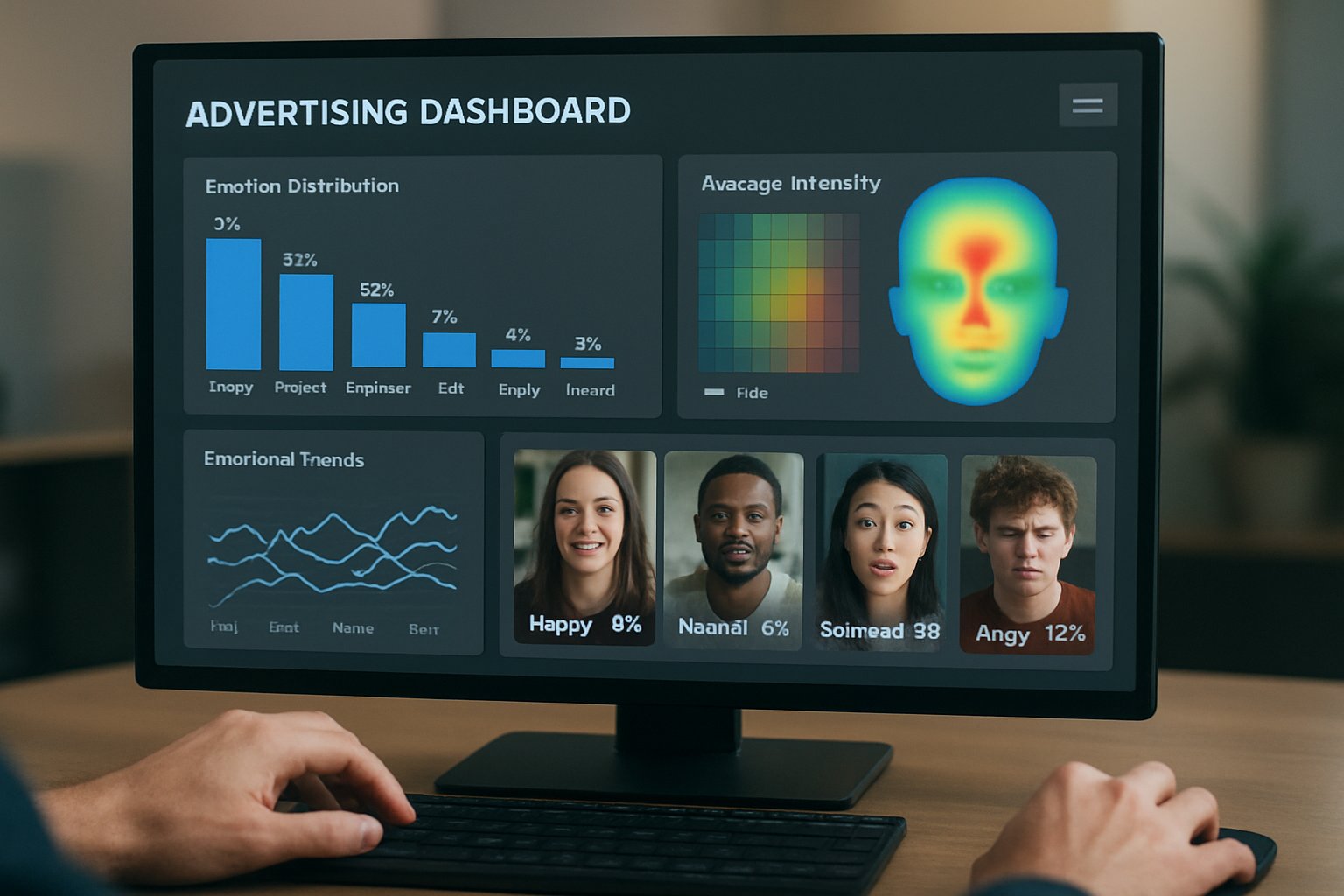
Additionally, vendors highlight strong metric lifts when ads mirror surrounding content sentiment. Wurl reported seven-fold brand awareness growth and doubled purchase intent in controlled streaming trials. Realeyes and Mars cited eighteen percent incremental sales in certain regions.
- Emotion AI market: USD 2.74B 2024
- Forecast size: USD 9.01B 2030
- CAGR estimate: ~22 percent
These numbers confirm surging investment and rising advertiser curiosity. However, questions remain about sustained performance across categories. Understanding the engine itself offers clearer context.
Core Engine Mechanics Explained
At its heart, an Emotion-Aware Advertising Engines architecture links emotion detection models with DCO decisioning. Sensors range from webcam facial coding to program emotion analysis that avoids biometrics. Subsequently, the DCO stack selects the best asset combination before render time. Therefore, scaling Emotion-Aware Advertising Engines requires modular asset libraries and consented data flows.
Multimodal approaches combine voice, text, and physiological data for robustness. Moreover, model outputs map to creative rules such as upbeat music or softer colors. Latency budgets often restrict changes to pre-assembled variants instead of live frame edits.
Affective computing breakthroughs shorten inference windows to milliseconds. Consequently, real-time audience targeting can operate without noticeable playback delay. Robust sensing and fast rendering underpin reliable emotional alignment. Next, evidence from field tests shows what that alignment yields.
Vendor Case Study Results
Case studies offer concrete yet vendor-reported signals of value. Realeyes partnered with Heineken, LG, and Mars to optimize video edits. Furthermore, Heineken observed double click-through rates and six-fold content actions after optimization.
Emotion-Aware Advertising Engines also matched ad mood to program tone on Wurl's streaming platform. Consequently, brand awareness jumped seven times compared with untuned placements.
- 18% incremental sales (Mars)
- 2× purchase intent (Wurl)
- 3× social interactions (Heineken)
Vendor tests indicate substantial upside when emotional context aligns. Nevertheless, legal boundaries can blunt those gains if ignored. The next section reviews evolving compliance pressures.
Regulatory Risk Landscape Shifts
Regulators increasingly scrutinize biometric emotion inference. The EU AI Act labels many applications high-risk and restricts workplace deployments. Meanwhile, U.S. states enforce biometric laws such as Illinois BIPA with stiff statutory damages.
Advertisers using Emotion-Aware Advertising Engines must secure explicit consent or pivot to contextual signals. In contrast, contextual content analysis usually avoids biometric classification and reduces exposure. Moreover, civil-society groups warn of cultural bias and manipulative persuasion risks.
Privacy counsel recommends data minimization, aggregation, and transparent documentation. Consequently, adoption plans must budget for legal reviews and record-keeping overhead. Compliance costs can outweigh early revenue lifts if unmanaged. Therefore, technical design choices become pivotal. Technical considerations follow next.
Technical Build Considerations Guide
Engineering teams juggle model accuracy, latency, and privacy while building real-time pipelines. Edge processing keeps raw frames local and sends only aggregated emotion scores upstream. Additionally, cached creative variants shorten rendering paths under 100 milliseconds.
Emotion-Aware Advertising Engines depend on diversified training data to avoid demographic bias. Affective computing researchers advise periodic revalidation across age and culture segments. Meanwhile, audience targeting rules integrate emotion scores with first-party purchase intent signals.
Developers can formalize skills through the AI Developer™ certification, covering model deployment and privacy design. Solid engineering foundations lower failure risk and ease audits. Next, we outline strategic steps for rollout.
Strategic Adoption Roadmap Steps
Pilot projects should start within consented test panels before live scaling. Stakeholders must align creative, legal, and analytics teams around shared KPIs. Moreover, clear success thresholds prevent scope drift and wasted spend.
Subsequently, integrate Emotion-Aware Advertising Engines into omnichannel DCO flows with staged escalation. Marketing leaders should update affective computing governance policies alongside audience targeting taxonomies. Consequently, insights move quickly from lab to media buying.
- Define emotional KPIs per segment.
- Secure consent workflows.
- Build variant library.
- Run A/B/C benchmarks.
- Scale with monitoring.
Disciplined rollouts convert technical promise into commercial advantage. Finally, we recap key insights and action items.
Conclusion Insights And Outlook
Emotion-Aware Advertising Engines have progressed from novelty to strategic lever. Case studies reveal strong lifts, yet independent replication remains scarce. Furthermore, affective computing advances continue shrinking inference cost and boosting precision. Meanwhile, regulators intensify scrutiny, demanding privacy-first blueprints. Therefore, teams should pair Emotion-Aware Advertising Engines with transparent consent and bias audits. Consequently, richer audience targeting will emerge that respects rights and drives revenue. Professionals who master Emotion-Aware Advertising Engines early will shape ethical standards and secure outsized returns. Start now by earning the AI Developer™ certification and lead responsible innovation.


