

AI CERTS
2 months ago
Electric Grid Modernization Faces Rapid Demand and Storm Threats
This article explains why stakeholders mobilize billions to modernize infrastructure and practices. Additionally, it outlines emerging tools, investment flows, and policy choices shaping reliability. Therefore, we synthesize new data from NERC, DOE, and market operators to illuminate the path ahead. The following sections break down drivers, risks, and solutions in concise, actionable terms.
Surging Electricity Demand Pressures
Data centers have become the fastest-growing load class on many transmission systems. In Northern Virginia alone, queued projects exceed five gigawatts of new draw. Consequently, Dominion Energy warns that local capacity margins could vanish within three years. EV fleets and electrified manufacturing compound the strain regionally and nationally. NERC’s 2025 State of Reliability labels large, fast loads a priority risk. Moreover, the organization stresses that traditional planning cycles cannot keep pace. The Electric Grid must therefore secure flexibility resources that react in minutes, not years. However, compensation structures remain uneven across system operators, slowing uptake. Rising consumption creates urgency for new capacity and smarter management. In contrast, slow action risks reliability penalties; attention now shifts to variable supply challenges.
Variable Renewables Integration Hurdles
Wind, solar, and batteries represented ninety-three percent of 2025 capacity additions. However, inverter-based resources behave differently from spinning generators. They supply less inertial support and require sophisticated controls during faults. NERC reports several disturbance events where weak coordination caused unexpected Disruption. Consequently, operators demand new ride-through standards, fast frequency response, and grid-forming modes. The Electric Grid also needs expanded transmission to move remote renewables to load centers. Permitting timelines, nevertheless, still span eight to twelve years in many jurisdictions. DOE funding attempts to accelerate high-voltage construction through grants and streamlined reviews. Additionally, utilities deploy synchronous condensers and advanced inverters as interim stability aids. Software standards and skilled staff must evolve equally quickly. Subsequently, market signals now reflect these integration costs.
Market Signals Elevate Urgency
The recent PJM Base Residual Auction cleared at the maximum allowable price of $329.17 per megawatt-day. Consequently, analysts describe the result as the loudest scarcity alarm in a decade. Scarcity pricing indicates committed capacity lags projected peak requirements. In contrast, investors see profitable opportunities for fast-build batteries and flexible gas assets. NERC expects other regions to witness similar Disruption if retirements outpace additions. Meanwhile, forward curves for capacity and ancillary services have already widened. These economic pressures force every Electric Grid stakeholder to reassess project pipelines and timelines.
- Capacity auction price capped at $329.17/MW-day
- Utility-scale battery capacity forecast to reach 65 GW by 2026
- Data-center power demand could triple by 2030
Together, these figures show markets rewarding speed, flexibility, and resilience. Therefore, funding availability increasingly hinges on demonstrable reliability benefits. The next section tracks where those dollars are headed.
Federal And Utility Investments
DOE has awarded billions through its Grid Resilience and Innovation Partnerships program since 2023. Projects range from advanced transformers to silicon-carbide electronics for high-voltage converters. Moreover, several awards target microgrids serving hospitals, ports, and tribal communities across the Electric Grid. Investor-owned utilities mirror federal ambition, budgeting $208 billion for 2025 alone. CenterPoint, for example, proposes hardened feeders and flood protection to withstand Gulf Coast Storms. These initiatives illustrate a pivot from reactive repairs toward proactive resilience. Professionals can boost expertise through the AI Network Security™ certification. Consequently, they gain credibility when proposing cybersecurity budgets or automation projects. Nevertheless, money alone cannot guarantee timely completion given supply-chain constraints. Transformer lead times have stretched to sixty months, pressuring schedules. Therefore, coordinated procurement pools and domestic manufacturing incentives are expanding. Capital volumes look sufficient; execution risk now dominates discussions. Technology solutions may ease some bottlenecks.
Emerging Resilience Technology Tools
Advanced analytics, sensors, and power electronics promise faster fault isolation and restoration. Virtual power plants orchestrate thousands of DERs as dispatchable fleets. RMI calculates these platforms could offset gigawatts of peak demand economically. Meanwhile, grid-forming inverters can maintain frequency even when synchronous machines are offline. Consequently, the Electric Grid gains synthetic inertia and voltage support during critical events. Machine-learning models also predict asset failure probabilities, enabling condition-based maintenance. Additionally, utilities deploy LiDAR and drones to inspect lines after Storms within hours. Cybersecurity platforms now integrate operational technology visibility with automated patch management. Nevertheless, experts caution that human training must accompany automation to avoid new vulnerabilities. Digital and hardware innovations together build multi-layered resilience. Yet, preparation for weather extremes remains paramount.
Preparing For Extreme Storms
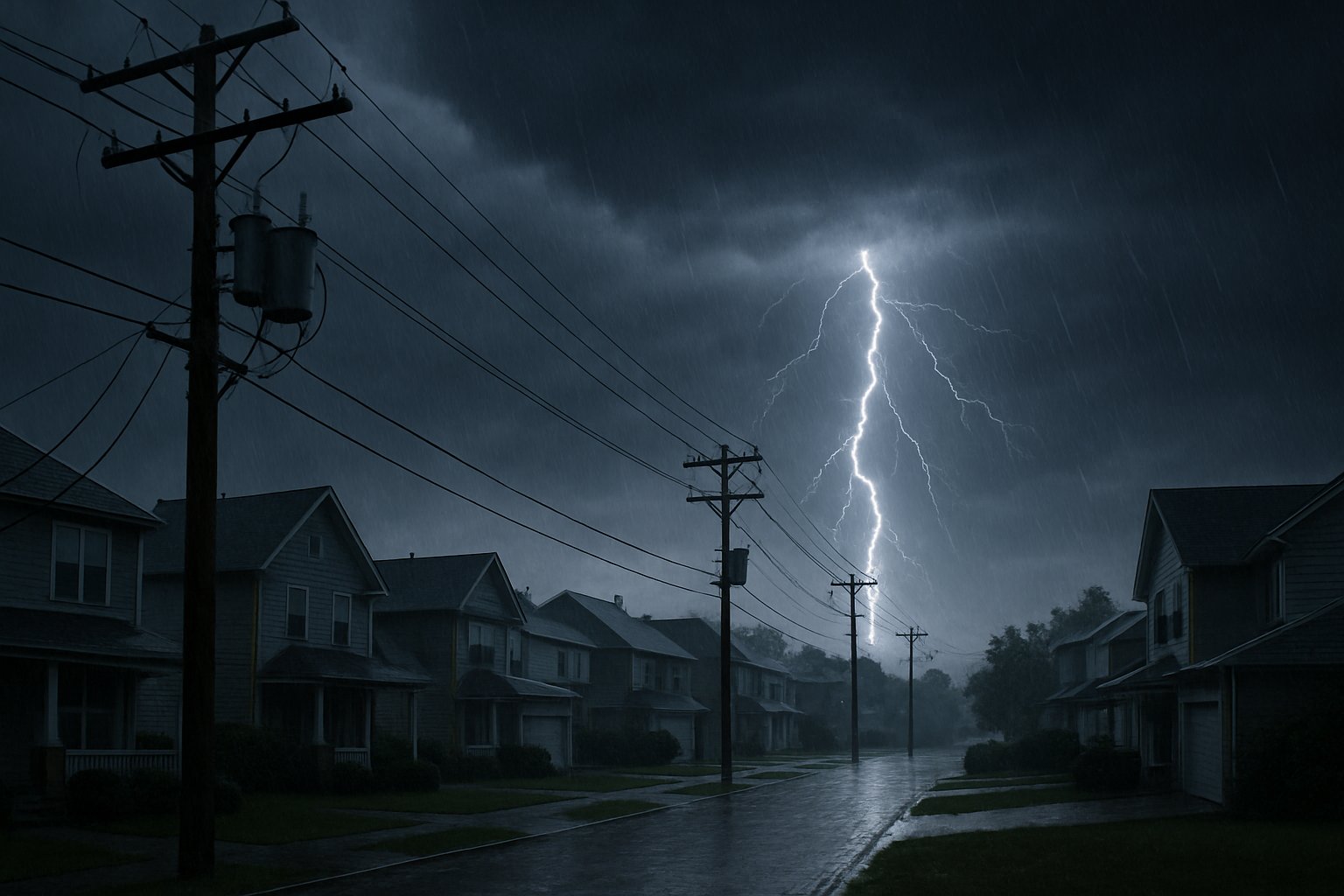
Climate models show hurricane rainfall intensity rising, while wildfire seasons lengthen. Consequently, the Electric Grid faces concurrent wind, flood, and heat stresses. Utilities now bury critical feeders, elevate substations, and install fire-resistant metal poles. In contrast, some operators adopt sectionalization strategies to reduce customer outage counts. Grid-hardening packages often include mobile batteries supplying emergency power during extended Storms. Moreover, regional mutual-assistance agreements pre-stage crews and equipment ahead of forecasts. Satellite and radar data feed AI models that predict fault clusters hours before landfall. Therefore, managers can position spares strategically, accelerating service restoration. Comprehensive planning converts inevitable weather threats into manageable events. Policy direction must now integrate all these strands.
Strategic Roadmap And Recommendations
Experts converge on four priority actions for the next five years.
- Update resource adequacy metrics for high-load growth scenarios.
- Streamline permits for transmission that unlocks diverse renewables.
- Reward flexibility services supporting the Electric Grid.
- Integrate cyber and physical resilience budgeting across units.
Moreover, transparent progress tracking will sustain public and investor confidence. Coordinated strategy aligns technology, capital, and policy toward dependable power. The concluding section distills major insights.
North America’s Electric Grid stands at a watershed moment. Demand is exploding, supply sources are shifting, and Storms grow more destructive. However, billions in investment, new market rules, and advanced technology can transform looming Disruption into opportunity. Consequently, stakeholders that act early will secure reliability advantages and competitive cost structures. Professionals should monitor capacity auctions, funding rounds, and standards updates closely. Additionally, earning credentials like the AI Network Security™ certification signals readiness for modern challenges. Therefore, engage with peers, advocate policy alignment, and lead projects that fortify the Electric Grid.


