

AI CERTS
3 months ago
Education Tech reshapes exam prep with AI schedules
This article examines the evidence, clarifies the statistics, and outlines next steps for educators exploring AI-driven Study Planning.
AI Study Schedule Impact
Developers combine learner diagnostics, spaced repetition, and predictive modelling to craft dynamic study roadmaps. Moreover, popular platforms like Quizlet and Khanmigo refresh plans as users progress. Academic research backs their potential. A Swiss university pilot found AI-tutor participants gaining up to 15 percentile points on exams. Meanwhile, a large Tutor CoPilot trial delivered four-point mastery gains across 1,800 students. Education Tech therefore shows measurable though variable benefits for Academic Performance.
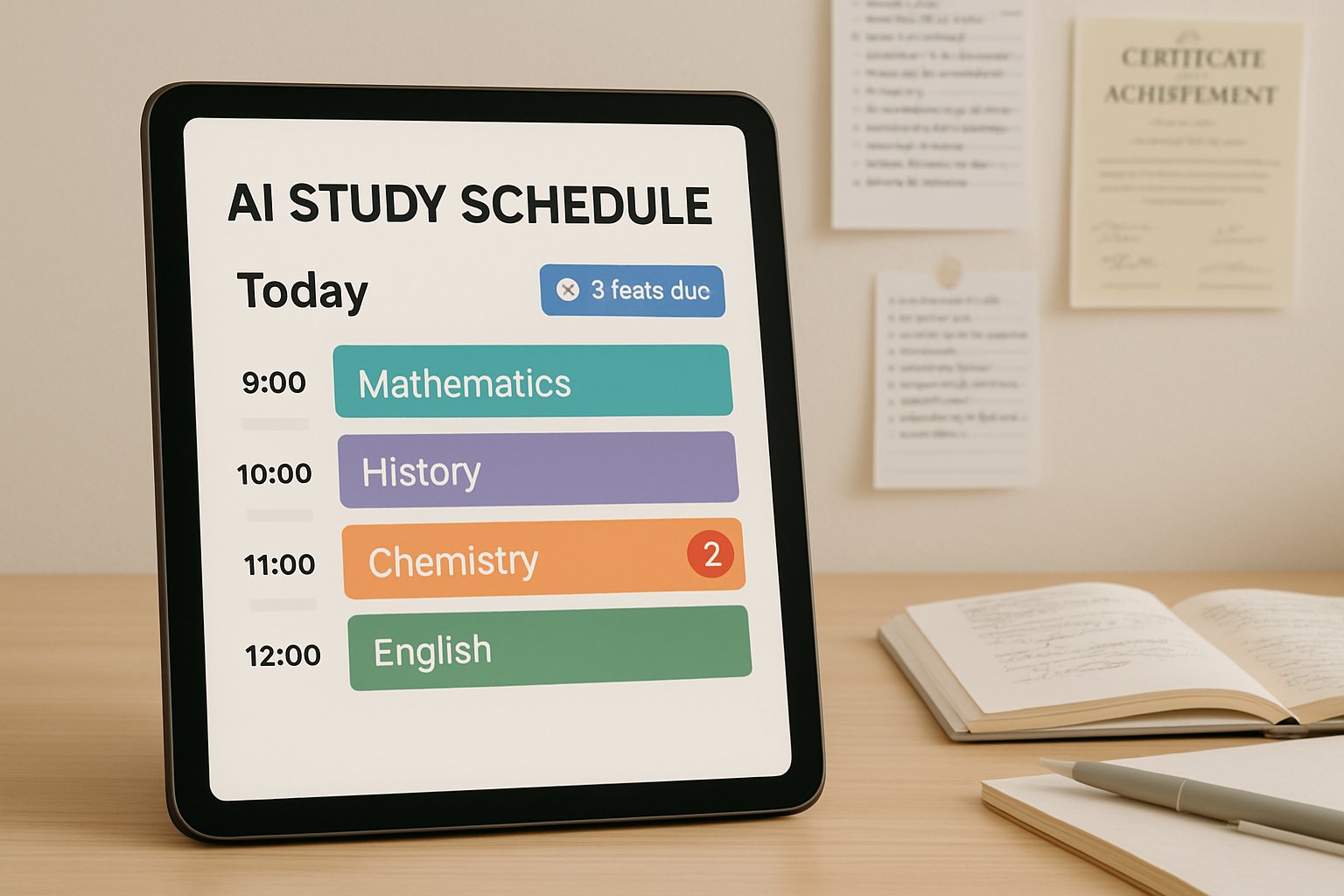
These field results confirm meaningful improvements. However, effect sizes rarely approach the dramatic marketing numbers. The section below unpacks the famous 42 percent claim and its limitations.
Evidence Behind 42 Percent
Numerous press releases repeat that AI schedules boost results by 42 percent. In contrast, no peer-reviewed randomised study reports that exact figure. The origin traces to a 2024 Squirrel AI event where short mathematics modules showed a 42-44 percent mastery lift after two hours. Furthermore, the company controlled content, participants, and metrics, limiting generalisability. Researchers reviewing wider literature observe improvements ranging from single-digit percentage points to about fifteen percentile points.
Consequently, experts advise cautious optimism. Vendors may report relative gains, absolute gains, or even time-to-mastery reductions, creating confusion. Clearer methodologies and independent replication remain critical. These nuances highlight why Education Tech stakeholders must scrutinise data transparency before citing large benefits.
Marketing figures can still inspire investment discussions. However, rigorous trials offer stronger guidance for policy and budgeting. Next, we examine the mechanisms that actually drive the observed Academic Performance lifts.
Key Mechanisms Driving Gains
Three design principles dominate successful AI Study Planning systems:
- Spaced repetition schedules reinforce memories at expanding intervals.
- Diagnostic assessments pinpoint misconceptions quickly.
- Adaptive sequencing delivers the right challenge at the right moment.
Moreover, large language models now generate bespoke explanations and practice questions, further individualising support. Consequently, learners engage longer because material stays appropriately difficult. Implementation quality matters though. Studies reveal bigger effects when platforms blend algorithmic guidance with human feedback. Therefore, hybrid tutoring models currently outperform fully automated approaches.
Understanding these mechanisms helps institutions choose tools that fit their curriculum. The following section explores which companies and markets are scaling these ideas.
Market Adoption And Players
Global adaptive-learning spend could exceed USD 5 billion by 2025, according to Markets and Markets. Major publishers such as Pearson, McGraw-Hill, and Carnegie Learning embed personalised timelines inside digital textbooks. Meanwhile, startups like Study Plannr, Dende, and PrepAce focus exclusively on automated Study Planning dashboards. Additionally, Chinese giant Squirrel AI serves millions of K-12 learners through after-school centres. Education Tech therefore spans consumer apps, enterprise platforms, and hybrid tutoring services.
Professionals seeking to guide deployments can enhance their expertise with the AI Educator™ certification. Such credentials build fluency in evaluation frameworks and ethical considerations. Market activity keeps accelerating. However, benefits arrive with risks that demand equal attention.
These adoption trends illustrate strong momentum. Nevertheless, understanding potential downsides ensures balanced decision-making, as explored below.
Benefits And Persistent Risks
Evidence shows several advantages:
- Targeted revision reduces study hours while sustaining retention.
- Consistent feedback scales support where teachers are scarce.
- Data dashboards help instructors monitor progress at a glance.
Nevertheless, challenges persist. Large models can hallucinate incorrect explanations, harming Academic Performance. Equity gaps may widen if devices and connectivity remain uneven. Moreover, marketing hype around 42 percent improvements can inflate expectations. Consequently, educators must vet content accuracy, provide human oversight, and insist on transparent analytics.
The mixed picture suggests cautious rollout. However, deliberate safeguards enable institutions to harness Education Tech advantages while mitigating pitfalls. Future research directions will further clarify best practices.
Future Research And Practice
Researchers call for larger preregistered trials tracking long-term retention, not just immediate scores. Furthermore, studies should compare algorithmic scheduling against teacher-crafted plans to isolate true added value. Interdisciplinary collaboration between learning scientists, data engineers, and classroom practitioners will accelerate progress. Meanwhile, policymakers can mandate standard reporting formats so vendors present results consistently.
Therefore, decision makers should demand open datasets, independent audits, and clear metric definitions. Continued validation will strengthen confidence in Study Planning tools and refine Education Tech procurement guidelines.
Conclusion And Next Steps
AI-generated study schedules already improve many learners’ outcomes. Rigorous trials show modest yet reliable gains, while vendor events report headline figures like 42 percent. Nevertheless, evidence strength varies, and transparency remains vital. Institutions should pair algorithmic tutors with human oversight, track Academic Performance metrics carefully, and prioritise equitable access. Additionally, professionals can deepen their understanding through the linked AI Educator™ certification. Explore these resources now and guide your organisation toward responsible, data-driven innovation.


