

AI CERTS
3 months ago
Education Readiness: UK Teachers Face AI Skills Gap
Meanwhile, rising vacancies intensify urgency. NFER reports record shortages, and workload relief could help attract and retain staff. Nevertheless, formal Training opportunities remain sparse despite government guidance published in June 2025. This article unpacks the data, stakeholder views, and next steps needed to build nationwide Confidence in classroom AI.
Policy Push Meets Reality
In January 2025, the AI Opportunities Action Plan signalled a cross-Whitehall commitment to educational innovation. Moreover, the Department for Education updated its technology collection six months later, adding AI audit tools and CPD modules. Consequently, school leaders received a clear steer to experiment.
In contrast, implementation budgets remain discretionary, leaving wealthier trusts better equipped. Educator groups note inconsistent infrastructure hampers equal access. These structural challenges curb Education Readiness despite strong ministerial rhetoric.
This policy momentum matters. However, uneven resources mean guidance alone cannot guarantee safe, effective usage.
These observations illustrate a widening implementation gulf. Subsequently, attention shifts to what teachers report on the ground.
Survey Data Signal Gap
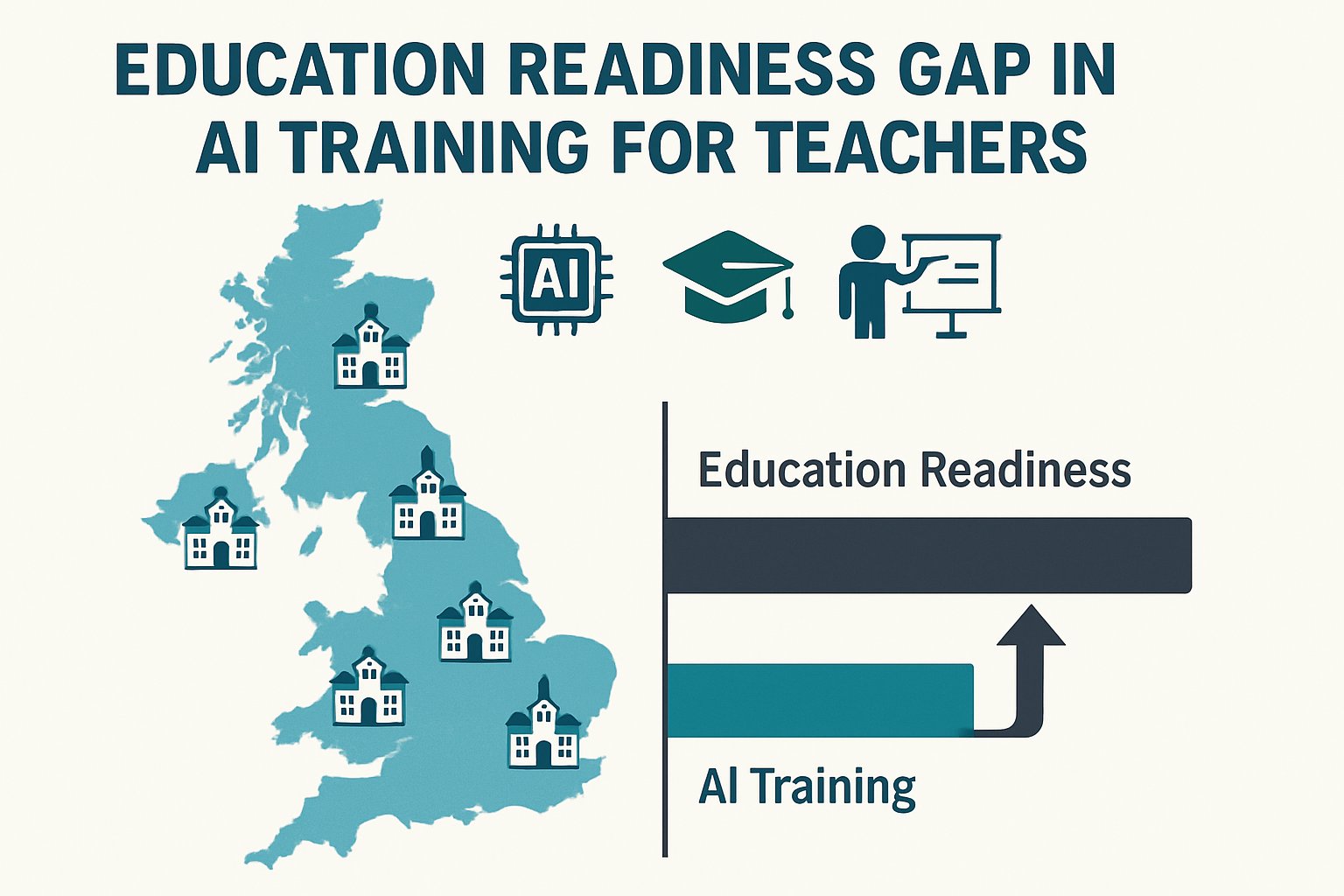
Twinkl’s 2025 survey polled 6,501 UK teachers. Approximately 60 percent already use generative AI at work. However, 76 percent report minimal or no formal Training from their schools. Moreover, only 19 percent believe regulation is adequate.
Jonathan Park, Twinkl’s Head of AI, states that Educator enthusiasm is “tempered by uncertainty on trustworthy solutions.” Confidence therefore hinges on clearer procurement standards and verified resources.
- 60 percent use AI weekly
- 76 percent lack structured Training
- 19 percent trust current regulation
These figures underscore limited Education Readiness in practice. Nevertheless, controlled trials reveal promising workload benefits when support exists.
Survey insights highlight urgent professional development needs. Consequently, evidence from experimental studies gains significance.
Trials Show Time Savings
An EEF-funded randomised trial tested ChatGPT with a detailed implementation guide. Teachers saved up to 31 percent on lesson planning for Key Stage 3 science. Additionally, average weekly planning time dropped by 25 minutes.
Emily Yeomans, EEF co-CEO, calls the findings “promising yet preliminary.” Researchers urge further replication across subjects and phases. Nevertheless, the results demonstrate how structured support can convert theoretical promise into tangible workload relief.
Educator testimonials from trial schools mirror the data. One secondary science lead reported “renewed pedagogical creativity” alongside time gains. Pedagogy quality did not decline, according to independent lesson observations.
These controlled results strengthen the evidence base for Education Readiness strategies. However, broader systemic barriers still limit scale.
Experimental evidence confirms potential gains. Meanwhile, attention turns to the biggest limiting factor—professional learning.
Training Deficit Stalls Adoption
Despite free DfE modules, uptake metrics remain unpublished. Moreover, unions note that most CPD time is allocated to mandatory safeguarding or assessment reforms. Consequently, AI-specific Training often becomes an optional extra.
NEU guidance insists that any AI rollout include negotiated workload protections. Additionally, staff should receive at least one full day of hands-on skill building each term. Without such guarantees, Education Readiness risks slipping to individual goodwill rather than systemic provision.
A growing market of commercial providers offers bespoke workshops. Professionals can enhance their expertise with the AI Prompt Engineer™ certification. However, school funding pressures limit widespread uptake.
Limited Training resources constrain Educator Confidence. Therefore, risk management becomes the parallel priority.
Professional development remains uneven. Consequently, schools must consider safety and pedagogy in tandem.
Pedagogy And Safety Concerns
Generative models can hallucinate facts or embed biases. Therefore, teachers need verification routines before sharing outputs with learners. Moreover, UK GDPR imposes strict rules on pupil data handling, and some AI platforms log user inputs.
Unions fear surveillance misuse if management analyses teacher prompts for performance data. In contrast, vendors argue analytics can improve Curriculum alignment. Balanced policies, transparent data flows, and robust opt-outs are essential to maintain staff Confidence.
Pedagogy also evolves. Adaptive tools personalise tasks, yet they may obscure concept progression if Educators lack dashboard literacy. Consequently, professional judgment must stay central.
Addressing safety and pedagogy fortifies Education Readiness. However, external market forces also shape deployment.
Safeguards protect learning integrity. Subsequently, economic and workforce dynamics influence decisions.
Market And Workforce Pressures
Global forecasts peg the AI-in-education sector between £4-6 billion today, with double-digit CAGR. Additionally, tech giants bundle classroom features into existing productivity suites, accelerating exposure.
Meanwhile, NFER records doubling vacancy rates since 2019, intensifying demand for workload solutions. Consequently, headteachers see AI as a retention lever, not merely a novelty.
However, unequal infrastructure investment risks widening attainment gaps. Schools lacking broadband or devices cannot exploit new Curriculum resources efficiently. Moreover, fragmented procurement may lock institutions into proprietary ecosystems.
These pressures heighten the stakes for coherent Education Readiness planning. Nevertheless, actionable steps exist for leaders.
Economic realities magnify urgency. Therefore, schools need a structured roadmap to progress.
Education Readiness Action Plan
Experts propose a phased approach. Firstly, conduct an AI audit aligned with DfE templates. Secondly, allocate ring-fenced CPD hours for focused Training each term. Thirdly, establish a cross-functional steering group including teachers, data officers, and safeguarding leads.
Moreover, integrate demonstrable Curriculum impact metrics to evaluate tools. Evidence from trials should guide adoption, while iterative feedback loops maintain Pedagogy quality. Additionally, seek external validation such as the earlier linked certification to bolster internal expertise.
Leaders should also publish transparent policy documents to boost community Confidence. Union involvement ensures workload protections and fair accountability frameworks. Consequently, staff buy-in strengthens over time.
This structured plan embeds Education Readiness across strategy, culture, and resources. Implementation then moves from ad-hoc experimentation to sustainable practice.
A phased roadmap cements systemic progress. Ultimately, classroom innovation depends on sustained investment and collective ownership.
Conclusion And Next Steps
UK classrooms already feel AI’s influence, yet Education Readiness still trails adoption. However, policy momentum, empirical trials, and clear leadership frameworks can transform that gap into an opportunity. Furthermore, consistent Training, robust safeguards, and shared pedagogical principles will empower every Educator.
Consequently, schools that act now can save time, enrich Curriculum delivery, and boost teacher Confidence amid severe workforce pressure. Explore recognised credentials, including the linked certification, to deepen expertise and lead responsible change today.


