

AI CERTS
2 hours ago
Edge Computing Fuels OSS Earnings and Balance Sheet Reset
Consequently, understanding the interplay between bookings, margins, and liquidity matters for any professional following defense technology. Meanwhile, sector valuations have recovered, placing execution in sharp focus. Consequently, sharper analysis helps investors separate durable momentum from short-lived hype. In contrast, last year’s inventory charges clouded comparability.
Therefore, this article dissects the latest earnings, explores program wins, and evaluates strategic options. Subsequently, readers will gain a clear snapshot of performance and prospects for this Nasdaq small-cap.
Latest Financial Highlights Recap
OSS delivered mixed yet constructive fourth-quarter metrics. Revenue landed at $11.2 million, aligning with consensus expectations. However, gross margin expanded to 36.1%, beating the prior quarter by 40 basis points. Moreover, adjusted EBITDA stayed positive at $0.8 million despite divestiture noise.
Key quarterly numbers include:
- Revenue: $11.2 million, up 23% year over year.
- Gross margin: 36.1%, highest since 2022.
- Net income: $0.04 per share, reversing a prior-year loss.
- Backlog: $42 million, driven by defense awards.
Furthermore, management reaffirmed full-year 2026 revenue guidance of $70-72 million. They attributed the target to accelerating Edge Computing deployments aboard naval and airborne platforms. Consequently, investors following Nasdaq technical plays welcomed the improving profitability trajectory. Edge Computing now drives over 60% of company backlog, underscoring the pivot away from commodity distribution.
Financial ratios point to disciplined execution and margin repair. However, program momentum ultimately determines future cash generation, as discussed next.
Defense Pipeline Momentum Builds
Defense contracts remain the primary growth engine for OSS. February’s $10.5 million P-8A Poseidon award increased program lifetime value beyond $65 million. Moreover, follow-on orders for rugged storage canisters extend visibility into 2027 deliveries. Consequently, book-to-bill ratios exceeded 1.3 in 2025, confirming backlog strength. Edge Computing solutions embedded in these aircraft process sensor data locally, cutting latency for anti-submarine missions. Meanwhile, the Navy continues seeking commercial off-the-shelf upgrades to tame procurement costs.
Rugged Compute expertise positions the supplier favorably against larger defense primes. Nevertheless, timing risk persists because funding milestones govern revenue recognition. Additionally, management flagged potential production pauses if congressional budgets slip. Still, the diversified order book now spans aircraft, surface vessels, and autonomous ground vehicles. Stakeholders therefore monitor contract modification notices for schedule changes.
Program traction confirms demand for mission-ready hardware. However, capital allocation decisions will shape capacity expansion, which we cover in the next section.
Balance Sheet Reset Details
The December divestiture of Bressner Technology generated $22.4 million in gross proceeds. Consequently, pro-forma cash rose to roughly $22 million, reducing liquidity anxiety. Moreover, an earlier $12.5 million registered direct offering bolstered working capital without excessive dilution. Nasdaq investors often punish small issuers that over-rely on credit lines. Therefore, the fresh equity strengthens negotiating power with suppliers.
In contrast, the sale trimmed consolidated revenue because Bressner contributed 55% of 2024 sales. However, management argues the move concentrates resources on higher-margin Edge Computing projects. Rugged Compute products now receive the bulk of internal R&D funding, accelerating PCIe Gen-6 roadmap execution. Additionally, lower European exposure simplifies currency management and compliance costs.
Stronger cash reserves improve flexibility for inventory build ahead of 2026 defense production ramps. Nevertheless, capital discipline remains critical, a point explored when we assess product differentiation.
Rugged Compute Differentiation Strategy
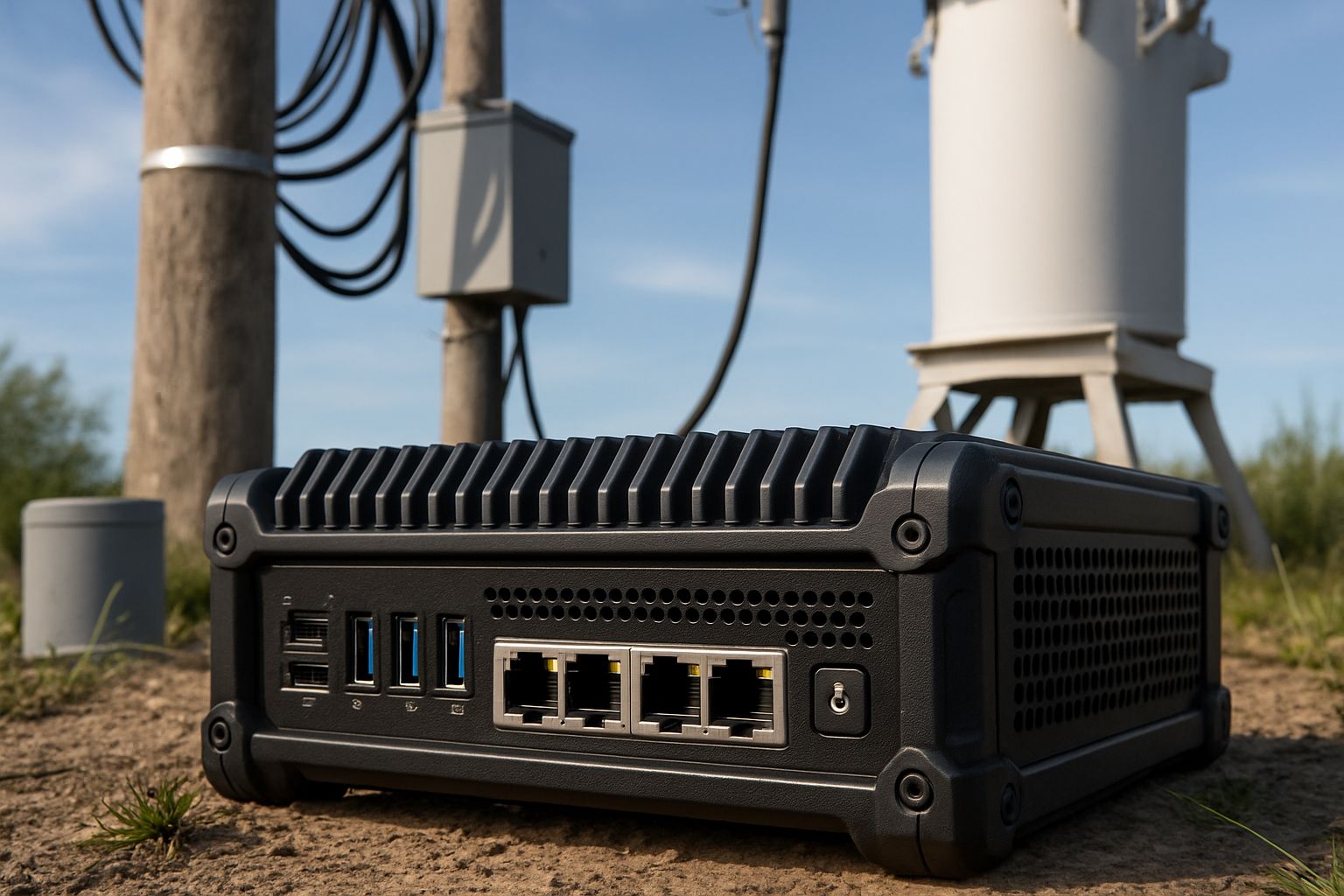
Product strategy centers on delivering datacenter throughput in extreme environments. Rugged Compute platforms combine liquid-cooled GPUs, short-depth chassis, and PCIe over cable fabrics. Moreover, the company claims its architecture delivers 40% more sustained performance than legacy air-cooled rivals. Edge Computing requirements at the tactical edge demand such thermal efficiency, especially inside cramped maritime enclosures.
Additionally, OSS engineers collaborate with silicon vendors to validate PCIe Gen-6 lanes under vibration stress. Consequently, prime contractors save qualification time, a benefit echoed in recent request-for-proposal feedback. Edge Computing clarity also attracts commercial robotics customers that need on-board inferencing without cloud connectivity. Such Rugged Compute focus simplifies manufacturing lines and reduces part counts. However, competitors are advancing proprietary modules that integrate RF shielding and AI accelerators.
The supplier’s differentiation thus hinges on open standards, modularity, and aggressive cooling. Nevertheless, sustained R&D funding must follow the balance-sheet improvements reviewed earlier to maintain the advantage.
Risks And Timing Constraints
No investment story is complete without examining headwinds. Government procurement calendars introduce unpredictable pauses. Moreover, OSS warns that production revenue may slip when continuing resolutions delay Navy appropriations. Consequently, quarterly volatility could unsettle Nasdaq traders seeking smooth trends. In contrast, high backlog offers some buffer, yet schedule risk persists.
Additionally, customer concentration rose after the Bressner sale. One late hardware delivery could dent cash flow and margin. Edge Computing architectures also evolve quickly, pressuring the company to refresh designs every 18 months. Rugged Compute rivals backed by larger balance sheets may accelerate release cycles and undercut pricing. Nevertheless, partnerships with GPU vendors mitigate component shortages seen in 2024.
Risk awareness informs valuation models. Therefore, stakeholders should weigh timing uncertainties against the strategic benefits discussed below.
Strategic Outlook Into 2026
Management projects 2026 revenue between $70 and $80 million, assuming timely P-8A and robotics deliveries. Furthermore, CEO Mike Knowles emphasized disciplined growth during today’s call. He stated that OSS will deploy sale proceeds toward inventory, field support, and next-generation Edge Computing prototypes. Moreover, expanded engineering headcount should accelerate liquid-cooling research.
Consequently, analysts model gross margins edging toward 38% as higher-value systems replace distribution sales. In contrast, they pencil conservative revenue recognition schedules to reflect defense program gating. Nevertheless, upward optionality exists if incremental awards convert faster than expected. Nasdaq coverage remains thin, so positive surprise potential could be amplified.
The path appears constructive yet contingent on flawless execution. However, closing capability gaps through professional development can improve risk management, as outlined below.
Edge Certification Pathways Forward
Engineering leaders looking to sharpen execution can invest in targeted upskilling. Professionals can enhance their expertise with the AI Cloud Professional™ certification. Moreover, the program dives deep into distributed AI architectures and Edge Computing deployment patterns. Consequently, certified staff can streamline integration, shorten testing cycles, and improve compliance documentation.
Structured learning therefore complements capital investment. In contrast, firms that neglect talent development often struggle to maintain competitive velocity.
One Stop Systems capped a transformative year with improving margins, stronger liquidity, and rising defense backlog. However, timing swings and customer concentration still demand vigilance. Moreover, concentrated focus on high-value edge platforms positions the company to tap growing sensor workloads. Consequently, the 2026 outlook appears balanced, with upside tied to production execution and budget clarity.
Nevertheless, sustainable advantage hinges on continuous innovation and skilled personnel. Therefore, readers should monitor contract milestones closely and consider advancing their own technical credentials through accredited programs. Explore the linked certification to stay ahead in an increasingly distributed compute landscape.


