

AI CERTS
4 months ago
Edge AI Advances Mobility Safety With Real-Time Driver Risk
However, regulators now require driver monitoring, pushing fleets toward rapid adoption. Against that backdrop, Mobility Safety emerges as the unifying metric connecting drivers, fleets, and policymakers. Industry observers therefore see a sizeable market forming around on-device scoring engines. Grand View Research values the Driver Monitoring System sector at USD 3.03 billion today and projects strong growth. Throughout this article, we examine technology, regulation, and business impact shaping next-generation Mobility Safety solutions.
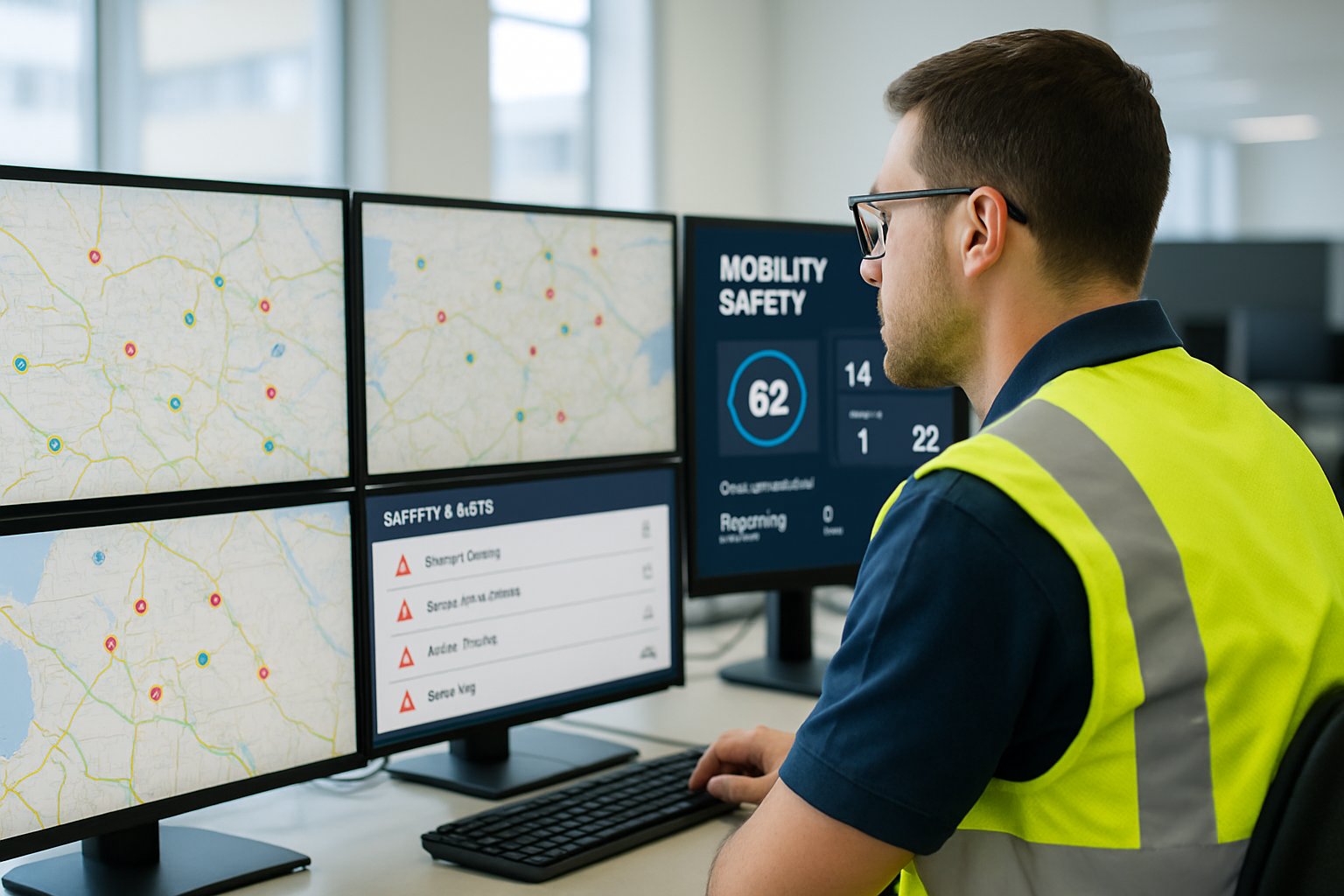
Edge Models Redefine Risk
Edge AI chips now power high-definition cameras, inertial sensors, and in-cab monitors. Consequently, inference happens locally, avoiding cloud round-trips. Risk models process steering angle, acceleration, and gaze direction within 50 milliseconds. These models compute a Driver Risk score every few seconds. Moreover, Real-Time feedback reaches drivers before dangerous maneuvers materialize.
Sonatus, a software-defined vehicle specialist, integrates the pipeline into its Digital Dynamics platform. Meanwhile, MOTER uses embedded microcontrollers to support similar scoring inside delivery vans. Both vendors emphasize modular APIs that let fleets tune coaching thresholds. Therefore, product teams can align alerts with corporate Mobility Safety policies. Section takeaway: on-device computing transforms raw signals into actionable insights with minimal delay. The following regulatory dynamics further accelerate deployment momentum.
Regulations Accelerate Safety Market
European Union Regulation 2019/2144 mandates Driver Monitoring Systems in new cars from July 2026. Moreover, EU NCAP scores will penalize models lacking proactive distraction alerts. Additionally, analyst Beatriz Minamy notes fleets now prioritize certified solutions. Roadzen recently validated DrivebuddyAI against those rules, citing a 70% accident reduction. Similarly, Powerfleet's July 2025 module aligns with NCAP performance criteria.
Across the Atlantic, U.S. mandates remain fragmented. Nevertheless, large insurers leverage Driver Risk scores for premium discounts, sidestepping legislative delays. Grand View Research projects the global DMS market will reach USD 8.10 billion by 2033. Consequently, vendors chase certification to unlock worldwide revenue. In summary, regulation converts Mobility Safety from optional add-on to procurement requirement. The next section profiles companies racing to capture that demand.
Key Players And Strategies
Nauto leads with its vision-based VERA score and 21% collision reduction per ten-point gain. Furthermore, Netradyne uses dual cameras to grade events across speeding, distraction, and tailgating. Samsara, Powerfleet, and Roadzen embed similar algorithms while integrating cloud dashboards. Sonatus differentiates with over-the-air update orchestration that keeps models fresh. In contrast, MOTER positions itself as a low-cost retrofit kit for emerging markets.
Compute suppliers also matter. NVIDIA Jetson modules dominate heavy vehicles, whereas Qualcomm chips target cost-sensitive passenger cars. Tier-1s like Bosch and Continental bundle hardware, software, and verification services. Moreover, insurtechs collaborate with these firms to embed underwriting logic inside the cabin. Consequently, Mobility Safety ecosystems now span silicon to actuarial science. Understanding performance advantages illuminates why fleets invest in on-device scoring.
Benefits Of On-Device Scoring
Latency drops from seconds to milliseconds because Real-Time inference avoids cellular hops. Consequently, audible or haptic alerts reach drivers before collisions occur. Bandwidth consumption also falls because only flagged clips stream to the cloud. Moreover, privacy improves when raw video stays inside the vehicle. Sentiance highlights offline crash detection that dispatches eCall even without coverage.
Below are headline advantages cited by analysts and fleets.
- Real-Time coaching prevents harsh braking and tailgating.
- Lower data bills save up to 40% annually, according to S&P Global.
- Enhanced Security posture meets GDPR video retention rules.
Collectively, these benefits strengthen the Mobility Safety business case for decision makers. Yet practical hurdles still challenge widespread scaling.
Persistent Challenges And Gaps
False positives can overwhelm drivers and erode trust. Therefore, vendors invest in better calibration and user experience design. Model bias remains another concern because regional data scarcity skews predictions. Edge AI updates must guard against tampering and ransomware. Security experts warn that compromised firmware could disable alerts or leak footage.
Liability questions also linger. In contrast, some insurers assume responsibility once systems pass certification tests. Professionals can deepen compliance knowledge through the AI Security Compliance certification. Consequently, legal clarity will influence procurement timelines. These gaps underscore the need for structured deployment frameworks. The next section offers actionable guidance.
Actionable Steps For Fleets
Fleet managers should first audit collision histories to identify priority behaviors. Next, compare vendor Driver Risk algorithms against those priorities. Additionally, insist on lab validation aligned with regional regulations. Sonatus, Nauto, and MOTER publish test reports, yet independent proof still matters. Moreover, integrate Edge AI firmware updates into existing Security patch cycles.
After rollout, track Real-Time coaching compliance and claim frequency. Consequently, finance teams can quantify Mobility Safety return on investment within quarters. Below is a condensed checklist.
- Define Mobility Safety metrics and targets.
- Shortlist vendors supporting Edge AI and Security audits.
- Run pilot, measure alert accuracy.
- Scale once Driver Risk reductions exceed 20%.
These steps create a disciplined pathway from pilot to full adoption. Consequently, fleets can realize tangible savings despite unresolved uncertainties. The concluding section synthesizes main insights and future expectations.
Conclusion And Future Outlook
On-device driver monitoring is shifting crash prevention from hindsight to foresight. Regulation, insurer economics, and maturing hardware create a perfect adoption storm. Meanwhile, vendors like Sonatus, MOTER, and Nauto scale global programs with certified pipelines. Nevertheless, Security, liability, and fairness challenges demand continual scrutiny.
Professionals pursuing fleet excellence must blend technology, process, and governance. Therefore, ongoing certification and independent testing remain essential. Explore deeper compliance insights through the earlier AI Security Compliance link. Ultimately, disciplined adoption can make roads safer and businesses stronger. Act now to pilot an embedded scoring program and stay ahead of competing fleets.


