

AI CERTs
2 months ago
Dynamic Pricing Intelligence Engines: Revenue and Regulation
Price tags are no longer static.
Accelerated digital commerce now demands micro-tuned offers calibrated in milliseconds.
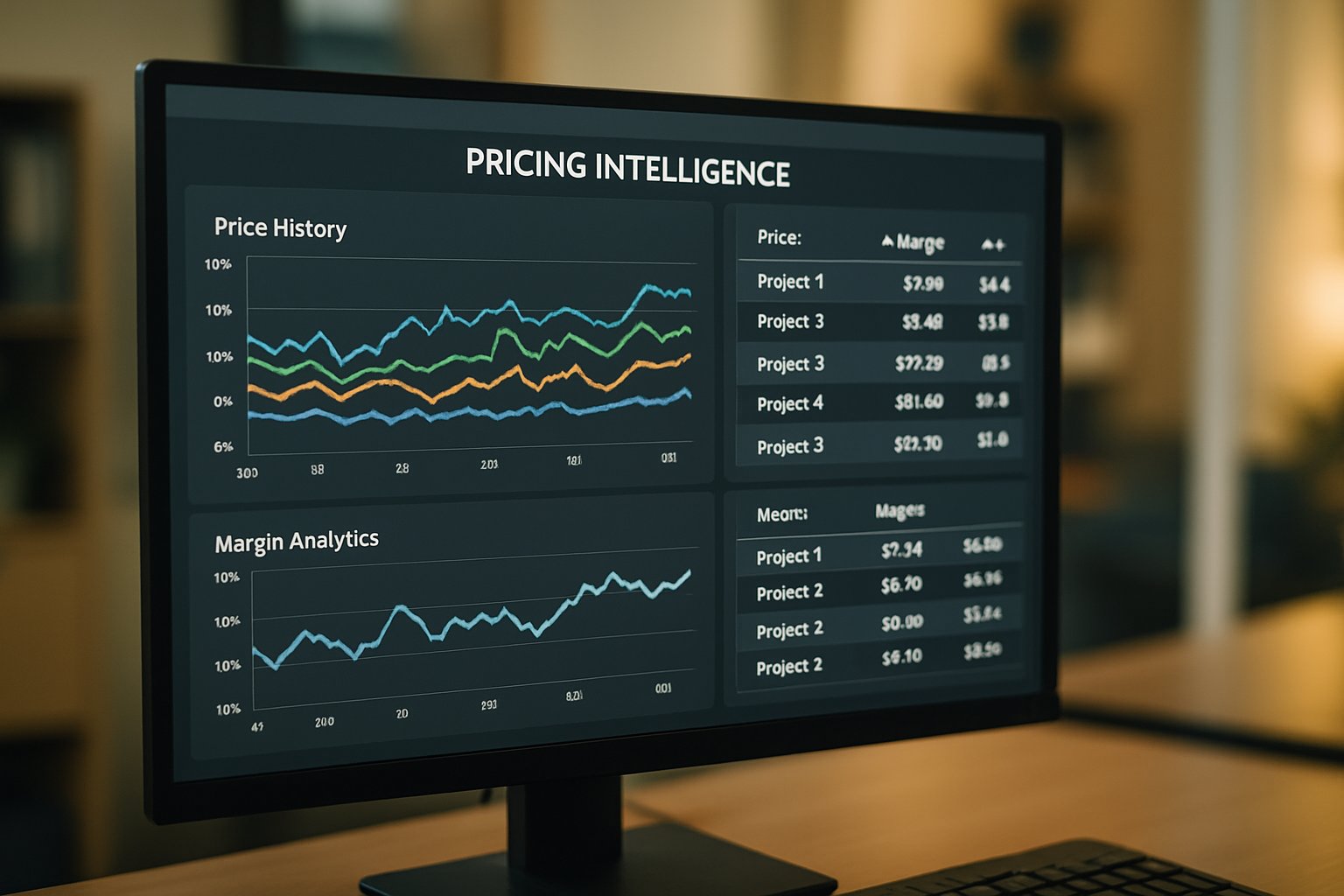
Consequently, retailers, airlines, and B2B sellers deploy dynamic pricing intelligence engines that translate real-time signals into precise offers.
These AI systems ingest clicks, carts, location, and loyalty data to infer willingness to pay.
Moreover, early adopters report revenue and margin lifts, yet regulators warn about opaque “surveillance pricing.”
This article unpacks the technology, market growth, regulatory landscape, and implementation hurdles shaping the next wave of algorithmic commerce.
Readers will learn practical guardrails, emerging standards, and certification paths that build trustworthy capabilities.
Understanding both benefits and risks prepares leaders to capture value without eroding customer trust.
Market Momentum Accelerates Fast
Global demand for AI-driven price optimization is rising fast.
Market.us values the segment at USD 2.98 billion in 2024 and predicts a 14.7% CAGR through 2034.
Meanwhile, Global Market Insights places related dynamic pricing and yield management revenue near USD 5.2 billion.
Retail digital shelf labels, airline ancillaries, and SaaS APIs all feed this expansion.
Moreover, Walmart is installing 2,300 electronic shelf label systems, enabling minute-level in-store adjustments.
Analysts therefore expect adoption curves to steepen as infrastructure removes update friction.
Such conditions provide fertile ground for dynamic pricing intelligence engines to scale across sectors.
The market is large and accelerating.
However, deeper technical understanding clarifies why momentum is possible.
Engines Technical Foundations Explained
Advanced engines merge supervised learning, reinforcement learning, and constraint solvers.
Elasticity estimators predict how demand shifts when prices move.
Furthermore, WTP models infer individual spending ceilings from browsing patterns, device type, and loyalty status.
Multi-armed bandits then explore price variants to maximize conversion while respecting guardrails.
Delivery occurs through real-time APIs capable of tens of millions of daily evaluations.
Consequently, latency often stays below one second, even when each request recalculates margins and inventory.
These mechanics enable dynamic pricing intelligence engines to personalize offers without human delay.
Technically, the stack is mature and performant.
Yet revenue claims matter most to executive sponsors.
Revenue And Margin Gains
Consultancies measure consistent commercial upside.
McKinsey pilots report 2–5% sales growth and 5–10% margin improvements.
Moreover, vendors trumpet double-digit lifts during controlled tests.
Such outcomes stem from precise margin optimization on non-KVI items while keeping key value items competitive.
Additionally, airlines using PROS adjust seat bundles and ancillaries dynamically, unlocking incremental revenue per passenger.
B2B sellers integrate engines with CPQ to accelerate quote turnaround and protect floor margins.
Dynamic pricing intelligence engines support these gains by executing price changes at millisecond cadence.
Nevertheless, consumer experiences vary sharply, as investigations show.
Financial upside appears tangible across industries.
In contrast, rising scrutiny may temper aggressive experimentation.
Scrutiny And Emerging Rules
Regulators now examine algorithmic pricing with unprecedented intensity.
In July 2024 the FTC launched a 6(b) study into surveillance pricing practices.
Subsequently, initial findings detailed extensive personal data flows, sparking public comment periods.
Consumer advocates bolstered the debate after a December 2025 Instacart study uncovered up to 23% price variance.
Consequently, media coverage framed the practice as opaque and potentially discriminatory.
Lina Khan stressed that Americans deserve transparency around dynamic pricing intelligence engines and the intermediaries behind them.
State lawmakers have introduced disclosure bills, while EU regulators monitor algorithmic collusion risks.
Consequently, organisations must establish explainability logs, audit trails, and consumer-friendly disclosures.
Regulatory momentum is accelerating quickly.
Therefore, operational hurdles warrant focused attention next.
Operational Adoption Hurdles Persist
Integrating new engines with legacy ERP, IMS, and POS systems often proves complex.
Data latency, inconsistent inventory, and governance silos can degrade model accuracy.
Moreover, behavioral pricing strategies fail when poor signals trigger erratic prices.
Consultants advise phased rollouts, human-in-the-loop approvals, and tight guardrails on price swings.
Explainability dashboards surface drivers, enabling quick rollback during anomalies.
Nevertheless, unbalanced exploration can erode consumer trust, so teams must closely monitor churn and cart abandonment.
Dynamic pricing intelligence engines therefore require interdisciplinary stewardship blending data science, product, compliance, and customer experience.
- Systems integration with real-time inventory
- Data quality and signal noise
- Regulatory compliance and audits
- Customer communication and fairness perceptions
These hurdles illustrate why governance principles remain essential.
However, best practices are emerging to mitigate risk.
Governance Best Practice Playbook
Successful programs embed multi-layer guardrails around every price decision.
First, margin floors prevent inadvertent losses while protecting strategic categories.
Second, fairness constraints cap inter-customer variation, limiting potential discrimination under behavioral pricing scenarios.
Third, approval workflows route high-impact changes to human reviewers before launch.
Furthermore, anomaly detectors watch for outlier price spikes or dips across channels.
Explainability logs record inputs, model scores, and chosen outputs for future audits.
Professionals can enhance their expertise with the AI+ Human Resources™ certification, which covers ethical AI governance.
Dynamic pricing intelligence engines running under these controls sustain trust while delivering margin optimization at scale.
Governance transforms theory into sustainable practice.
Next, leaders must anticipate future trajectories.
Future Outlook And Trends
Expert consensus forecasts continued algorithmic penetration across omnichannel retail and B2B quoting.
Edge computing and 5G will push response times toward sub-100-millisecond territory.
Meanwhile, federated learning could reduce personal data exposure while still supporting behavioral pricing insights.
Industry groups are drafting voluntary transparency standards that pre-empt stricter mandates.
Moreover, competition authorities may clarify rules on algorithmic collusion, influencing model design.
Dynamic pricing intelligence engines will likely integrate synthetic data, privacy sandboxes, and AI copilots for analyst workflows.
Consequently, skill requirements will broaden, elevating the demand for cross-functional certifications and continuous education.
- Real-time ESG and carbon cost signals
- Voice-assistant negotiation interfaces
- Dynamic subscriptions bundling
- Concurrent experimentation across endpoints
The technology frontier continues to expand rapidly.
Nevertheless, foundational principles of fairness and clarity remain non-negotiable.
Dynamic commerce is moving quickly toward individualized, real-time offers.
Through disciplined data strategy, organisations can harness dynamic pricing intelligence engines for sustained margin optimization.
However, transparency, fairness, and rigorous governance must guide every model iteration.
Leaders should adopt clear guardrails, maintain audit logs, and communicate price logic to customers.
Furthermore, teams can future-proof skills by pursuing the above certification and studying regulatory updates.
As behavioral pricing matures, those who balance profit with trust will capture durable advantage.
Therefore, explore pilot opportunities, evaluate technical stacks, and start building cross-functional capabilities today.
Your next revenue uplift may be only a millisecond away, delivered by dynamic pricing intelligence engines.


