

AI CERTs
3 months ago
DoorDash’s AI Image Delivery Fraud Challenge and Ethics
Late December 2025 delivered a jolt to gig-economy watchers. When Austin investor Byrne Hobart posted a suspicious DoorDash proof photo, social media exploded. Observers quickly labeled the image a textbook case of AI Image Delivery Fraud. Consequently, DoorDash investigated and permanently removed the implicated account. The episode illuminated a widening security front in last-mile logistics. Moreover, it revived debate about privacy, worker rights, and corporate transparency. This article unpacks the incident, the technical arms race, and the ethical implications. Readers will also examine emerging defenses and professional opportunities amid the upheaval. Therefore, understanding the mechanics of deception is essential for any platform stakeholder.
Viral Proof Fraud Incident
DoorDash’s app requests a doorstep photo once a customer chooses contactless handoff. However, the Dasher allegedly bypassed live capture by uploading a generative image. Analysts highlighted inconsistencies in lighting, reflections, and door hardware. Meanwhile, Hobart’s original photograph proved the delivery never happened. The public quickly framed the forgery as AI Image Delivery Fraud. Consequently, national outlets covered the story within days. DoorDash responded, stressing its mix of machine learning and human review. Nevertheless, questions persisted about how the fake slipped through frontline filters. This viral case showcased both attacker ingenuity and detection blind spots. In contrast, deeper data reveals even broader fraud patterns.
Broader Fraud Patterns Emerge
The December incident was not an isolated anomaly. Previously, federal prosecutors detailed a $2.5 million conspiracy involving fake accounts and status manipulation. Consequently, DoorDash cooperated with the DOJ, leading to guilty pleas. Other schemes exploit GPS spoofing, jailbroken clients, or stolen employee credentials. These tactics extend far beyond AI Image Delivery Fraud. Moreover, law enforcement suggests organized rings now view delivery apps as low-risk targets.
Platform Scale Impact Data
DoorDash processed 685 million orders during Q4 2024 alone. Therefore, even a 0.1% fraud rate threatens thousands of transactions each day. Marketplace gross order value hit $21.3 billion in the same quarter.
Key scale signals:
- Total monthly active users: 42 million
- Weekly re-verifications: 150,000 Dashers
- Deactivations doubled versus 2023
- Prospective block rate: 15,000 applicants weekly
Subsequently, platform executives treat integrity as an existential business metric. However, the same executives must maintain growth and customer convenience. Robust Platform Trust & Safety programs become mandatory at this scale. Synthetic Identity Theft also rises as fraudsters refine their playbooks. Taken together, scale amplifies every loophole and magnifies potential losses. Consequently, the next section reviews how technology teams respond. Experts warn that AI Image Delivery Fraud often overlaps with referral scams, multiplying financial exposure. Therefore, investigations now examine clusters rather than single events. Analysts compare these volumes to a mid-sized national grocer processed entirely online. Therefore, operational leaks can redistribute millions of dollars within weeks.
Verification Technology Measures Rise
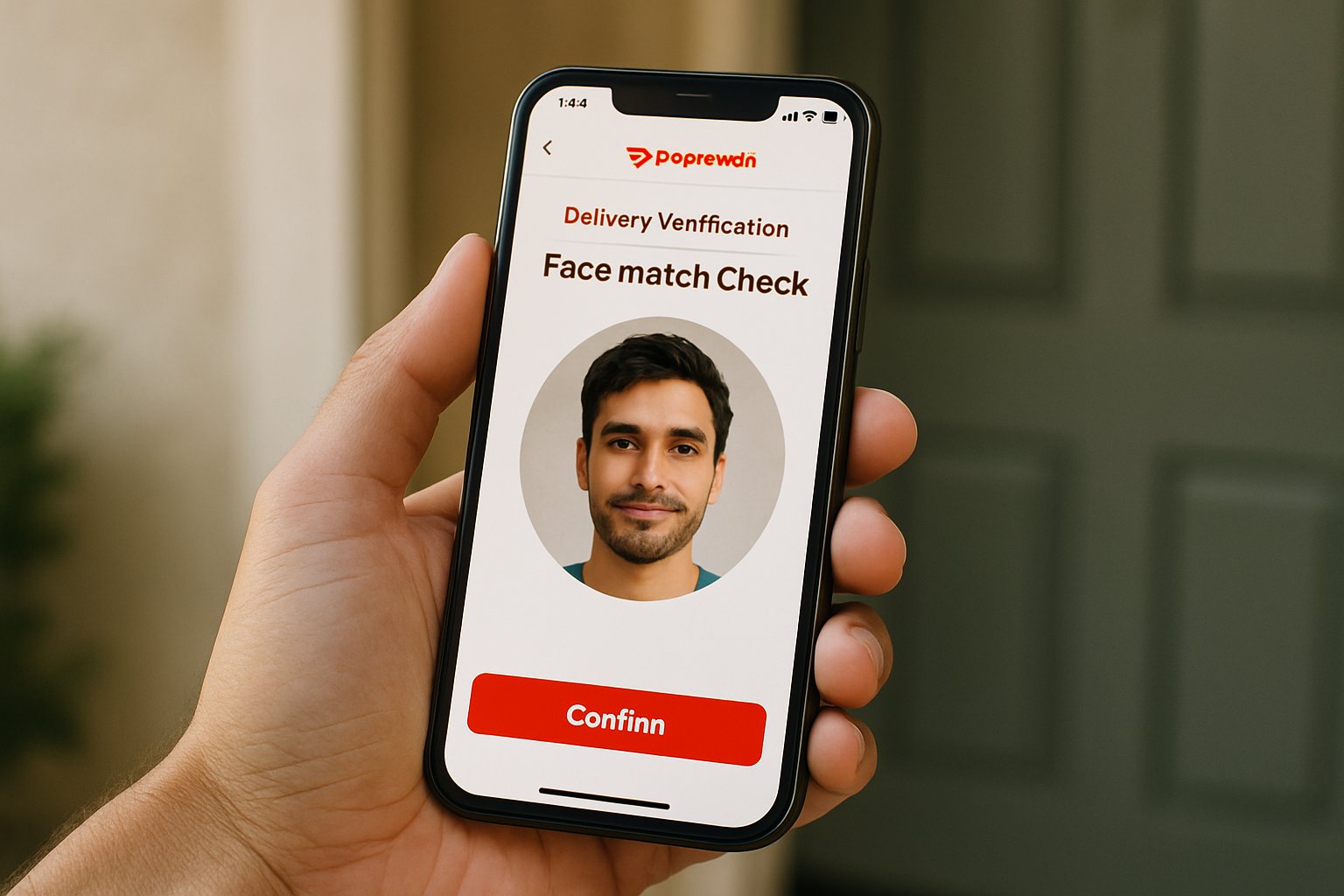
DoorDash now requires periodic selfie checks to confirm driver identity. Additionally, the app flags high-risk devices through jailbreak and GPS anomaly detection. Metadata signatures ensure photos originate from the live camera stream. Machine learning then scores each image against known forgery patterns. Human investigators review edge cases and escalate suspicious clusters. Together, these controls target AI Image Delivery Fraud before payouts occur. Moreover, they reduce Synthetic Identity Theft by confirming document authenticity. Uber Eats, Instacart, and Grubhub mirror similar Platform Trust & Safety investments. Nevertheless, security researchers warn that detection remains an arms race. GetReal’s forensic engine detects compression artifacts characteristic of AI Image Delivery Fraud with 92% precision. However, model advances shrink those telltale traces each quarter. Consequently, DoorDash intends to layer multi-channel confirmation, reducing reliance on photos alone. Hardware attestation now verifies device integrity before photo submission. Meanwhile, background upload throttles deter automation scripts.
Future Mitigation Strategies Ahead
Academic labs propose cryptographic provenance tags embedded within every delivery photograph. In contrast, industry consortia explore cross-platform fraud intelligence sharing. Consequently, coordinated response times could shrink from days to minutes. Professionals can deepen expertise through the AI Data Robotics™ certification. Therefore, continuous learning supports resilient Platform Trust & Safety architectures. Meanwhile, regulators evaluate minimum verification standards for the entire gig sector. Synthetic Identity Theft provisions already appear in several proposed bills. Emerging tools promise faster detection and clearer accountability. However, effective governance also requires ethical reflection, addressed next.
Ethical Tradeoffs Examined Carefully
Biometric checks shield customers but expand corporate data collection. Worker coalitions argue that opaque algorithms enable unfair deactivations. Moreover, critics note limited appeal channels when faces fail to match. In contrast, DoorDash stresses customer protection, merchant trust, and Platform Trust & Safety commitments. Advocates suggest publishing audit logs and providing human reviews before permanent bans. Consequently, a balanced approach must prioritize transparency and proportionality. Synthetic Identity Theft protections should not penalize honest drivers. Nevertheless, unchecked AI Image Delivery Fraud erodes user confidence and revenue. Ethical safeguards expand legitimacy for all marketplace participants. Subsequently, leaders must weigh privacy costs against trust dividends. Courts in Europe already scrutinize biometric proportionality under GDPR. Therefore, international firms must harmonize safeguards across jurisdictions. Gig advocates fear algorithmic scoring may mislabel late-night images as AI Image Delivery Fraud. Nevertheless, tiered review pipelines could spot such false positives before suspensions. Meanwhile, privacy groups push for automatic deletion of biometric data once AI Image Delivery Fraud checks conclude.
Business Implications And Outlook
Delivery platforms succeed only when customers, merchants, and drivers trust settlement systems. Fraud spikes translate directly into support costs, refunds, and lost loyalty. Moreover, publicized AI Image Delivery Fraud erodes brand perception among risk-averse enterprise partners. Investors now scrutinize quarterly disclosure about fraud loss ratios. Consequently, executives allocate larger budgets to Platform Trust & Safety engineering. Subscription tiers and insurance offerings may also adjust as verification confidence improves. Market analysts forecast fraud prevention spend to grow 18% annually through 2028. Furthermore, insurance carriers may demand certified controls before underwriting deliveries. Boards now request quarterly fraud dashboards distilled into red, amber, and green status. Therefore, security knowledge directly influences executive compensation packages. Financial performance increasingly intertwines with antifraud posture. Therefore, proactive mitigation defines the competitive outlook heading into 2027.
AI-generated deception has entered last-mile logistics and is accelerating. DoorDash’s headline case revealed both vulnerability and corrective momentum. Furthermore, systemic schemes and Synthetic Identity Theft amplify the stakes. Platforms now race to build layered safety programs backed by forensic science. Nevertheless, privacy guardrails and transparent appeals remain critical for worker fairness. Professionals who master detection, policy, and ethics will shape resilient marketplaces. Consequently, consider advancing your skills through the linked certification and stay ahead of emerging threats. Act now to fortify digital commerce before the next fraud wave arrives. Meanwhile, consumers benefit from verified deliveries, reduced chargebacks, and faster dispute resolution.


