

AI CERTs
2 hours ago
Donut Solid-State Battery Charges in 4.5 Minutes, Faces Scrutiny
Finland’s Donut Lab has jolted the battery world. Independent tests by VTT reveal rapid charging and robust high-temperature performance. Consequently, investors and engineers are re-evaluating timelines for next-generation energy storage. However, experts still question Donut’s bold claims on energy density and lifespan. This article unpacks the findings, industry reaction, and remaining hurdles surrounding the Solid-State Battery breakthrough.
VTT Tests Confirmed Results
VTT examined Donut’s 26 Ah pouch cell on February 9. Moreover, the lab recorded a 0→80 % charge in about 4.5 minutes at 11C current. Full capacity arrived in roughly 7.5 minutes. Additionally, the cell retained over 98 % of the injected charge during subsequent discharge.
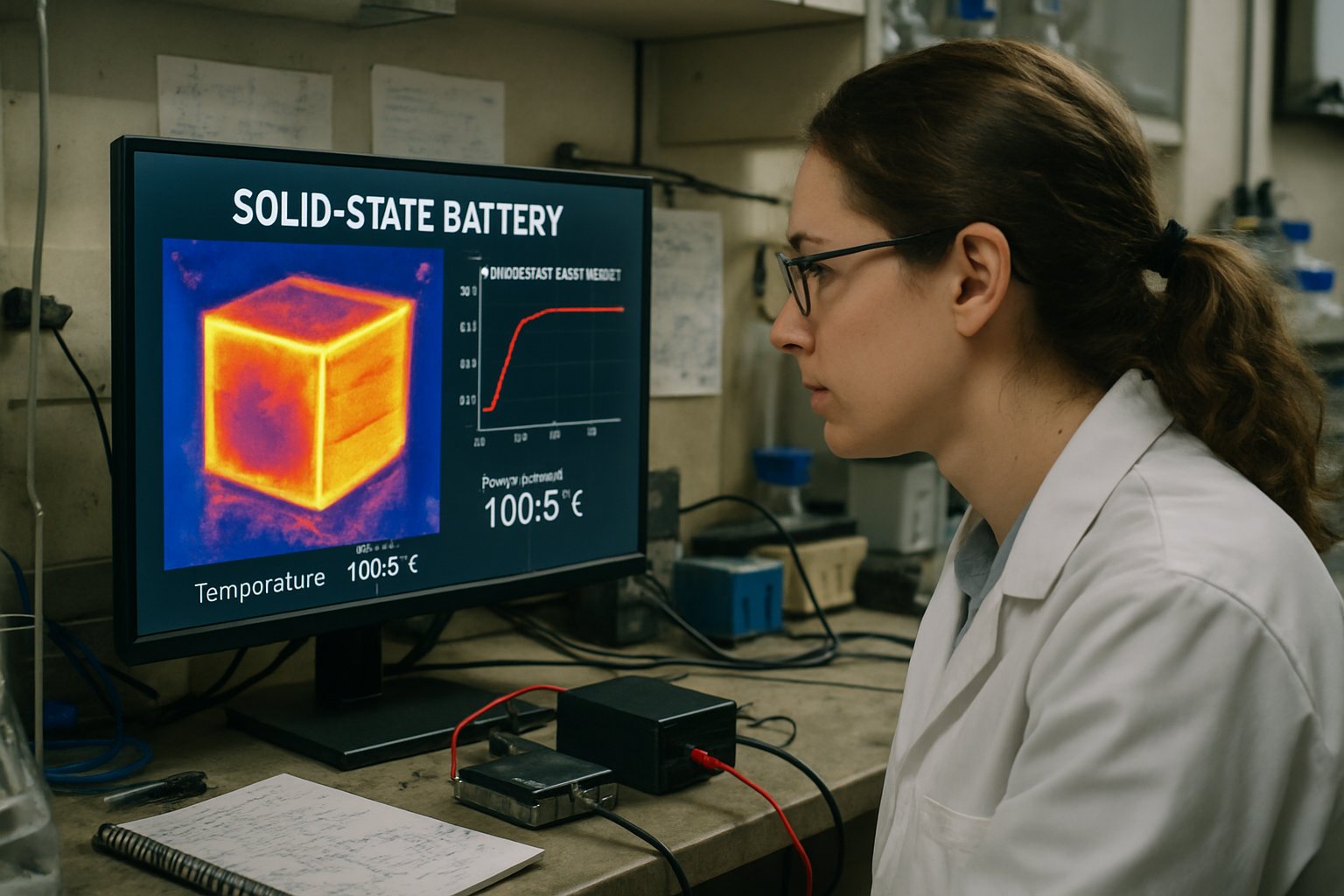
The 5C protocol still impressed, hitting 80 % in 9.6 minutes without notable degradation. Meanwhile, surface temperatures peaked at 63 °C when dual heat sinks were applied. A single heat sink pushed the surface near 90 °C and triggered an automatic cutoff, underscoring thermal contact’s importance.
- 11C peak current: ≈286 A
- 5C peak current: ≈130 A
- Post-charge usable capacity: 98–100 %
These metrics confirm compelling cell-level speed. Nevertheless, the results cover only a single Solid-State Battery pouch under controlled fixtures.
The data highlight real fast-charge potential. However, further tests must validate consistency across production batches.
Extreme Heat Test Findings
On February 27, VTT pushed the cell far hotter. Consequently, discharge at 80 °C delivered 110 % of baseline capacity. At 100 °C, capacity still reached 107 % even after the pouch lost vacuum. Nevertheless, mechanical integrity concerns surfaced because the enclosure showed deformation.
Furthermore, the cell re-charged normally after cooling, suggesting electrolyte stability across that temperature span. Such resilience could simplify thermal management in electric motorcycles, where space restricts bulky cooling loops.
These heat test outcomes expand design windows. Yet they expose durability questions for repeated thermal cycling.
Temperature tolerance appears impressive. In contrast, long-term enclosure stability remains unverified.
Skepticism And Open Questions
Industry veterans remain cautious. Moreover, Svolt chief Yang Hongxin bluntly labeled Donut’s simultaneous promises "contradictory." Analysts echo the sentiment, noting that VTT never measured gravimetric energy density or cycle life.
Donut advertises 400 Wh/kg and 100,000 cycles. However, VTT’s report lists only 94 Wh of energy without cell mass, making the ratio impossible to confirm. Additionally, no third-party data show multi-year cycling.
Consequently, observers ask for raw traces, pack-level trials, and chemistry disclosure. Until those emerge, each Solid-State Battery headline should carry an asterisk.
Questions persist about headline claims. Nevertheless, transparent data could shift sentiment quickly.
Impact On Electrification
Ultra-fast charging aligns perfectly with urban Electrification strategies. Moreover, motorcycles and light delivery vehicles benefit most from short dwell times. Faster turnaround boosts fleet utilization and lowers station congestion.
Additionally, high-temperature endurance could expand viable climates for electric two-wheelers, especially in tropical cities. Consequently, charging infrastructure might relax stringent cooling requirements, reducing capital costs.
However, pack-level safety and regulatory approvals still gate deployment. Therefore, stakeholders await module propagation studies before committing large orders.
Fast charging aids quick adoption. Yet regulatory confidence remains a prerequisite for broad Electrification.
Scale-Up Manufacturing Key Hurdles
Prototype success rarely guarantees factory throughput. Moreover, Donut Lab must demonstrate repeatable layer uniformity, interface bonding, and anode plating control. Each step complicates Manufacturing scale-up.
Furthermore, the 11C current demands thick busbars and precise tab welding, increasing production complexity. Consequently, cost parity with conventional lithium-ion remains uncertain.
Supply chains add more uncertainty. Solid electrolytes often rely on scarce elements or brittle ceramics. However, Donut claims its chemistry avoids heavy compression, potentially easing equipment investment.
Factory readiness defines commercial timing. In contrast, single-cell tests reveal little about full line yields.
Next Critical Validation Steps
Analysts outline four immediate tasks:
- Publish cell mass to verify 400 Wh/kg.
- Share extended cycling curves beyond 1,000 loops.
- Release pack-level thermal propagation data.
- Allow independent labs to replicate the Heat Test protocol.
Additionally, professionals can enhance their expertise with the AI Developer™ certification to interpret complex data sets and validation reports.
Moreover, Donut should invite academic teams to probe dendrite growth under 11C pulses. Consequently, peer-reviewed publications would strengthen credibility.
Transparent replication will silence doubts. Meanwhile, measurable milestones will attract strategic Manufacturing partners.
Conclusion And Future Outlook
Donut Lab’s Solid-State Battery dazzles with 4.5-minute charging and admirable heat resilience. Moreover, VTT’s independent data lend weight to those specific achievements. However, extraordinary energy density, cycle life, and cost claims remain unproven. Consequently, large-scale Electrification hinges on thorough replication, rigorous Heat Test repeats, and demonstrable Manufacturing readiness. Nevertheless, if upcoming validations succeed, Donut could accelerate next-generation mobility. Industry professionals should monitor new data releases and equip themselves with advanced analytics skills to stay ahead.
Stay tuned for forthcoming evidence, and consider advancing your technical credentials to lead in this rapidly evolving field.


