

AI CERTs
2 hours ago
Disney v Midjourney: The AI Legal Showdown
Disney and NBCUniversal shocked the creative sector on June 11, 2025. The studios jointly filed a blockbuster copyright complaint against Midjourney in California. Consequently, the clash places generative imagery at the center of a growing AI Legal dispute. Midjourney allegedly copied thousands of movies, comics, and theme-park icons for model training. Moreover, the complaint accuses the service of distributing near-perfect replicas through its public gallery. Industry observers view the action as the most aggressive studio offensive against an AI platform to date. Meanwhile, investors, engineers, and lawyers scramble to gauge the fallout. This article unpacks the facts, arguments, and potential consequences for intellectual property stakeholders. This lawsuit marks the latest salvo in the generative AI debate.
Studios Versus Midjourney Clash
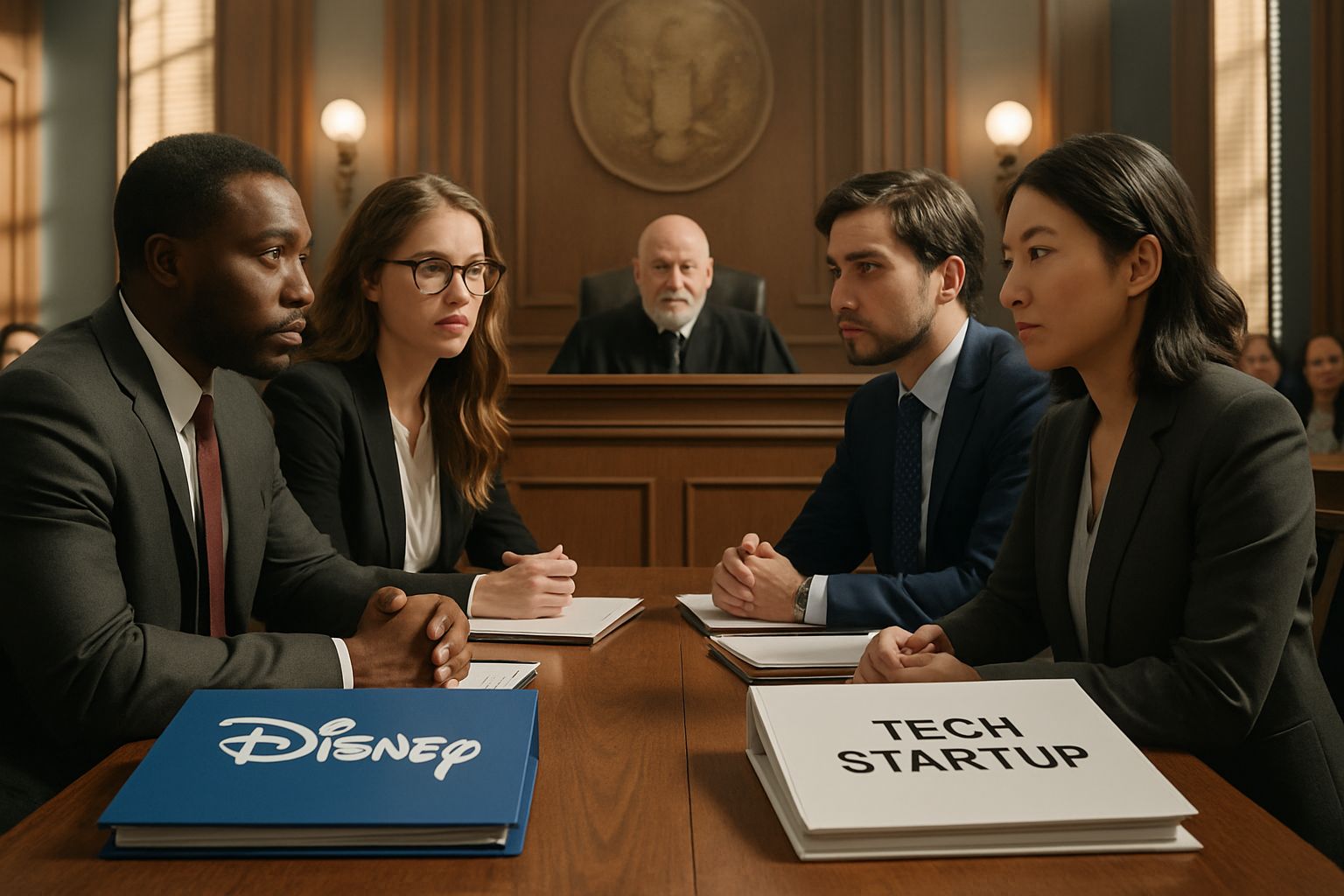
The complaint, docketed as Case No. 2:25-cv-05275, lists Disney Enterprises, Marvel, Lucasfilm, and Universal as plaintiffs. Furthermore, DreamWorks and several affiliates joined to broaden the offensive. The filing spans 110 pages and showcases dozens of side-by-side images. In contrast, Midjourney stands alone as the single defendant, led by founder David Holz. Plaintiffs seek injunctive relief, statutory damages, and disgorgement of profits. Therefore, the matter quickly became a headline across AI Legal newsletters and mainstream outlets.
However, procedure moves fast. Subsequ ently, a November order consolidated a related Warner Bros. lawsuit, streamlining discovery. Each docket entry fuels public debate about balancing innovation with established intellectual property rights.
Meanwhile, analysts at several AI Legal consultancies predict drawn-out appeals because precedent remains thin.
These early moves set the adversarial tone and preview large-scale litigation costs. Nevertheless, understanding the precise allegations is essential before assessing financial exposure.
Core Copyright Claims Explained
At the heart of the lawsuit, studios allege two intertwined theories of infringement. First, Midjourney directly copied protected images during training. Moreover, plaintiffs argue that storing those files created unauthorized reproductions. Second, they allege secondary liability because the platform encourages users to generate derivative character art. Consequently, the Explore gallery allegedly showcases infringing outputs and draws subscription revenue.
Disney legal chief Horacio Gutierrez stated, “Piracy is piracy, even when automated.” Meanwhile, NBCUniversal counsel Kim Harris warned that theft by algorithm still undermines creative labor. These statements frame the dispute as a fight to protect intellectual property rather than resist technology itself. Additionally, plaintiffs highlight Midjourney revenue of $300 million in 2024 and 21 million users to emphasize commercial scale.
Experts note that any decision will ripple through AI Legal compliance programs already underway at rival platforms.
Overall, the complaint paints Midjourney as a commercial engine fueled by unauthorized data. However, financial figures provide even sharper context for potential damages.
Financial Stakes And Risks
Statutory damages loom large because United States law permits up to $150,000 per willful infringement. Moreover, plaintiffs exhibit dozens of examples, suggesting aggregate exposure could reach billions. Midjourney admits profitability, yet venture appetite can evaporate under such multipliers.
Key docket dates include:
- June 11 2025: Complaint filed and summons issued.
- August 6 2025: Midjourney answer and corporate disclosure submitted.
- November 4 2025: Consolidation with Warner Bros. action ordered.
- First quarter 2026: Discovery conference scheduled; dataset disclosure expected.
Furthermore, studios seek injunctive relief that could pause Midjourney’s image and forthcoming video services. In contrast, investors prefer negotiated licenses over court-mandated shutdowns. The AI Legal community monitors cash reserves, insurance cover, and settlement ranges. Insurance carriers now offer specialized AI Legal riders to hedge large statutory awards.
Financial exposure pressures both settlement and precedent formation. Therefore, Midjourney must articulate robust legal defenses to survive.
Midjourney Defense Strategy Playbook
Midjourney’s answer previewed several defenses grounded in fair use doctrine. First, the company claims that copying during model training is transformative research, protected by precedent. Additionally, executives compare the system to a search engine that indexes public data without storing expressive value. Nevertheless, courts will test whether such analogies hold when outputs replicate famous characters.
Consequently, Midjourney highlights content filters and style-distance tools that reduce similarity scores. The firm argues that user prompts, not the model creator, drive any infringing output. Effective AI Legal governance will require transparent documentation and prompt takedown tools. Meanwhile, policy experts suggest that sharing dataset lists could boost transparency and calm intellectual property concerns.
These defenses hinge on nuanced interpretations of fair use and platform liability. Subsequently, broader industry outcomes may pivot on the court’s analysis of AI practice.
Industry Wide Implications Unpacked
Regardless of outcome, the litigation signals a shift in bargaining power between studios and AI startups. Moreover, investors now expect tighter licensing regimes and clearer data provenance audits. Comparable cases, including Getty Images v. Stability AI, reinforce that pattern.
Creative unions applaud aggressive enforcement, arguing the lawsuit preserves future revenue streams. In contrast, open-source advocates caution that expansive liability could stifle grassroots innovation. Therefore, policymakers seek balanced frameworks that safeguard intellectual property while nurturing research freedom.
Training Fair Use Debate
Courts must decide whether nonpublic internal copies, made during training, qualify as infringement or fair experimentation. Additionally, judges will examine whether generated images compete with originals or merely reference style. The answer will shape AI Legal standards that govern every generative model.
Industry stakeholders seek clarity more than victory for any single party. Consequently, forward-looking scenarios illustrate possible paths ahead.
Likely Future Court Scenarios
One scenario involves early settlement that licenses Disney catalogs for a confidential fee. Moreover, Midjourney could adopt character detection that blocks infringing prompts. Another scenario sees a full trial establishing that large-scale training on copyrighted data is not fair use.
Alternatively, the court might split the issues. Judges could deem ingestion permissible under fair use yet find output distribution infringing. Consequently, platform design changes, audit trails, and revenue-sharing programs would emerge. Professionals may prepare by earning specialized credentials. For example, individuals can deepen expertise through the AI Legal Specialist™ certification.
Each scenario carries different compliance costs and innovation ceilings. Nevertheless, every stakeholder must monitor the docket closely.
The Disney-Midjourney battle underscores a turning point for creative technology. Moreover, every ruling will influence venture funding, compliance engineering, and artistic practice. Stakeholders should track docket updates, expert commentary, and parallel cases for signals. Importantly, robust AI Legal insight will help companies navigate evolving norms. Additionally, seasoned professionals can leverage certified learning paths to stay competitive. Consequently, pursuing an AI Legal certification strengthens credibility, fosters risk awareness, and supports sustainable innovation.


