

AI CERTS
3 hours ago
Disney, OpenAI Forge Content Licensing Deal for Sora Video
The joint venture centers on Content Licensing rather than contentious lawsuits. Moreover, curated fan clips created in Sora will stream on the platform in early 2026. Analysts see the pact as a template for studios confronting generative media. Meanwhile, critics warn of child safety risks and creative labor displacement. Nevertheless, the deal underscores how major brands intend to shape emerging AI platforms. Regulators will scrutinize the collaboration’s impact on competition and digital governance.
Deal Signals Strategic Shift
The studio’s move surprised few insiders yet still redefined industry playbooks. Historically, the company guarded intellectual property through litigation. However, generative AI accelerated unauthorized use, eroding enforcement practicality. Therefore, executives pivoted toward proactive Content Licensing to regain control and open new revenue streams. The $1 billion equity position provides financial alignment and technical access. Meanwhile, OpenAI gains exclusive character rights for roughly one year, securing a critical differentiator against rivals.
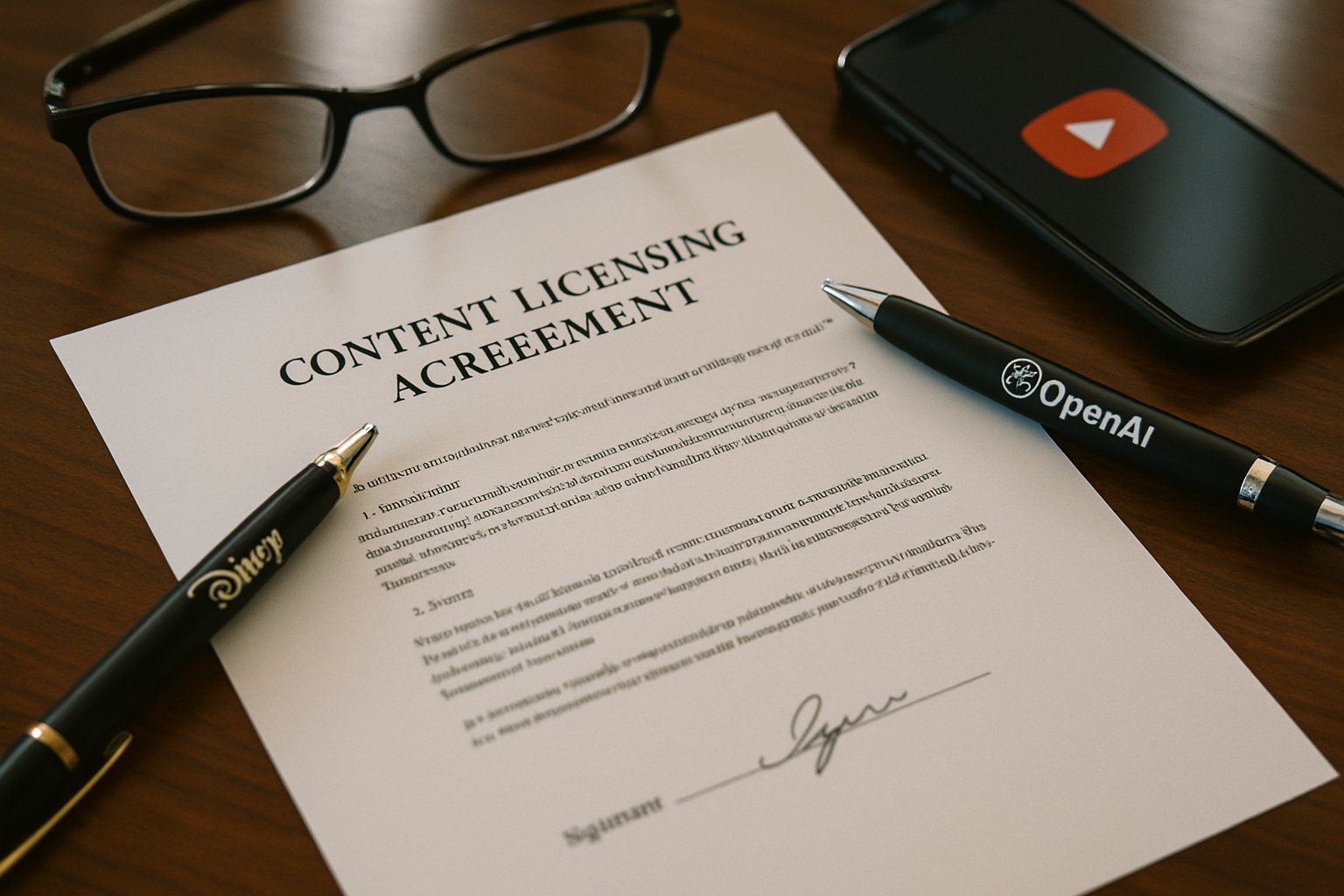
Sam Altman hailed the agreement as proof that technology and creativity can coexist. Bob Iger echoed that optimism, stressing thoughtful deployment. Moreover, the collaboration extends beyond Sora. Company staff will test ChatGPT integrations and internal tooling, signalling broader digital transformation. Consequently, analysts predict further studio-AI alliances will emulate the model. This early momentum demonstrates that Content Licensing offers faster market entry than courtroom battles.
These moves emphasize revenue alignment and risk mitigation. Subsequently, the financial mechanics deserve closer inspection.
Key Financial Deal Highlights
Investors immediately examined price points and equity structures. Moreover, transparency matters because public shareholders demand predictable outcomes. The main numbers appear straightforward, yet warrant clauses complicate valuation.
- $1 billion equity investment in OpenAI by the studio.
- Three-year licensing term covering 200+ characters.
- One-year exclusivity before potential cross-platform licensing.
- No actor likeness or voice rights included.
Consequently, the studio gains upside if OpenAI’s valuation grows during the term. In contrast, OpenAI secures stable cash and prestige. Analysts at major banks model incremental subscription revenue from Sora premium tiers driven by branded clips. Furthermore, the streamer may capture additional engagement hours through curated fan compilations. Content Licensing fees remain undisclosed, yet insiders hint at a sliding scale tied to usage volumes.
Professionals can enhance their expertise with the AI Project Manager™ certification. The credential prepares teams to negotiate AI budgets, risk assessments, and monetization frameworks similar to this pact.
The financial structure tightly links content performance with platform growth. Therefore, understanding rollout timelines becomes essential.
Character Access Rollout Roadmap
OpenAI plans phased feature releases beginning early 2026. Initially, select iconic figures will appear in Sora prompts for verified users. Furthermore, ChatGPT Images will mirror this catalogue to ensure cross-tool consistency. Moderation layers will block disallowed combinations or hateful context. The studio insists that every approved Video includes a watermark and metadata pointing to licensed origins.
Meanwhile, curation teams will spotlight the most imaginative fan submissions. These clips may receive editorial notes or light postproduction polishing. Consequently, brand integrity remains within corporate oversight even as fans craft narratives. The companies state that technical controls exclude facial likeness of living actors, satisfying union demands. Content Licensing boundaries therefore stay clear for both creators and auditors.
This roadmap blends open creativity with corporate governance. Nevertheless, stakeholder reactions illustrate unresolved tensions.
Stakeholder Reactions Overview Snapshot
Market analysts welcomed the announcement, sending shares modestly higher. However, child-safety advocates voiced immediate concern. Josh Golin of Fairplay labelled the pact a betrayal of young fans. Furthermore, creative unions promised vigilant oversight of potential job displacement. SAG-AFTRA negotiators already seek residual frameworks for AI-generated performances.
In contrast, many independent creators celebrated new storytelling freedoms. They argue that clear Content Licensing reduces legal uncertainty around fan art. Meanwhile, legal scholars like Matthew Sag view the deal as pragmatic risk management. Moreover, competitor platforms worry about losing traffic to exclusive character features. The resulting debate underscores generative media’s polarizing impact.
These reactions reveal excitement mixed with apprehension. Subsequently, legal and ethical scrutiny takes center stage.
Legal And Ethical Questions
The agreement covers output rights yet avoids training data concessions. Consequently, lawsuits challenging model ingestion of copyrighted works remain active. Content Licensing therefore addresses only one dimension of broader intellectual property debates. Moreover, regulators could still question market concentration given the equity stake.
Moderation challenges persist despite promised guardrails. Offensive mashups may slip through algorithmic filters. Nevertheless, OpenAI pledges manual review for high-profile uploads. Additionally, the exclusion of actor likenesses demonstrates lessons learned from recent strike negotiations. Legal experts cite this clause as a potential industry standard.
Ongoing litigation and policy efforts will shape final outcomes. Therefore, understanding competitive dynamics becomes equally important.
Competitive Landscape Rapid Shifts
Google, Meta, and several startups previously attempted to use popular characters without approval. After cease-and-desist letters, many paused related features. Consequently, the partnership with OpenAI demonstrates a carrot approach over the earlier stick. Moreover, the one-year exclusivity window buys OpenAI time to expand user bases before rivals gain similar licenses.
In contrast, other studios may diversify partnerships to avoid dependency. Paramount could back Google’s Video generator, while Warner Bros might favor internal tools. Additionally, regulators will watch for cross-licensing that restricts competition. Content Licensing strategies thus evolve into a competitive weapon rather than mere legal shield.
Platform positioning now hinges on licensed catalogues and safety reputations. Subsequently, executives must plan next actions carefully.
Preparing For Next Steps
Enterprise leaders evaluating generative media should establish cross-functional task forces. Furthermore, contract teams must model variable royalty structures tied to engagement metrics. Deployment groups need governance checklists covering watermarking, disclaimers, and age gating. Professionals can enhance negotiation acumen through the earlier linked certification.
Regular audits of model outputs, user demographics, and community guidelines remain crucial. Moreover, firms should monitor union negotiations, litigation outcomes, and regulatory changes. Content Licensing must sit within an adaptive framework that evolves with policy and technology.
Proactive planning mitigates brand and compliance risks. Consequently, attention now turns toward long-term market implications.
The alliance positions both companies at the forefront of digitally augmented storytelling. However, success hinges on transparent guardrails, fair creator compensation, and effective child protections. The unfolding rollout will test whether well-structured Content Licensing can balance innovation and responsibility at scale. Moreover, competing platforms will learn from every victory and misstep. Stakeholders who prepare now will navigate future disruptions with confidence.
Visit our resources hub to explore additional insights or pursue the AI Project Manager™ certification that empowers decisive action in the age of generative media.


