

AI CERTs
2 weeks ago
Diplomatic Secretary Spoofing Threatens High-Level Diplomacy
Diplomatic Secretary Spoofing shocked Washington in July 2025. An unknown actor used AI voice cloning to mimic Secretary of State Marco Rubio and call senior officials. Consequently, five non-State leaders almost shared sensitive data. The episode underscored rising threats at the nexus of Politics, Foreign Affairs, and technology. Moreover, investigators warned that zero-shot text-to-speech systems need only seconds of audio to fool seasoned diplomats. This article unpacks the timeline, technical landscape, policy gaps, and practical defenses.
AI Impersonation Timeline Facts
The campaign began in April 2025 with smishing texts. Subsequently, vishing calls followed. On May 15, the FBI issued PSA I-051525 warning that senior officials were being spoofed. Mid-June brought a Signal profile labeled “Marco.Rubio@state.gov.” However, the plot gained attention after a July 3 State Department cable detailed multiple targets: three foreign ministers, one governor, and one member of Congress.
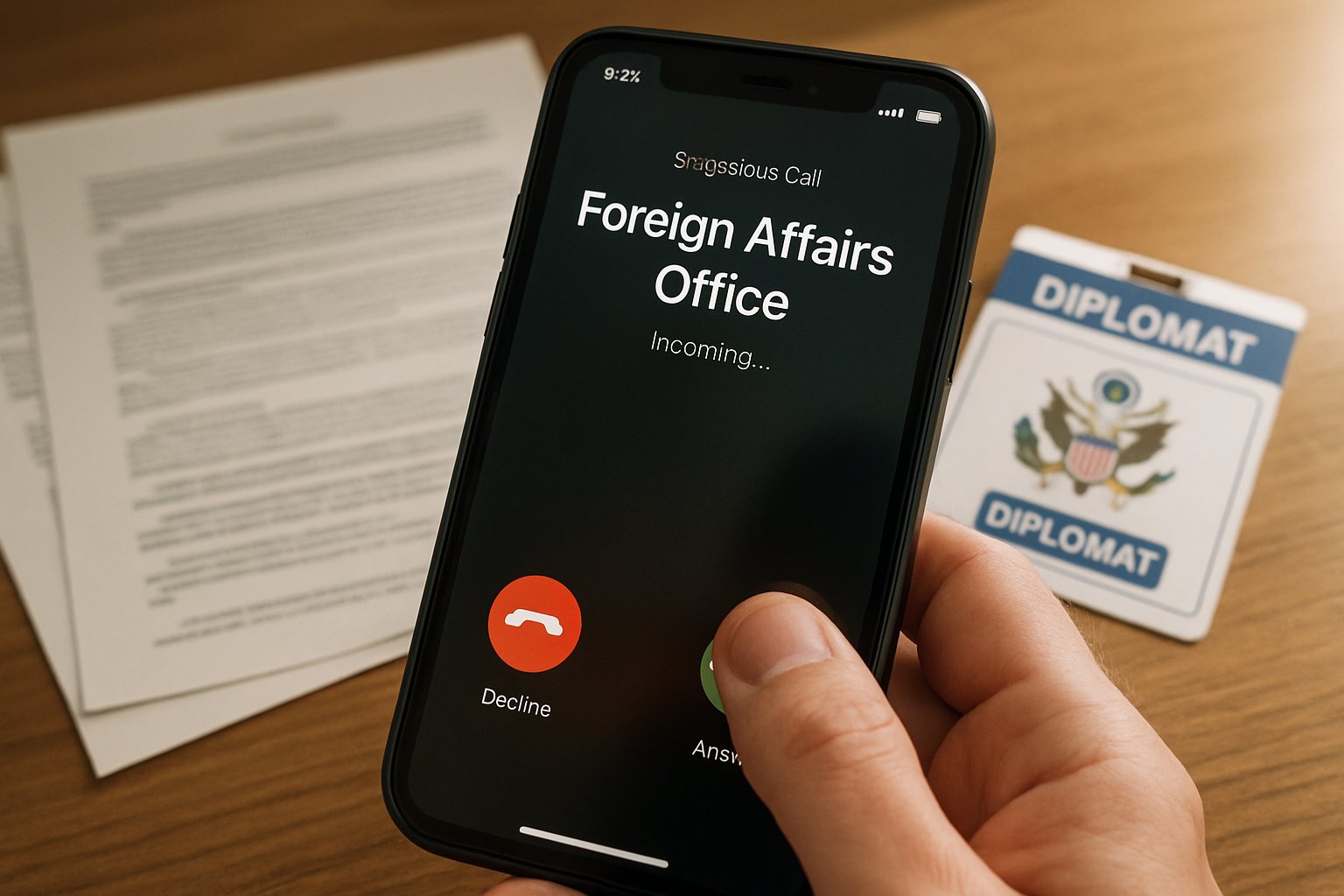
On July 8, The Washington Post and the Associated Press published the first public reports. Therefore, Diplomatic Secretary Spoofing became headline news.
- 5 known high-value targets confirmed
- 2 months of undetected activity before the cable
- 1 FBI advisory outlining verification steps
These milestones reveal how quickly AI intrusions escalate. Nevertheless, understanding the technology behind the stunt is equally urgent. The next section explains those tools.
Technical Deepfake Audio Capabilities
Modern neural codec models such as Microsoft’s VALL-E can generate convincing voices from three-second samples. Furthermore, Consumer Reports tested six commercial products in March 2025 and found four lacked solid consent checks. Deepfake generation thus moved from research labs to consumer dashboards.
Expert Hany Farid noted, “You just need 15 seconds of audio and a button.” Vijay Balasubramaniyan added that each tool feels “push-button simple.” In contrast, detection lags behind synthesis quality. Consequently, Diplomatic Secretary Spoofing thrived.
Foreign Affairs teams now face audio disinformation that travels faster than formal cables. These technical realities raise severe national security stakes, examined below.
National Security Stakes Rise
Voice impersonation erodes trust among allies. Additionally, impostors can request confidential scheduling data or policy drafts. Politics widens the blast radius when fake instructions reach governors or lawmakers.
State Department officials fear diplomatic friction if a foreign minister acts on false guidance. Meanwhile, adversaries could trigger market swings by leaking forged remarks. Therefore, Diplomatic Secretary Spoofing is not a niche cybercrime; it is a Foreign Affairs emergency.
These dangers highlight ethical considerations and industry responsibility. However, current safeguards remain thin, as the following vendor review demonstrates.
Vendor Safeguard Gaps Exposed
Consumer Reports analyzed Descript, ElevenLabs, Lovo, PlayHT, Resemble AI, and Speechify. Moreover, four services failed to verify speaker consent effectively. Ethics took a back seat to user convenience. Deepfake creators simply ticked a box claiming ownership.
Industry has responded with voluntary watermarking talk, yet implementation varies. Nevertheless, regulations lag. The FCC banned AI robocalls in 2024, but no rule addresses targeted diplomatic fraud.
These gaps sustain Diplomatic Secretary Spoofing incidents. Consequently, leaders must adopt stronger mitigation tools and policies, explored next.
Mitigation Tools And Policies
Organizations can reduce risk with layered defenses. Additionally, audio watermarking and provenance metadata help trace synthetic speech. Detection startups offer machine-learning analyzers that flag spectral anomalies.
Operational changes matter too. Officials should avoid consumer messaging apps for classified business. Furthermore, every unexpected platform switch request must be verified through secondary channels. The FBI advises using multifactor authentication and reporting suspicious messages to IC3.
Legal levers include FTC enforcement and possible statutes criminalizing intentional diplomatic deepfakes. Consequently, robust frameworks would deter future Diplomatic Secretary Spoofing. Professionals can deepen their understanding through the AI Researcher™ certification.
These solutions form a multilayered shield. However, leaders still need concise guidance, addressed in the next section.
Strategic Takeaways For Leaders
Executives should map critical communication channels and apply stringent verification. Moreover, train staff to recognize smishing and vishing red flags. Politics often accelerates crises; therefore, rapid response protocols are vital.
Ethics training must accompany technical controls. Deepfake literacy programs reduce gullibility across Foreign Affairs teams. Nevertheless, boards should allocate budgets for voice forensic tools.
These actions empower resilience against Diplomatic Secretary Spoofing. The final section recaps and issues a call to act.
Summary And Action Steps
AI cloning is here, and threats grow daily. Consequently, collaboration between technologists, policymakers, and diplomats becomes essential.
Key steps include:
- Adopt secure channels and MFA immediately
- Deploy watermarking and detection algorithms
- Engage regulators to close legal loopholes
These priorities fortify defenses. However, sustained vigilance remains necessary.
Diplomatic Secretary Spoofing showed how synthetic voices endanger global governance. Moreover, national security, Politics, Ethics, and Foreign Affairs now intersect inside every voicemail. Therefore, technical safeguards, policy reforms, and continuous education must advance together.
Consequently, readers should explore upskilling options. Professionals can build advanced competencies by pursuing the AI Researcher™ program.


