

AI CERTs
2 hours ago
Digital Traceability Laws Reshape Deepfake Compliance
Deepfakes no longer belong to science fiction. They flood news feeds, private chats, and enterprise workflows. Consequently, lawmakers worldwide now demand robust origin labeling for synthetic media. At the heart of these mandates sits Digital Traceability, the practice of embedding machine-readable provenance data. Furthermore, the new rules promise greater Transparency while forcing companies to overhaul content pipelines. This article unpacks the evolving Law, the technical markers, and the commercial impact ahead. Moreover, we highlight deadlines, vendor strategies, and practical steps for compliance teams. Readers will finish with a clear checklist and links to professional certifications. The stakes are high and growing. Therefore, every stakeholder must understand how Digital Traceability will reshape operations by 2027.
Global Legal Shift Now
Regulators have moved from voluntary guidelines to binding statutes within eighteen months. In the European Union, Article 50 of the AI Act compels providers to embed machine-detectable markers. Deployers must also disclose deepfakes to users at first exposure. Meanwhile, India’s amended IT Rules introduce a three-hour takedown clock for unlabeled synthetic content. California, China, and the United States federal Law add sectoral duties, particularly against non-consensual imagery. Consequently, compliance desks now juggle overlapping Transparency requirements across five major jurisdictions. Nevertheless, each statute converges on one objective: end-to-end Digital Traceability for synthetic media.
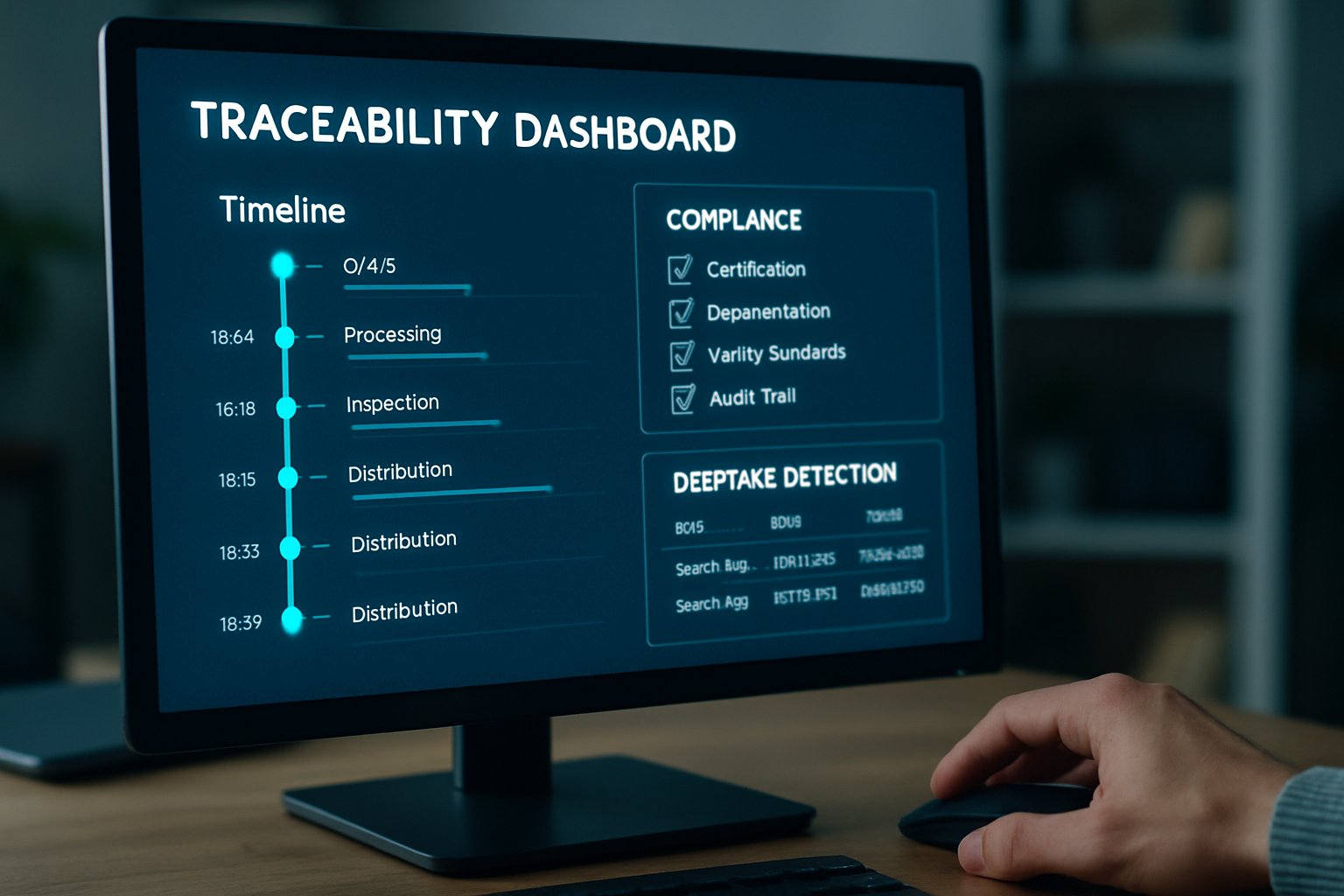
These converging laws raise compliance urgency. However, technical marker design determines whether obligations can be met efficiently. The next section dissects those markers.
Core Technical Marker Types
Providers rely on a layered toolkit combining Watermarking, Metadata, and cryptographic signatures. Visible labels tell humans a file is artificial. However, invisible watermarks persist through re-encoding and cropping, offering stronger Digital Traceability in adversarial settings. C2PA Content Credentials attach signed Metadata describing model, timestamp, and edit history. Moreover, fingerprinting logs hash values on secure ledgers for offline verification. In contrast, standalone Watermarking can be stripped; therefore, Transparency suffers without supplementary Metadata.
Layered markers reinforce accuracy and resilience. Consequently, companies must select combinations that survive real-world transformations. Deadlines make that selection immediate.
Compliance Deadlines Looming Worldwide
Major obligations arrive sooner than many executives expect. Article 50 duties start August 2026, with fines reaching €15 million or 3% turnover. India enforces provenance on 20 February 2026 after only ten days’ notice. China’s labeling standard became mandatory September 2025. Additionally, California device and cloud requirements phase in through 2026. Consequently, procurement teams have under twelve months to operationalize Digital Traceability across supply chains.
- EU AI Act penalties: up to €15 million
- India takedown window: 3 hours
- Global provenance market: projected $478M in 2026
These hard dates crystallize project timelines. Therefore, budget approvals and vendor selections must finish this quarter. The commercial upside also merits attention.
Market Impact Forecasts Ahead
Analysts value the deepfake detection and provenance segment at $478 million for 2026. Moreover, compound growth could push revenues into multibillion territory by early 2030s. Device makers like Nikon already embed C2PA credentials in new firmware. Meanwhile, cloud vendors expose detection APIs to lock in enterprise traffic. Watermarking specialists advertise resilience as a competitive differentiator. Consequently, Digital Traceability becomes both compliance necessity and revenue catalyst.
Market signals align with regulatory urgency. However, technical and legal hurdles remain. Those challenges surface next.
Implementation Challenges Persist Globally
Watermarks can degrade after transcoding, analog capture, or malicious editing. Additionally, Metadata often vanishes when platforms strip headers to optimize file size. Jurisdictional gaps let bad actors publish abroad, undermining Transparency at scale. Privacy advocates argue that mandatory identifiers may chill anonymous art. Nevertheless, regulators insist that balanced Digital Traceability outweighs those concerns. Legal teams must track satire exceptions to avoid over-moderation and free speech litigation.
These barriers complicate global rollouts. In contrast, structured action plans can mitigate risk. We propose one next.
Action Plan For Firms
First, map all jurisdictions touching your content. Subsequently, align provider pipelines with C2PA or equivalent multi-layer Watermarking schemes. Third, expose verification endpoints to partners and journalists to foster Transparency. Fourth, rehearse accelerated takedown procedures that meet India’s three-hour clock. Finally, train frontline staff on deepfake spotting, evidence preservation, and Digital Traceability audits. Professionals can deepen expertise through the AI Legal Specialist™ certification. Consequently, auditors gain authoritative insight into evolving Law and technical standards.
Structured steps turn abstract mandates into daily routines. Therefore, monitoring future enforcement becomes the final task. Key watchpoints follow.
Future Enforcement Watchpoints Emerging
Regulators will issue guidance clarifying acceptable watermark durability thresholds. Furthermore, the first Article 50 fines will benchmark corporate diligence. Independent labs plan stress tests to validate Transparency claims by vendors. Courts will weigh free speech arguments against mandatory Digital Traceability in pending cases. Meanwhile, industry consortia will iterate standards to address evasion techniques.
Early enforcement outcomes will signal practical expectations. Consequently, proactive data gathering now can inform rapid policy adjustments.
Deepfake proliferation has triggered a decisive regulatory response. Global statutes converge on multi-layer provenance, making Digital Traceability non-negotiable for every content producer. Watermarking, Metadata, and robust workflows now define operational readiness. Moreover, market forecasts show lucrative upside for early movers that master these tools. Nevertheless, technical fragility and jurisdictional diversity demand ongoing vigilance. Therefore, leaders should implement the action plan, monitor enforcement, and pursue accredited training immediately. Start today by exploring the linked certification and fortify your strategy before penalties arrive.


