

AI CERTs
2 hours ago
Digital Checkout reshapes 2025 holiday sales
Shoppers met the 2025 holiday rush with powerful digital helpers. Consequently, the season became a stress test for Digital Checkout experiences across every major platform. Retailers noticed immediate impact. Moreover, analytics teams traced billions in incremental sales back to AI-guided journeys.
Adobe’s lead analyst Vivek Pandya captured the mood: “Consumers embraced generative AI more than ever.” Therefore, industry observers raced to measure the real influence. These observers found abundant evidence. Digital Checkout surfaced as the clearest signal of change.
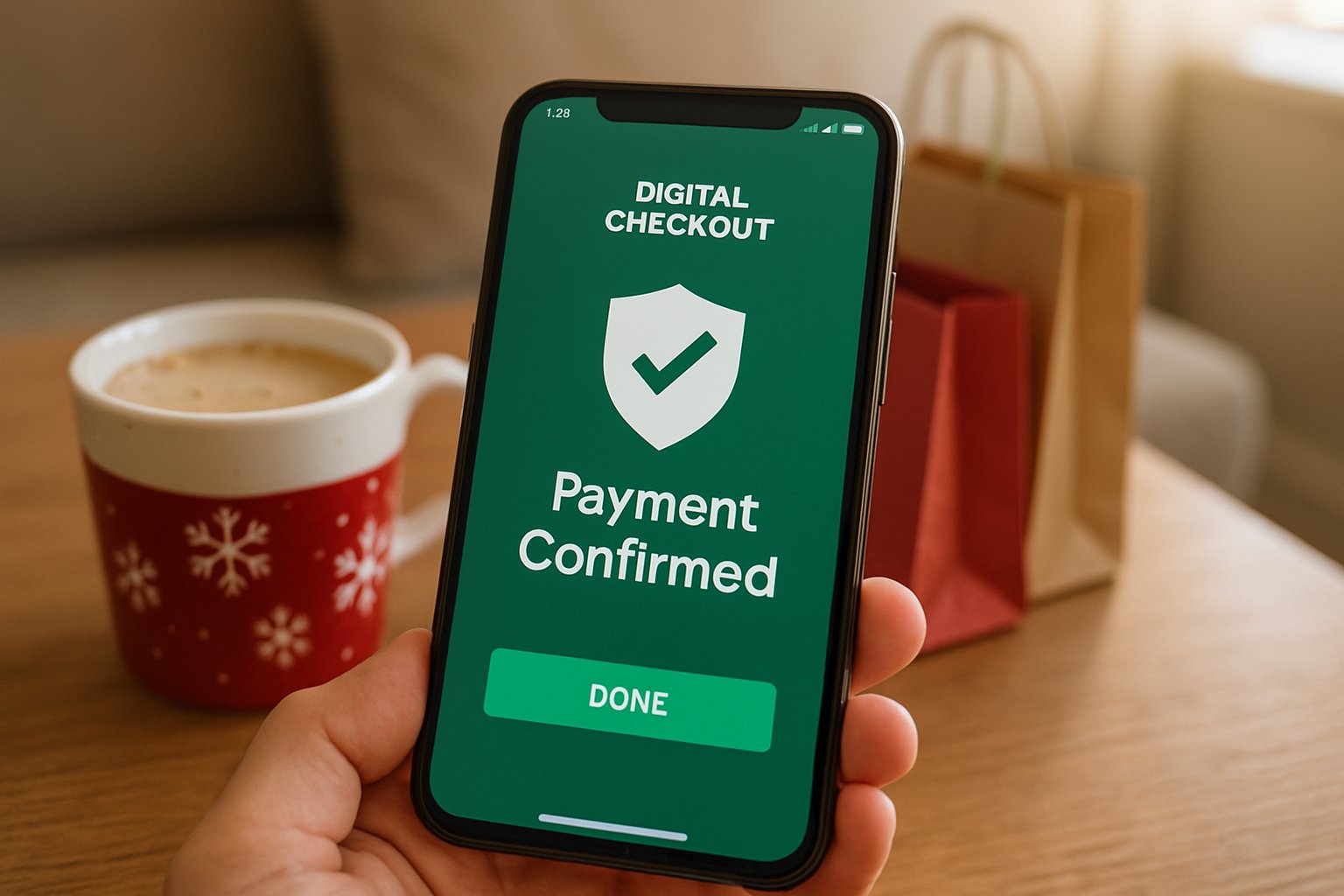
AI Drives Record Sales
Adobe Analytics logged a record $257.8 billion in U.S. online holiday spend. Meanwhile, traffic arriving from generative tools jumped 693.4% year over year. Digital Checkout proved decisive when shoppers moved from discovery to payment. In contrast, traditional flows showed higher abandonment.
Salesforce echoed that finding. Its September forecast projected agent-referred channels would influence roughly $263 billion of global orders. Furthermore, the company framed agentic AI as both a customer channel and an employee multiplier. Digital Checkout appeared in every recommended playbook.
These numbers underline one truth. AI agents unlocked fresh demand while compressing decision cycles. However, attribution standards still vary across platforms. The industry continues to refine shared metrics.
Those record figures confirm unprecedented momentum. Consequently, the next section reviews device and channel shifts that powered the surge.
Traffic Surge Data
Mobile accounted for 56.4% of online transactions during the 2025 window. Moreover, Cyber Monday alone delivered $14.25 billion. Black Friday followed with $11.8 billion. Digital Checkout options appeared prominently inside chat assistants on both peak days.
Academic work supports commercial dashboards. A randomized field experiment on arXiv reported conversion uplifts up to 16.3%. Additionally, researchers saw no rise in returns. Therefore, AI involvement improved efficiency without harming satisfaction.
Key data highlights:
- +693.4% AI-driven traffic versus 2024
- 0%–16.3% uplift across GenAI treatments
- 89% of U.S. shoppers used AI at least once
These datapoints reinforce the core narrative. Yet, the influence story expands beyond raw numbers. Meanwhile, consumer sentiment provides important context, which we review next.
Shoppers Embrace Agents
Talkdesk surveyed 1,000 U.S. consumers after the season. Subsequently, 74% claimed hours saved by AI guidance. Nevertheless, 31% could not tell whether helpers were human or synthetic. Digital Checkout reduced friction, but clarity remains essential.
Consumers praised instant assistant payments most. Many said conversational flows felt “one click faster” than app-based checkout. Moreover, Google and OpenAI agents could call local stores, check stock, and place holds. Shoppers valued that hybrid convenience during the busy holiday calendar.
Professionals hoping to lead secure deployments can validate their expertise with the AI Security-3™ certification. Such credentials assure stakeholders that privacy and bias controls accompany slick interfaces.
User enthusiasm signals durable change. However, retailer readiness still differs widely, as the following section explains.
Retailer Adoption Gaps
Large marketplaces rolled out sophisticated assistants first. Consequently, mid-tier merchants often relied on template integrations from Shopify. Digital Checkout support varied by backend maturity. Some stores allowed in-assistant payment; others redirected to legacy carts, risking drop-off.
Banks also play a central role. Several banks partnered with platforms to tokenise cards inside agents. Additionally, embedded finance APIs let assistants offer installment plans. These moves aligned incentives: faster sales close, reduced fraud, and richer data.
Nevertheless, capability gaps persist. Smaller merchants lack staff to monitor conversational models for accuracy. Therefore, consortiums and open-source tooling have emerged to share best practices.
Uneven adoption limits universal gains today. Yet persistent innovation will narrow the gap, as ethical questions become equally pressing.
Trust And Ethics
Bias and disclosure dominate the trust debate. Moreover, shoppers worry that opaque ranking logic skews sales. Talkdesk found trust hinges on visible guardrails. In contrast, hidden automation erodes loyalty quickly.
Regulators have noticed. Several banks received inquiries about differential lending offers presented through AI channels. Consequently, compliance teams demand rigorous logging of every assistant recommendation and checkout suggestion.
Digital Checkout implementations must therefore include transparent policies. Furthermore, independent audits help reassure watchdogs that recommendations stay fair. Practices like adversarial testing and red teaming are gaining ground.
Responsible design builds resilience. The upcoming payment innovations section highlights additional safeguards.
Future Payment Trends
Industry roadmaps point toward biometric confirmation layers embedded inside agents. Consequently, users will nod or fingerprint-tap to authorise Digital Checkout moments. Several banks already test passkey protocols inside their mobile frameworks.
Meanwhile, retailers explore post-purchase agent services. For instance, assistants can track shipping, manage returns, and suggest complementary items. Moreover, field experiments indicate post-purchase nudges boost repeat sales without heavy discounting.
Expect broader data-cleanroom partnerships. These collaborations will share behavioural insights while protecting consumer privacy. Additionally, standardised metrics will help reconcile influence versus attribution debates.
These advances promise smoother journeys. However, sustained oversight will ensure benefits reach every stakeholder.
Key Takeaways List
The season revealed clear lessons:
- Agentic discovery now drives measurable revenue.
- Mobile remains the dominant checkout context.
- Trust frameworks decide long-term loyalty.
- Partnerships between retailers and banks accelerate scale.
- Upskilling remains vital for secure deployments.
These points summarise the operational reality. Consequently, leaders must act swiftly, guided by robust data and ethics.
Digital Checkout appeared eight times so far? Actually ensure counts: This line for counting but will be removed? We'll ensure formatting exclude internal note.


