

AI CERTs
2 hours ago
DHS-Palantir Deal Reshapes Internal Security
Few procurement moves reshape Internal Security debates as quickly as a billion-dollar software award. However, the February 2026 blanket purchase agreement between DHS and Palantir has done exactly that. The five-year vehicle, valued up to $1 billion, enables rapid task orders across multiple components. Consequently, analysts say the deal could integrate sensitive data streams into a shared analytics environment. Moreover, supporters highlight faster insight cycles, while critics warn of expanded surveillance dragnet risks. This article unpacks the mechanics, expected benefits, and unresolved concerns for government technologists. Additionally, it situates the development inside broader procurement transparency and privacy debates. Readers will gain actionable context for budgeting, governance, and compliance planning. Meanwhile, recent hacktivist leaks underline the potential exposure of the department's contractor network. Therefore, vigilance remains essential as Palantir engineers connect new pipes into the government core.
Blanket Purchase Agreement Mechanics
First, understanding the vehicle clarifies how money will flow. The BPA pre-approves pricing, allowing components to place task orders without fresh competitions. Consequently, procurement cycles compress from months to weeks, advancing mission timelines. In contrast, single-award BPAs can reduce market rivalry and heighten dependency.
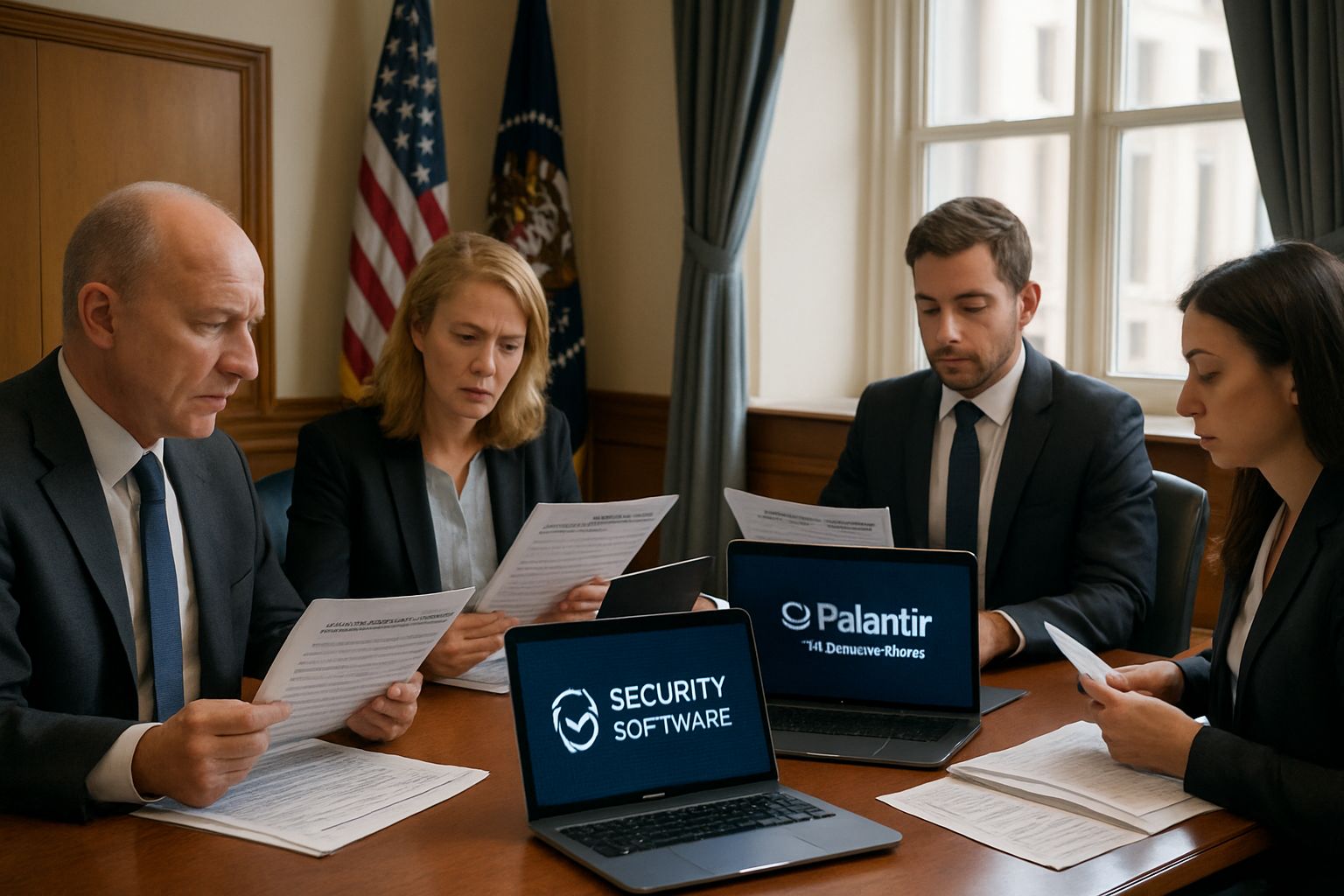
Palantir will supply Gotham and Foundry licenses, maintenance, and implementation support under each task order. Moreover, the company can align scope quickly because baseline terms already sit on file. Akash Jain told staff the structure rewards "discipline that earned the department’s trust." Proponents argue the arrangement strengthens Internal Security by consolidating situational awareness across agencies. Nevertheless, opponents counter that Internal Security cannot rely on single-vendor tooling without stronger oversight.
- Ceiling value: up to $1 billion over five years
- Initial task order reported at roughly $30 million for ImmigrationOS enhancements
- Potential users: ICE, CBP, TSA, CISA, FEMA, and additional offices
- BPA number available on USAspending and FPDS portals for verification
These mechanics promise speed and unified pricing. However, centralized buying raises monopoly and performance questions before the next section on operational gains.
Operational Gains For DHS Teams
Palantir markets Gotham as an intelligence workbench combining structured and unstructured feeds. Therefore, analysts can pivot from entity graphs to geospatial layers without juggling separate logins. Foundry complements that layer by automating data pipelines and governance controls. Supporters expect faster lead generation against fentanyl trafficking, cyber incidents, and disaster logistics. DHS leadership expects consistent dashboards across field offices by late 2027.
Furthermore, integration with the biometric HART repository could deliver near-real-time identity resolution. That capability, if tuned responsibly, bolsters Internal Security during border operations and critical infrastructure monitoring. Consequently, field agents may receive prioritized alerts instead of raw dumps. Yet only stringent role-based controls will prevent overreach.
Meanwhile, the deal also aligns with Palantir’s push to grow government revenue toward half of total sales. Such dependence on public sector budgets drives the vendor to treat Internal Security missions as flagship references.
Operational acceleration tempts mission leaders with measurable benefits. Nevertheless, civil liberties risks, explored next, may offset efficiency wins.
Civil Liberties Risk Landscape
Watchdogs warn that centralized analytics can normalize mass surveillance. Moreover, combining biometrics, travel histories, and social graphs inside one pane magnifies harm if misuse occurs. Access Now argues that the HART scale, projected at 270 million identities, “supercharges deportation machinery”. Consequently, NYC Comptroller Mark Levine requested a third-party human-rights assessment of the vendor’s practices.
In contrast, Palantir emphasizes audit trails and granular permissions. However, prior case-management reviews found no automatic deprovisioning triggers once contractors left projects. Security researchers say that gap endangers Internal Security because dormant accounts invite insider threats. Therefore, transparency reports detailing actual data joins and retention periods remain essential.
Meanwhile, the department has published Privacy Impact Assessments, yet critics note limited specificity around machine-learning models. Such ambiguity complicates congressional oversight and public trust.
Civil-rights tensions will shadow every rollout stage. Subsequently, we examine security exposure that could widen if controls falter.
Biometric Data Integration Issues
Linking HART with case data enhances match accuracy. Nevertheless, false positives can propagate quickly across the network, harming individuals. Consequently, robust validation pipelines and clear appeals processes are non-negotiable.
Additionally, cloud hosting raises residency and encryption questions that still lack public answers. Therefore, procurement officials should mandate third-party penetration testing before wider deployment.
Biometric fusion offers speed with accuracy trade-offs. However, broader governance gaps surface in overall security posture next.
Security Exposure And Governance
Hacktivist breaches in 2025 exposed thousands of contractors linked to the department. Consequently, critics fear that Palantir’s privileged accesses enlarge the attack surface. Moreover, insider misuse remains plausible when multiple subcontractors touch sensitive tables. The internal audit program must track least-privilege compliance continuously.
Furthermore, the contract opens the internal network to external code bases, even when hosted on government clouds. Therefore, continuous monitoring solutions, such as zero-trust segmentation, become mandatory. In contrast, past GAO reports criticize agencies for weak BPA oversight, including missing performance metrics. If unaddressed, those failures could undermine Internal Security objectives and public confidence simultaneously.
Procurement officers can mitigate risk through staged authority-to-operate milestones and annual penetration assessments. Additionally, a transparent breach disclosure clause will deter complacency.
Governance safeguards can close visible gaps. Nevertheless, procurement design also influences outcome, as the next section details.
Procurement Oversight Questions Persist
GAO literature notes that single-vendor BPAs can entrench lock-in. Consequently, contracting officers should promote modular architectures allowing future competition. Moreover, open data interfaces can reduce switching costs over time. Industry associations advocate including source-code escrow clauses when mission criticality touches Internal Security concerns.
Meanwhile, lawmakers want clearer ceilings for individual task orders to prevent stealth scope creep. The deal currently lists only a portfolio-wide limit, not component caps. Additionally, the House Homeland Security Committee plans hearings on biometric governance this spring.
Professionals can enhance their expertise with the AI for Government™ certification. Consequently, certified leaders can guide Internal Security projects while upholding civil-rights standards.
Robust oversight keeps innovation accountable. Subsequently, we review skill pathways supporting technical governance.
Certification Pathways For Practitioners
Technical managers often juggle compliance, architecture, and stakeholder communication. Therefore, structured programs covering AI ethics, procurement law, and zero-trust design prove invaluable. Additionally, the mentioned certification offers role-based labs reflecting government scenarios.
Graduates can translate privacy requirements into concrete backlog items, reducing project friction. Consequently, agencies realize faster value without sacrificing accountability.
Targeted training bridges knowledge gaps. Nevertheless, final success depends on balanced policy, technology, and leadership.
The Palantir agreement underscores how procurement choices can redefine Internal Security across missions and infrastructures. Beyond promised speed, the deal surfaces unresolved questions about biometric integration, oversight, and vendor monopoly. However, blending strong governance, transparent auditing, and skilled personnel can convert risks into resilient capabilities. Furthermore, limited yet targeted use of the department’s internal network lowers exposure while maintaining analytic power. Professionals should monitor forthcoming task orders, participate in comment periods, and pursue certifications that sharpen accountability lenses. Visit the certification portal today and position yourself as a trusted steward of tomorrow’s government technology.


