

AI CERTS
2 hours ago
DeepSeek R1: Efficient AI Reshapes Model Cost Economics
R1 Efficiency Context Explained
However, hype often obscures uncomfortable caveats that matter for technical buyers. This article unpacks architecture choices, training math, and real cloud invoices. Additionally, we weigh expert praise against credible skepticism from rival labs. Finally, readers gain guidance for optimizing deployment and skills. Stay with us to understand if the promised savings truly materialize. Moreover, reduced energy Power demands might align with stricter sustainability mandates. Therefore, every engineering leader should examine the numbers before embracing the trend fully.
Industry buzz began on January twenty seventh last year when DeepSeek published benchmark charts. Subsequently, third party tests suggested comparable reasoning accuracy to frontier systems. Yet the compute footprint appeared smaller thanks to mixture-of-experts gating. Therefore, proponents framed the release as a milestone for Efficient AI. Microsoft quickly added the model to Azure, granting enterprises immediate access. Meanwhile, OpenAI chief Sam Altman publicly praised the accomplishment while promising further scale.
These reactions illustrate momentum but also raise questions about reproducibility. Consequently, we must examine technical design choices more closely. Community excitement rests on impressive numbers paired with accessible tooling. However, architectural mechanics reveal why those numbers are possible.
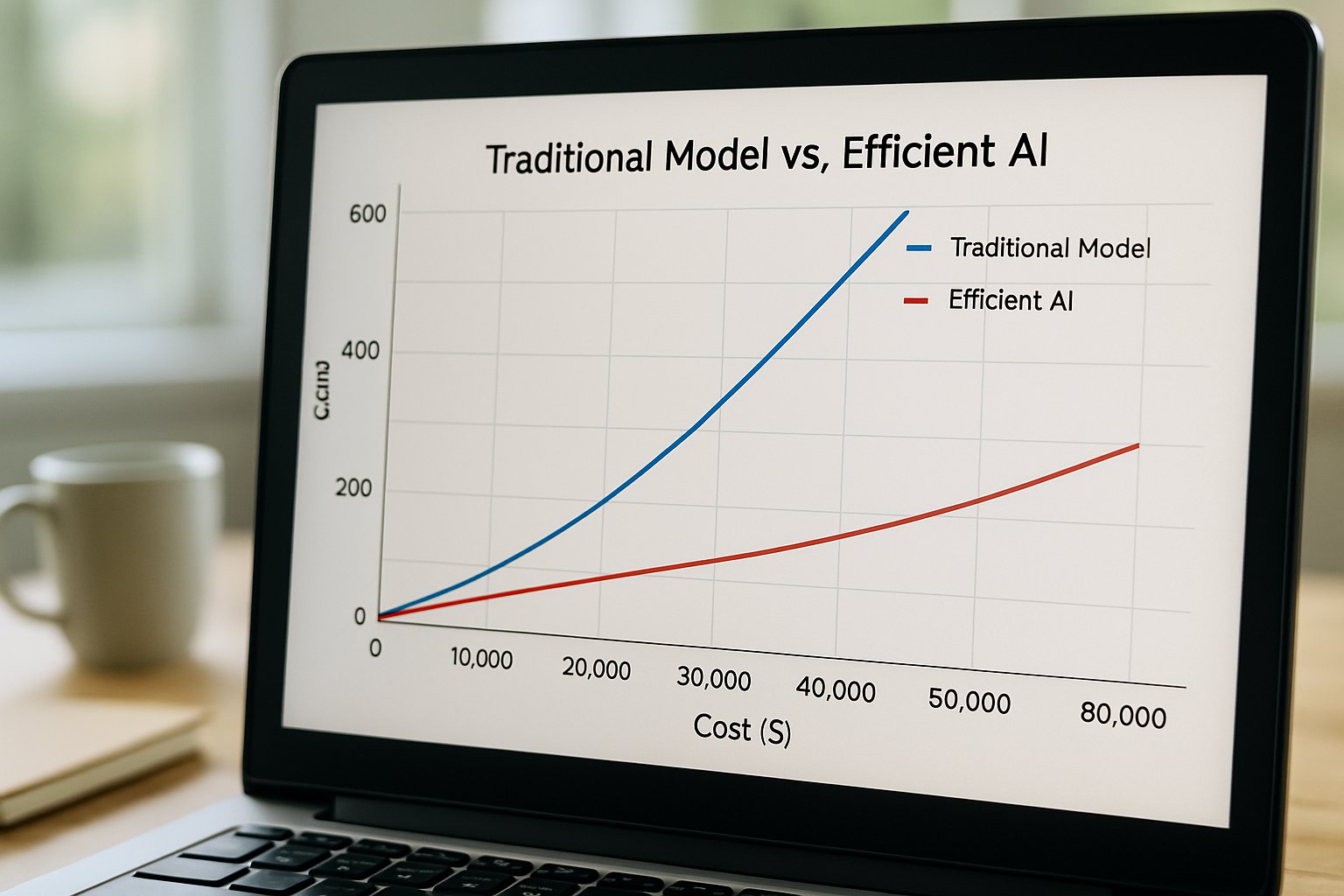
MoE Design Mechanics Overview
The R1 model employs a mixture-of-experts layout with 671 billion total parameters. However, only thirty seven billion parameters fire per token, trimming active computation. Consequently, memory demands shrink, yielding higher throughput across identical hardware. Such sparsity aligns with Efficient AI principles by matching compute to complexity rather than size. In contrast, dense transformers burn cycles on every parameter irrespective of need. Moreover, DeepSeek engineers pair the experts with custom CUDA kernels to maintain throughput. Test time scaling further boosts reasoning accuracy by spending extra inference compute selectively. Nevertheless, these gains rely on mature routing algorithms that avoid overload on hot experts. MoE delivers raw Power efficiently when routing works correctly. Therefore, design elegance must still meet operational reality.
Training Cost Debate Points
DeepSeek public papers trumpet a final-phase training Cost below six million dollars. However, critics argue the figure excludes earlier experiments, dataset collection, and staff salaries. Moreover, Google DeepMind leader Demis Hassabis called the headline optimistic at best.
- Sub-$6M final-phase training spend on Nvidia H800 GPUs.
- 37B active parameters from 671B total using MoE routing.
- 545% theoretical margin under DeepSeek's published assumptions.
- Reinforces the Efficient AI narrative across venture decks.
In contrast, earlier generation dense systems sometimes consumed hundreds of millions in raw compute. Therefore, the disputed metric still demonstrates progress toward Efficient AI economics. NVIDIA spokespeople added context, noting that inference will continue driving GPU demand regardless. Consequently, total ownership calculations must include infrastructure depreciation and energy Power draw. Nevertheless, a lower starting point offers meaningful headroom for optimization. Headline Cost numbers excite but can mislead when isolated. Subsequently, buyers should audit assumptions before forecasting budgets.
Cloud Pricing Reality Check
Early adopters often meet their first surprise when the invoice arrives. Azure lists the R1 SKU at one point three five dollars per million input tokens. Output tokens cost four times more, pushing complex chat sessions higher. Meanwhile, community marketing pages sometimes tout sub-dollar rates without clarifying cache assumptions. Consequently, procurement teams must compare region, latency tier, and discount eligibility. Amazon Bedrock publishes similar yet slightly higher numbers, reflecting differing margin goals. Moreover, Pay-per-use models create unpredictable spend patterns that challenge stable forecasting. Efficient AI philosophy demands meticulous monitoring to maintain promised savings. Pricing transparency remains uneven across platforms. Therefore, continuous metering and alerting safeguard budgets before overruns spiral.
Inference Engineering Needs Today
Achieving brochure numbers demands more than choosing a cheap endpoint. Teams often rebuild kernels, tweak quantization, and reshape batches for sparse routing. However, those optimizations consume valuable engineering hours and specialized talent. Moreover, misconfigured routing can overload certain experts and negate gains. Consequently, Efficient AI requires disciplined profiling at every release. Energy Power budgets also shrink when kernels push GPUs toward higher utilization sweet spots. In contrast, naive deployments might spike latency and disappoint users. Operational excellence converts theoretical savings into real cash. Subsequently, tooling investments become mandatory rather than optional luxuries.
Strategic Market Impact Ahead
Enterprise architects increasingly recalibrate roadmaps around lower price per reasoning unit. Consequently, incumbents feel pressure to cut inference margins or release sparse alternatives. Moreover, chip vendors welcome demand generated by expert routing despite reduced training spending. In contrast, open source communities gain leverage because capital barriers keep shrinking. Efficient AI shifts competition toward creative application layers and data moats rather than brute force. Regulators may also favor architectures that curb energy footprints while safeguarding capability. Market dynamics favor quick movers aligned with efficiency trends. Therefore, strategic foresight now includes robust energy accounting and flexible inference architectures.
Professional Skill Upskilling Path
The talent landscape evolves alongside architectural disruption. Consequently, engineers must master prompt design, sparse tuning, and budget observability. Furthermore, leadership expects practical guidance on deploying Efficient AI without service degradation. Professionals can enhance their expertise with the AI Prompt Engineer™ certification. Moreover, credentialed staff often unlock premium project opportunities and higher salaries. Continuous learning cements individual relevance amid rapid tooling changes. Therefore, structured programs accelerate adaptation while reducing experimentation risk.
Conclusion
Deep savings are plausible when architecture, pricing, and operations align. Nevertheless, headline numbers hide prerequisites that only disciplined teams can fulfill. Careful metering, tailored kernels, and transparent vendor agreements remain mandatory. Consequently, Efficient AI becomes a practice, not merely a product brochure term. Enterprises embracing that mindset will realize lower spend and greener footprints sooner. Meanwhile, professionals who upskill quickly position themselves as vital transformation catalysts. Explore certification pathways and begin refining deployment playbooks today. Start with the AI Prompt Engineer™ credential and lead your organization toward smarter scalability.


