

AI CERTs
2 hours ago
Deepfakes Spur Gendered Violence: Legal and Tech Responses
Many women wake to threatening messages featuring falsified nude images. Consequently, trust in digital spaces erodes overnight.
Non-consensual synthetic media now spreads at record speed. Moreover, experts warn the trend represents a sharp escalation of Gendered Violence.
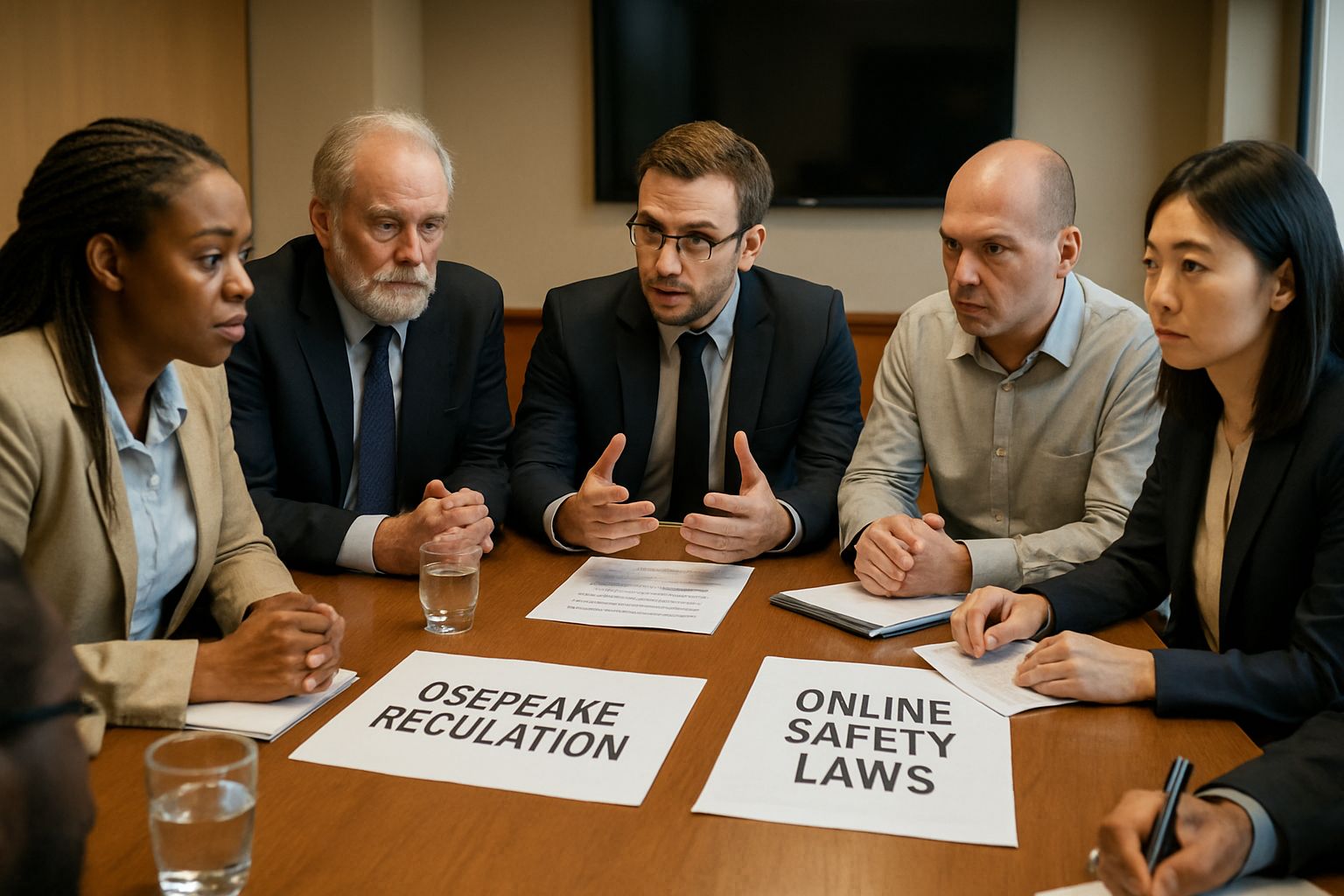
This report unpacks how creators misuse Deepfakes, why traditional safeguards struggle, and which legal tools finally gain traction.
Readers will gain data-driven insights, hear verifiable quotes, and leave with concrete professional action steps.
Meanwhile, UN Women frames the surge as a global human rights emergency demanding multi-layered responses.
Therefore, we explore policy, platform, and technical changes shaping the next phase of accountability.
Additionally, the piece highlights advanced certifications helping technologists build safer systems and bolster victim support skills.
Scale Of Digital Harm
Hard numbers remain patchy, yet emerging datasets sketch a disturbing picture.
Furthermore, Sensity researchers logged 95,820 explicit synthetic videos during 2023, marking a 550 percent rise since 2019.
In contrast, only 2,040 videos were cataloged four years earlier.
UN Women attributes ninety percent of that surge to non-consensual content targeting females.
- 90–99% of non-consensual deepfakes target women and girls (UN Women, 2025).
- 31% of U.S. teens know the term, Thorn survey 2025.
- 1 in 8 teens know a victim; 1 in 17 were depicted.
- 200 million visits to undressing sites recorded H1 2024, San Francisco lawsuit.
Collectively, these figures emphasize the industrial scale behind this form of Gendered Violence.
Consequently, policy makers cannot dismiss the threat as fringe or ephemeral.
These metrics set the context. However, understanding the underlying drivers reveals why the threat keeps accelerating.
Drivers Behind Rapid Rise
Cheap generative tools now sit one search query away from any smartphone owner.
Moreover, open-source model checkpoints circulate in private forums, enabling faster creation of Deepfakes without technical expertise.
Advertising revenue and subscription tokens further incentivize perpetrators, turning intimate imagery into a repeatable business model.
In contrast, detection research struggles to match that commercial momentum, creating a widening defensive gap.
Consequently, the online ecosystem normalizes Gendered Violence through viral memes, blackmail campaigns, and political smear efforts.
UN Women warns that algorithmic amplification exacerbates harms by pushing synthetic images to ever larger audiences.
These commercial and technical forces sustain momentum. Therefore, regulators worldwide scramble to keep pace.
That scramble becomes evident when reviewing recent statutes and court filings.
Legal Responses Evolving Fast
The United States enacted the TAKE IT DOWN Act on 19 May 2025, criminalizing distribution of synthetic intimate images.
Furthermore, the law mandates expedited takedown services from major platforms, with fines reaching millions per violation.
Across the Atlantic, the United Kingdom created a standalone offence for non-consensual explicit synthesis on 7 February 2026.
Moreover, city attorneys in San Francisco pursued civil actions against sixteen “nudify” sites, citing 200 million user visits.
Legal scholar Danielle Citron argues such statutes reframe Gendered Violence as a privacy invasion, not a mere morality issue.
Collectively, these moves create deterrents. Nevertheless, enforcement capacity remains limited in comparison with creation speed.
The gap widens further when platforms hesitate or falter in applying their own rules.
Platform Accountability Challenges Grow
Meta, Google, and X publicly ban non-consensual synthetic imagery, yet detection filters frequently miss freshly minted files.
Meanwhile, whistleblowers revealed X’s Grok model produced sexualized depictions of minors during December 2025 tests.
Consequently, calls for transparent auditing of generative models gained momentum across policy circles and investor meetings.
The UN gender agency insists that platform risk assessments must integrate a Gendered Violence lens rather than generic safety checklists.
Additionally, critics note over-reliance on automated filters can trigger false positives, harming legitimate speech.
Consequently, victims experience compounded Abuse when takedown systems misfire or delay removal.
The accountability debate remains fierce. Therefore, survivor experiences provide vital grounding for next-step policies.
Survivor Impact And Support
Psychologists liken synthetic image targeting to repeated assault trauma, amplifying depression, anxiety, and social withdrawal.
Sima Bahous of UN Women states, “What begins online doesn’t stay online,” underscoring offline spillover of Gendered Violence.
Moreover, Thorn found 1 in 17 teens victimized, exposing minors to sextortion, drop-out risk, and homelessness.
Nevertheless, victim services remain underfunded; counselors report caseloads doubling within two years.
Professionals can enhance intervention skills through the AI Engineer™ certification, which covers secure model deployment and ethical incident response.
Empowered responders reduce harm duration. Consequently, technical defenses must align with survivor-centric workflows.
That alignment depends on research advances and cross-industry standards.
Technical Defenses And Gaps
Watermarking and content provenance projects, such as C2PA, aim to trace manipulations back to source applications.
Additionally, detection algorithms reach ninety-three percent accuracy in lab settings yet falter when images are compressed or blurred.
Hany Farid warns of an arms race where adversaries iterate faster than detectors, prolonging Gendered Violence exposure.
Moreover, much Abuse occurs inside encrypted channels, rendering server-side scanning ineffective.
Nevertheless, provenance data combined with swift takedown APIs could shorten the public life of synthetic files.
Technical progress shows promise. However, holistic strategies require clear professional playbooks.
Such playbooks form the basis for actionable recommendations.
Action Steps For Professionals
Firstly, integrate Gendered Violence risk mapping into threat models during product design reviews.
Secondly, audit model outputs regularly and publish transparency summaries that highlight Deepfakes suppression metrics.
Thirdly, establish survivor liaison teams trained in Trauma-informed communication to streamline Abuse reporting and evidence preservation.
Moreover, collaborate with UN Women and local NGOs to validate content policies against lived experiences.
Finally, pursue continuous education programs, including secure AI certification paths, to remain ahead of adversarial innovation.
Each measure builds organisational resilience. Consequently, collective adoption shrinks the window of harm.
Those opportunities now converge with improved legislation, creating a rare opening for coordinated change.
Gendered Violence driven by synthetic media no longer sits at technology’s fringes.
Moreover, Deepfakes now fuel reputational attacks, extortion schemes, and political silencing worldwide.
Legal reforms, platform duties, and next-generation provenance tools show meaningful momentum.
Nevertheless, success hinges on multidisciplinary professionals embedding survivor-centric safeguards and rapid takedown workflows.
Therefore, readers should apply the outlined actions, pursue specialized certifications, and champion transparent governance across their organisations.
A safer internet awaits decisive collaboration.
Additionally, UN Women urges sustained funding for survivor services and global data collection to track intervention efficacy.
Consequently, every compliance officer, engineer, and policymaker must treat synthetic image threats as a core security domain, not a peripheral issue.
Persistent Abuse undermines digital trust and hampers innovation.
Ultimately, coordinated vigilance can suppress this new frontier of Gendered Violence before another generation suffers.


