

AI CERTS
5 months ago
Deep Learning Drives AI Clinical Trials Momentum
Recent evidence supports the optimism. Unlearn secured EMA qualification for digital twins in February 2024. Moreover, Insilico Medicine reported Phase 2a data for an AI-discovered drug in 2025. Market analysts now project double-digit CAGRs for algorithmic enablement across study phases.
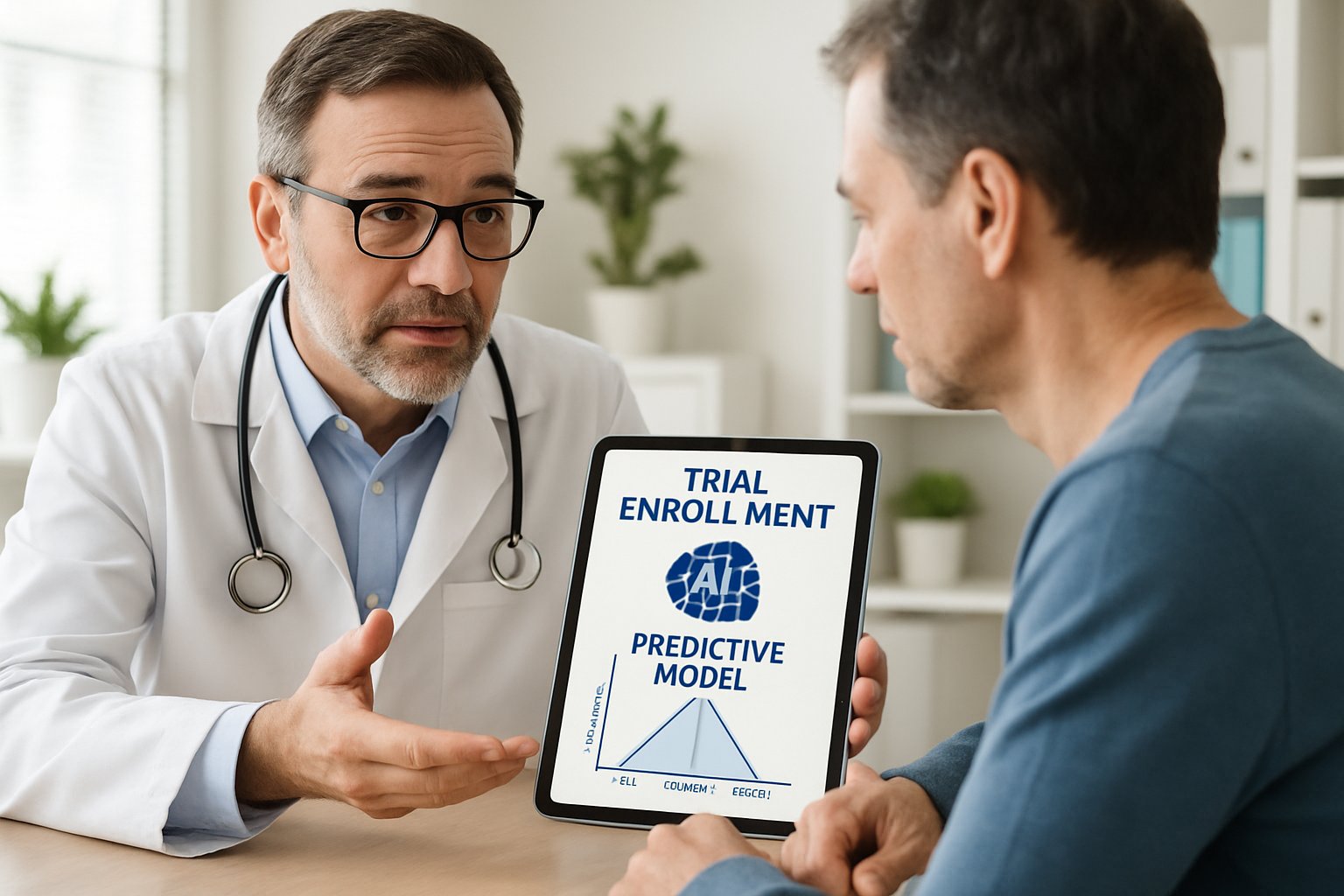
Nevertheless, translating theory into operational gains demands clear understanding. This article dissects the technical pillars, commercial signals, and regulatory guardrails shaping AI Clinical Trials today.
Why Momentum Accelerates Now
Funding has surged. Unlearn raised $50 million Series C in 2024. Meanwhile, Insilico closed a $110 million Series E in 2025. Moreover, CRO giants like IQVIA and Medidata added AI modules to flagship platforms.
Regulators encourage innovation. FDA Commissioner Robert Califf emphasized quality-by-design and digital technologies in 2023 remarks. Consequently, sponsors feel emboldened to propose adaptive, data-driven methodologies.
These capital, technology, and policy signals converge around AI Clinical Trials. Therefore, the window for strategic advantage is narrow. Teams that act now can capture early efficiencies. The next section explores design-stage opportunities.
Design Stage Deep Learning
Planning sets downstream success for AI Clinical Trials. Deep learning models such as Trial Pathfinder analyse retrospective real-world data to test eligibility criteria. In one lung cancer simulation, the eligible pool doubled when restrictive rules relaxed. Consequently, trial diversity improved without harming statistical power.
Protocol drafting also accelerates. Retrieval-augmented LLMs extract precedent language, assemble schedules, and highlight regulatory citations. However, outputs need traceability, audit logs, and expert review to meet Good Clinical Practice.
Deep learning therefore streamlines design and broadens generalizability. Yet benefits depend on high-quality, representative data. The following section examines patient recruitment impacts.
Smarter Patient Recruitment Pathways
Enrollment remains the costliest bottleneck. NLP pipelines now ingest structured fields and free-text notes to surface eligible candidates automatically. Deep6.ai claims four-fold screening speed and doubled cohort precision, although independent audits remain limited.
Moreover, reinforcement learning ranks sites by historic performance and local catchment data. Consequently, sponsors allocate budgets to centers most likely to enroll quickly. Diverse representation improves when algorithms map demographic gaps across regions. Effective AI Clinical Trials hinge on timely patient recruitment.
- Eligible pool doubled in a lung cancer simulation.
- 4× faster patient recruitment reported by Deep6.ai.
- USD 2.14B market projected for 2026.
Together, these advances shorten enrollment months and reduce site burden. Nevertheless, statistical rigor must guide any algorithmic recommendation. The digital twin section shows how modelling further lowers sample sizes.
Digital Twins Transform Comparators
Digital twin models predict each participant’s control outcome. Sponsors then supplement or partially replace traditional control arms. Unlearn’s method received EMA qualification for Alzheimer’s disease progression in 2024.
Consequently, sample sizes fall while power holds steady, according to company simulations. However, regulators demand pre-specification, transparent code, and control of Type I error. Independent validation studies remain scarce but growing.
Digital twins thus offer compelling efficiency gains for AI Clinical Trials. Yet cross-disease generalizability and statistical robustness require continued partnership with agencies. The next discussion weighs broader operational gains and residual risks.
Operational Gains And Risks
Beyond enrollment and comparators, AI Clinical Trials also flag data anomalies in real time. Consequently, monitors focus on high-risk sites instead of routine visits. Medidata reports machine-learning alerts cut monitoring trips by 30 percent.
Nevertheless, risks persist. Models trained on single health systems may encode geographic bias. Moreover, adaptive randomization can inflate false positives if statistical safeguards fail. Experts therefore urge external validation and transparent reporting.
- Bias from localized datasets.
- Unverified vendor efficiency claims.
- Evolving regulatory expectations.
Balancing gains against these risks demands disciplined governance. Therefore, regulator guidance becomes a strategic roadmap. The next section details current agency positions.
Regulators Shape Next Steps
FDA has released decentralized trials guidance and hosts frequent Type C meetings on AI approaches. Meanwhile, EMA issued a qualification opinion for Unlearn, signaling conditional acceptance. Consequently, sponsors must align statistical plans and documentation early.
Califf’s 2023 statement underscores openness but stresses fit-for-purpose evidence. Therefore, multidisciplinary teams should involve statisticians, data scientists, and ethicists when crafting an AI-enabled protocol. Clear audit trails simplify regulator interactions. Sponsors should submit a comprehensive protocol addendum describing algorithm performance. Regulators now expect AI Clinical Trials proposals to include validation plans.
Current guidance thus rewards transparency and proactive engagement. Subsequently, workforce skills become the next limiting factor. Certification opportunities address that gap.
Upskilling Through Certifications Programs
Clinical teams increasingly seek structured training on algorithm validation, ethics, and regulatory science. Professionals can enhance their expertise with the AI Healthcare Specialist™ certification. Moreover, several CROs now require documented AI literacy for study leads.
Medicine increasingly blends computation and biology. Consequently, cross-functional fluency accelerates adoption of AI Clinical Trials frameworks. Formal credentials build confidence among regulators and investors.
Skills investment now reduces future compliance surprises. Therefore, organizations should map capability gaps and pursue tailored programs. The conclusion distills overall strategic recommendations.
AI Clinical Trials momentum is unmistakable. Deep learning optimizes design, accelerates patient recruitment, and enables digital twins. Moreover, centralized monitoring and adaptive analytics further compress timelines. Nevertheless, success demands validated models, transparent protocol governance, and early regulator dialogue. Therefore, leaders should pilot limited-scope studies, track objective metrics, and scale proven approaches. Professionals can future-proof careers by securing credible certifications and cross-disciplinary skills. Explore the linked program to join the next wave of data-driven medicine.
Disclaimer: Some content may be AI-generated or assisted and is provided ‘as is’ for informational purposes only, without warranties of accuracy or completeness, and does not imply endorsement or affiliation.


