

AI CERTS
3 months ago
Data Privacy AI: AWS Clean Rooms Differential Privacy Explained
However, technical leaders must grasp key mechanics, limitations, and governance steps before production use. This article dissects AWS’s new feature set, compares rival offerings, and examines emerging market pressure. Readers will leave with a clear roadmap to deploy Data Privacy AI without compromising collaboration goals.
Why Differential Privacy Matters
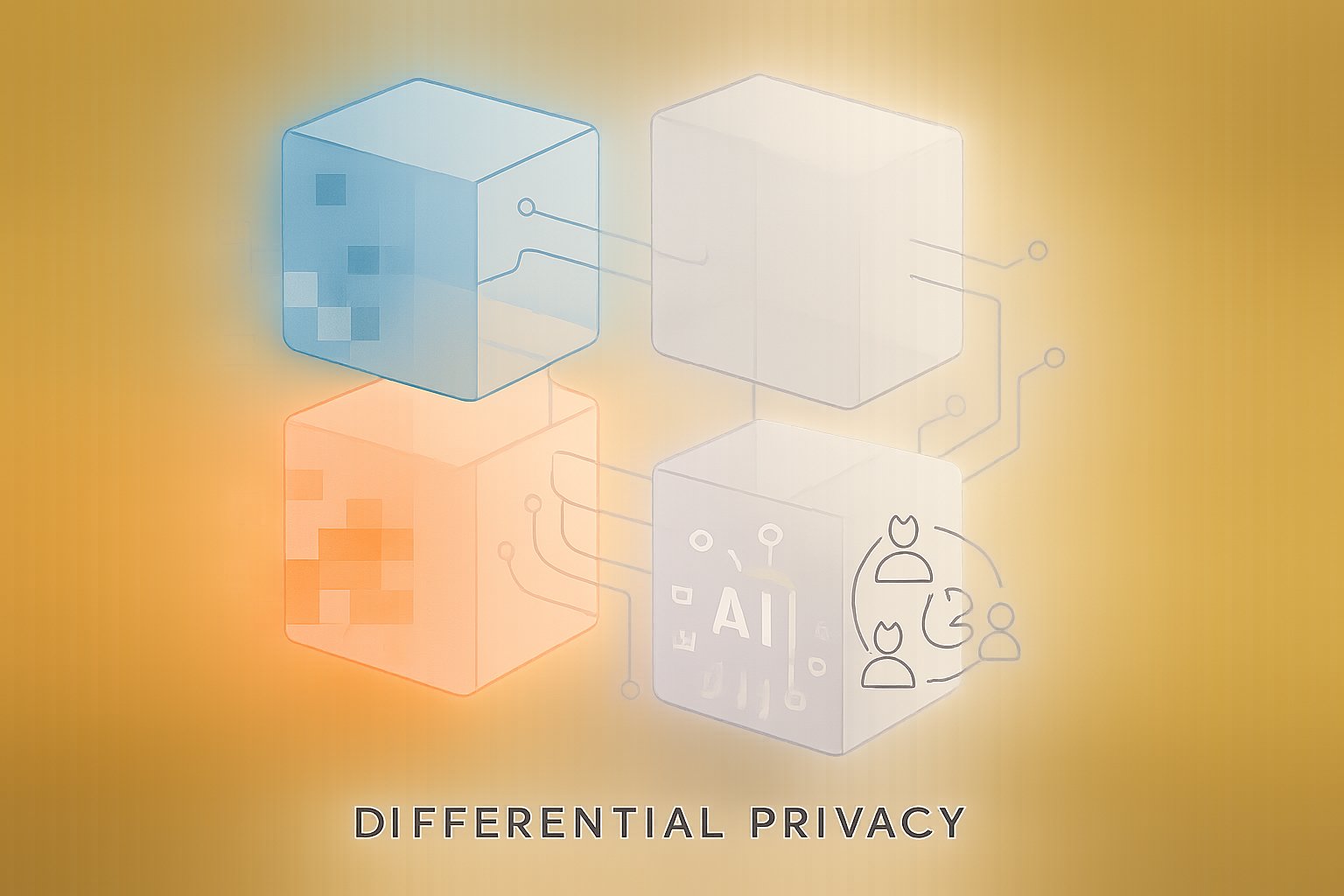
Every query leaks small clues about individuals. Moreover, repeated queries amplify damage. Differential privacy limits that cumulative exposure by adding calibrated noise and tracking a privacy budget. AWS bakes those controls into the Clean Rooms console and APIs, turning abstract math into clear dashboards.
For marketers, the advance is vital. Companies can pool marketing data and still assure regulators that personal records remain obscured. Furthermore, enterprise security teams appreciate a formal epsilon gauge rather than vague promises. Data Privacy AI therefore bridges legal, technical, and business expectations.
These guarantees raise adoption confidence. Nevertheless, misconfiguration can erase benefits. The next section outlines AWS’s approach.
AWS Clean Rooms Overview
The Clean Rooms service enables multi-party SQL analysis without raw exports. Additionally, AWS enforces column-level access, logging, and encryption by default. Differential Privacy extends that baseline by injecting noise at runtime.
Customers create a collaboration, select an identifier column, and set an epsilon budget. Subsequently, each aggregate query consumes budget units displayed on a “gas gauge.” When budget hits zero, further protected queries fail gracefully. Data Privacy AI appears throughout the workflow, reminding analysts to respect limits.
Supported queries include COUNT, SUM, and WITH clauses against S3-backed AWS Glue tables. In contrast, external Athena or Snowflake tables remain unsupported today.
Core Mechanics Explained Clearly
Internally, AWS applies Laplace or Gaussian noise aligned to query sensitivity. Moreover, runtime validators block SQL constructs that could bypass protections through overflow or casting tricks. The service also rejects cross-provider joins when both sources enable differential privacy.
Key configuration knobs include:
- Epsilon privacy budget
- Noise per query threshold
- Minimum group sizes
- Analysis template approvals
Engineering teams monitor CloudWatch for CastError or OverflowError signals. Furthermore, AWS recommends periodic budget reviews during heavy marketing data campaigns. Data Privacy AI visibility simplifies that routine.
Professionals can enhance their expertise with the AI+ Educator™ certification. The credential deepens mathematical understanding, ensuring correct parameter selection.
These mechanics sound robust. However, operational limits still apply.
Operational Limits And Risks
Several constraints deserve attention. First, encryption protects data at rest, yet timing attacks remain possible. Therefore, analysts should randomize query schedules where feasible. Second, only S3-backed tables qualify, limiting broader lakehouse strategies.
Regulators are watching. The FTC warned in November 2024 that technology alone cannot guarantee privacy. Consequently, companies must audit epsilon values, access logs, and security policies. Data Privacy AI supplies tooling, but governance processes complete the puzzle.
Finally, noise reduces accuracy. Marketing teams must test whether added variance still meets campaign measurement goals. Proper simulation avoids surprises.
These risks can be managed. The following market data shows why many firms proceed anyway.
Market Adoption Trends Today
Forrester reports that 90% of B2C marketers already use a clean room. Moreover, analyst models place the privacy-enhancing computation market above USD 2 billion in 2024, with 25% CAGR projected.
IDC named AWS a leader in early 2024, praising its managed approach. Consequently, rival vendors accelerated roadmaps. Snowflake added template-level epsilon controls, while Google integrated Tumult Labs libraries into BigQuery.
The momentum reflects practical value. Differential privacy lets partners share marketing data insights, maintain security baselines, and still honor regulations. Data Privacy AI thus evolves from optional add-on to essential capability.
Adoption continues to surge. However, buyers still compare features closely.
Comparisons Across Major Providers
Snowflake Data Clean Rooms supports per-template budgets and optional encryption keys. In contrast, Google Ads Data Hub emphasizes automated thresholds for advertising metrics.
Feature parity differs:
- AWS offers visual budget meters.
- Snowflake enables join control across clouds.
- Google integrates publisher first-party signals.
Additionally, specialist vendors like Habu or InfoSum wrap orchestration layers around these clouds. Nevertheless, core privacy math remains similar. Data Privacy AI consistency will improve once standards mature.
Provider comparison helps teams align roadmaps. Yet, governance best practices ultimately determine success.
Best Practices And Governance
Project leads should start with conservative epsilon defaults, then iterate. Furthermore, cross-functional sign-off involving legal, security, and analytics units ensures balanced tradeoffs. Clear documentation of noise settings prevents misinterpretation during audits.
Regular penetration tests probe for timing leaks. Additionally, separate encryption keys per partner reduce blast radius during incidents. Collaboration logs should feed centralized SIEM tools for real-time alerting.
Meanwhile, staff training remains crucial. Developers who complete the earlier mentioned certification grasp both math and policy, strengthening the entire security posture.
These practices lock in benefits. However, ongoing regulatory updates require vigilance.
Key Section Takeaways
AWS automates differential privacy yet demands careful configuration. Market momentum validates the approach, but governance secures long-term trust.
Consequently, teams must prepare for evolving standards and audits.


