

AI CERTs
2 hours ago
Cursor Office Policy Drives Viral No-Shoes Startup Trend
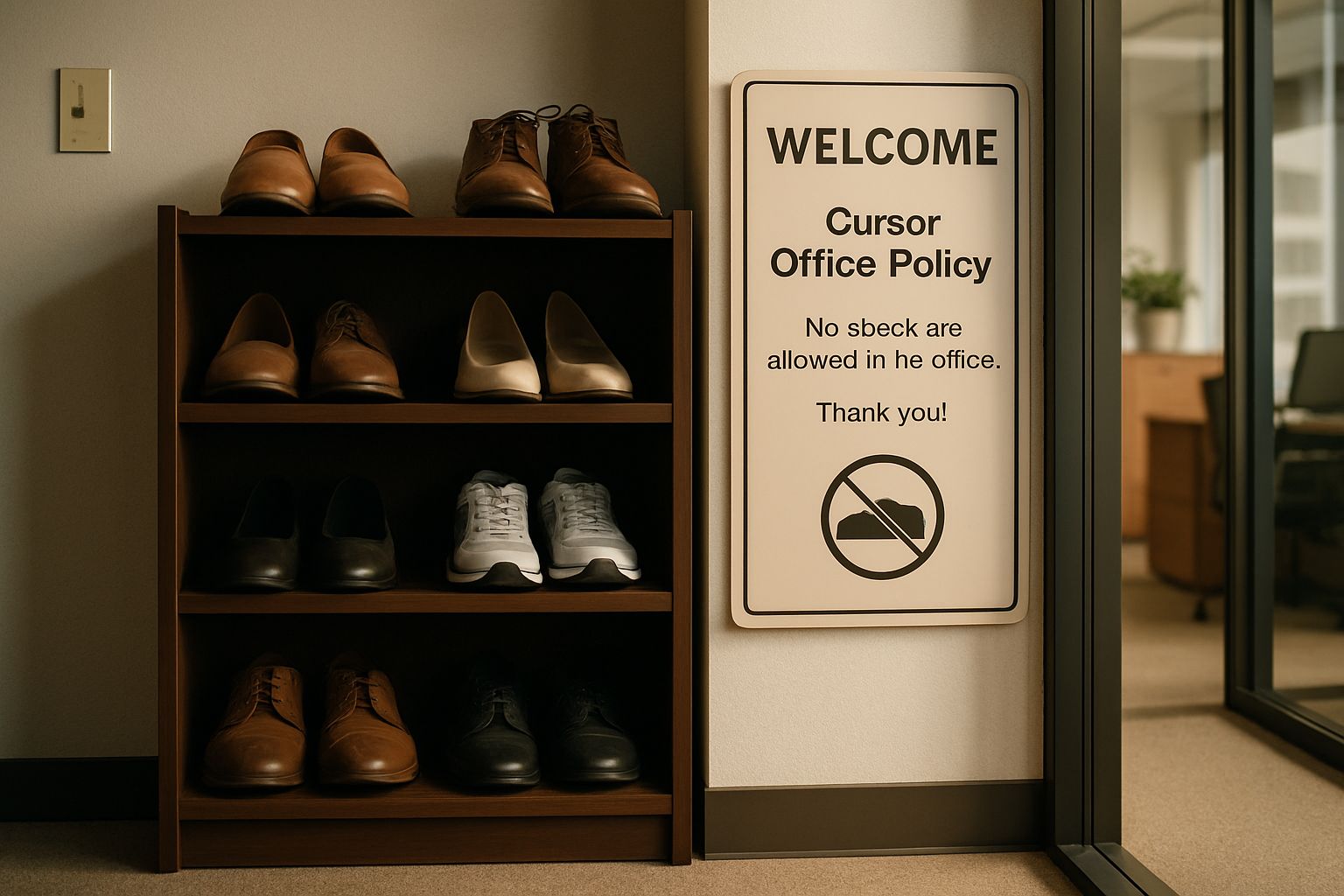
Visitors arriving at San Francisco AI darling Cursor often notice shoes neatly lined near reception. The unexpected sight stems from the Cursor Office Policy that requires everyone to enter sock-footed. Over the past year the rule has leaped from private quirk to trending workplace talking point. Moreover, social posts by early employees spread the practice across more than twenty young firms. Consequently, journalists began treating a shoes-off office as the latest marker of post-pandemic startup identity. Investors following Cursor’s multibillion-dollar raise also amplified discussion, linking comfort perks to productivity. Nevertheless, detractors question hygiene, professionalism, and legal exposure. Meanwhile, founders argue the policy simply brings home comforts back to shared desks. Therefore, leaders in facilities management now study slippers and signage with the same rigor once reserved for standing desks. In contrast, human-resources counsel debate whether shoes qualify as essential protective gear. The stakes feel small yet symbolically huge in today’s hybrid workplaces.
Viral Policy Timeline Rise
August 2025 marked the spark. Ben Lang posted photos of shoe racks from several offices. Additionally, his thread listed companies proudly enforcing the Cursor Office Policy. The post exceeded one million impressions within days. Consequently, Business Insider, Fortune, and regional outlets chased the story. September coverage framed the practice as a broader Silicon Valley wave. Moreover, Cursor’s parent Anysphere announced a $2.3 billion Series D in November, renewing spotlight.
Key Timeline Viral Milestones
- Aug 2025: Initial social thread generates massive reach.
- Sep 2025: Fortune labels no-shoes a hot workplace trend.
- Nov 2025: Cursor Office Policy reappears during funding news.
- Feb 2026: Viral photo of 40 pairs reignites debate.
These milestones illustrate rapid meme-like adoption. However, understanding founder motivations requires deeper examination.
Motivations Behind Rule
Founders cite mixed reasons for embracing the Cursor Office Policy. Cultural upbringing ranks high, especially among leaders from shoe-free households. Moreover, remote-work habits make socks feel normal inside a shared workspace. Economist Nick Bloom links the choice to a “pajama economy” mindset. Consequently, founders argue that relaxed feet translate into relaxed minds. Sneha Sivakumar of Spur says the rule “makes it feel like a second home” and lowers stress.
Cleanliness provides another incentive. In rainy San Francisco, outside shoes track mud onto carpets and electronics. Therefore, banning footwear can reduce janitorial costs and extend furniture life. Some startups even issue branded slides or a slipper stipend.
The motivations intertwine image with practicality. Nevertheless, every reason feeds back to perceived employee comfort and company culture.
Motives blend heritage, hygiene, and branding. Subsequently, advocates point toward tangible employee benefits.
Benefits Advocates Highlight
Supporters describe three main upsides delivered by the Cursor Office Policy. Firstly, comfort encourages longer focus blocks without stiff dress shoes. Secondly, employees report a calmer environment that echoes home office moods. Moreover, the rule becomes a conversation starter that signals inclusive culture to recruits.
- Cleaner carpets and reduced allergens
- Informal vibe that fosters creative risk-taking
- Visual employer branding through matching slides
Additionally, some facilities managers monitor air quality and note fewer particulate readings. Consequently, founders frame the policy as a modest ergonomic win.
Advocates link socks to smiles and savings. However, critics challenge those assumptions with hygiene concerns.
Criticisms And Challenges
Not everyone cheers the Cursor Office Policy. Detractors worry about odor, foot fungi, and awkward client visits. Furthermore, legal experts warn about disability accommodations requiring special orthopedic footwear. In contrast, seasoned enterprise buyers may see slippers as unprofessional.
Cleaning logistics present practical headaches. Shared slides demand laundering schedules, and signage must remind people about kitchen rules. Moreover, insurance policies rarely anticipate bare feet near heavy equipment. Consequently, risk managers request waivers or disclaimers. The office environment can suffer if maintenance lapses.
Public perception swings quickly. A New York Post column joked about investing in air fresheners. Nevertheless, founders counter that clear rules, deodorizing sprays, and optional socks solve most problems.
Objections underscore hygiene, liability, and optics. Therefore, implementation details determine whether the rule scales gracefully.
Operational Rule Implementation Details
Companies serious about the Cursor Office Policy craft explicit playbooks. They define entry zones, storage cubbies, and acceptable foot coverings. Additionally, facilities supply disposable slippers for guests and mandate socks in food areas. Signage clarifies expectations, while onboarding packets explain cultural roots.
Some founders budget a monthly slipper allowance. Moreover, QR codes on cubbies link to cleaning schedules for transparency. Consequently, employees trust that shared footwear stays sanitary.
Professionals can deepen their knowledge through the AI Marketing Strategist™ certification, gaining skills to analyze how such policies influence brand narratives.
Detailed protocols reduce friction and complaints. Subsequently, attention shifts to broader brand impact.
Branding And Talent Impact
Employer branding thrives on small, distinctive signals. The Cursor Office Policy offers an instantly shareable image for social media. Moreover, racks of colorful slides visually differentiate offices during recruiting tours. Early-stage startup founders report that the policy differentiates them from corporate giants. Consequently, talent seeking relaxed culture may view the policy as authenticity proof.
Investors also notice. Anysphere’s valuation climb shows culture can bolster narrative during fundraising. In contrast, conservative clients might pause before signing large contracts. Therefore, communications teams prepare talking points that frame the rule as forward-thinking rather than frivolous.
Hiring data remains early, yet some founders report increased inbound applications after viral posts. Additionally, Glassdoor reviews mention comfort, cleanliness, and environment quality as positives.
Brand value appears amplified by uniqueness and press buzz. However, sustainability depends on workplace evolution trends.
Future Workplace Outlook Ahead
The Cursor Office Policy sits inside a larger re-norming of the physical workspace. Remote habits continue bleeding into offices through hoodies, pets, and now socks. Consequently, analysts expect more experiments blending home comfort with enterprise standards.
Nevertheless, legal guidelines and diverse employee needs will constrain extremes. Facilities teams may adopt hybrid models allowing clean indoor shoes rather than full removal. Moreover, sensor data could inform real-time cleanliness scores, guiding policy tweaks.
Regulators have yet to issue specific guidance, yet OSHA footwear clauses may evolve. Additionally, insurance carriers could introduce premium discounts for documented hygiene routines.
The shoes-off trend offers a glimpse into adaptive environments. Therefore, leaders should monitor data and remain flexible.
Tech offices continue redefining norms once considered non-negotiable. Moreover, the shoes-off movement shows how a simple sensory change influences morale, cleanliness, and brand voice. Advocates highlight comfort and cultural respect, while skeptics flag sanitation and professionalism. Consequently, success hinges on clear protocols, strong communication, and ongoing feedback. Facilities leaders should pilot small, measure impact, and adapt quickly. Meanwhile, HR teams can survey employees to balance inclusivity with hygiene. Professionals seeking deeper strategic insight may pursue advanced credentials like the AI Marketing Strategist™ program. Ultimately, whatever policy leaders adopt, they must craft offices that feel welcoming, productive, and credible in an evolving business environment.


